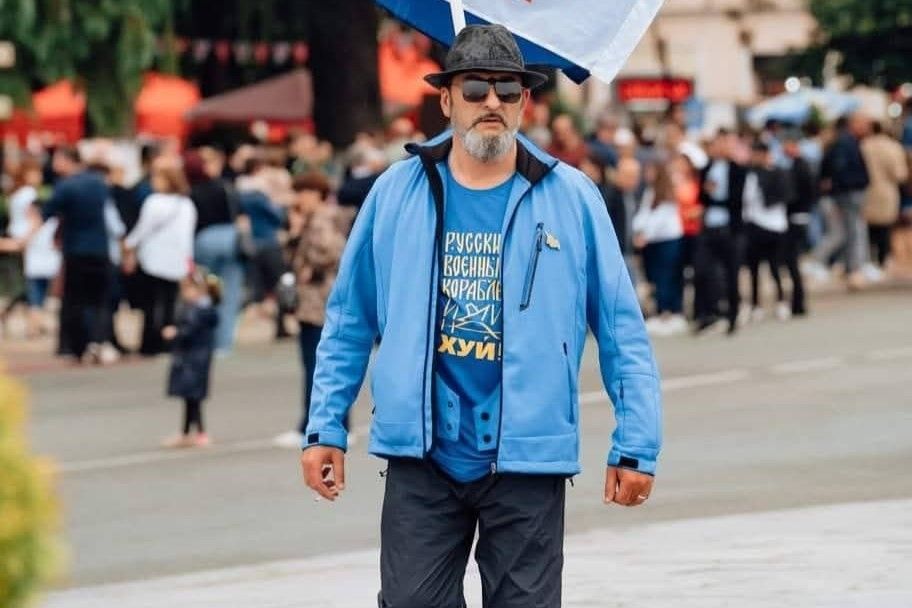
Zugdidi protester released after plea deal that criminalised repeated disobedience to police
An anti-government activist from the western Georgian city of Zugdidi, Shalva Esartia, has been released after entering a plea agreement that converted repeat administrative offences into a criminal charge. Supporters say the terms included a three-month sentence already served, a one-year suspended sentence, six months of probation, revocation of his driver’s licence and a ₾1,500 fine.
By Mikheil Gvadzabia
1,160 views
An anti-government activist from the western Georgian city of Zugdidi has been released from detention after accepting a plea agreement that required him to admit guilt for repeated disobedience to police, a case his supporters say reflects a broader crackdown on protest activity. Shalva Esartia was detained by local officers on 17 March while on his way to a rally in the city’s central square and was accused of disobeying police orders — an offence that is ordinarily an administrative violation but which was prosecuted under a criminal provision because of prior penalties.
According to activists close to Esartia, the plea agreement imposed a three-month prison sentence that he has already served, together with a one-year suspended sentence and a six-month probationary period. Additional penalties reported by his friend, activist Mariam Sichinava, include revocation of his driver’s licence and a fine of ₾1,500 (approximately $570). As part of the deal, Esartia was required to admit guilt; he was subsequently released on Thursday.
Esartia’s sister, Tamar Kankava, told OC Media that he had been travelling to the protest in a car displaying Georgian and EU flags, with protest songs playing loudly — behaviour she said he regularly engages in before demonstrations. Kankava said that, on arrival at the rally outside the regional administration building, police approached Esartia and claimed they had previously called on him to pull over while driving. A verbal exchange ensued after officers told him he would be fined for a traffic violation. Esartia protested and demanded evidence, saying he did not trust the ‘militsia’. Video footage from the scene shows other activists vocally objecting to the arrest as officers detained and placed Esartia into a police vehicle.
The criminal provision under which Esartia was charged increases the severity of penalties when a person has already been penalised twice for the same administrative offence. It allows for up to one year in prison for repeated disobedience to police. Esartia had prior detentions in January 2025 and December 2025 for disobeying police; the first resulted in a fine and the second in a seven-day detention. Prosecutors applied the criminal clause in the March case because of those earlier sanctions.
Human rights advocates and opposition activists have criticised recent legal changes that escalate penalties for repeated administrative protest-related offences. Those measures were introduced by the ruling Georgian Dream party against the backdrop of daily anti-government rallies in Tbilisi and other cities that began in November 2024, after the government announced it would pause Georgia’s EU membership bid until 2028. Critics say the tougher penalties amount to a form of criminalisation of dissent and pose a threat to the freedoms of assembly and expression.
Esartia’s release under a plea agreement raises questions about due process and the pressures on activists to accept deals that include admissions of guilt in order to obtain immediate freedom. While plea agreements are commonly used to resolve cases swiftly, human rights lawyers often warn that when used in politically sensitive cases they can obscure the facts of alleged rights violations and limit scrutiny of law enforcement actions.
The case also highlights local tensions in Zugdidi, where daily demonstrations have become common and where police and protesters frequently clash. Activists say the use of repeated administrative penalties, upgraded to criminal charges, creates a legal pathway to impose more severe sanctions — including prison sentences and restrictions on civil rights, such as revoking driving licences — on those who participate in or travel to protests. Observers say the development will be closely watched as part of a wider debate over Georgia’s democratic trajectory and compliance with European standards on the freedom of peaceful assembly and due process.