Zelensky Says U.S. Negotiators Asked If Ukraine Would Withdraw From Donbas in Exchange for NATO Membership
Ukrainian President Volodymyr Zelensky told journalists that U.S. negotiators raised for the first time whether Ukraine would pull its remaining forces from the Donbas region in return for joining NATO. Zelensky said Kyiv rejects ceding territory in principle but would consider presenting a comprehensive package of security guarantees to the Ukrainian public if Washington and NATO partners can offer concrete assurances.
By Clémence Desjardins
1,194 views
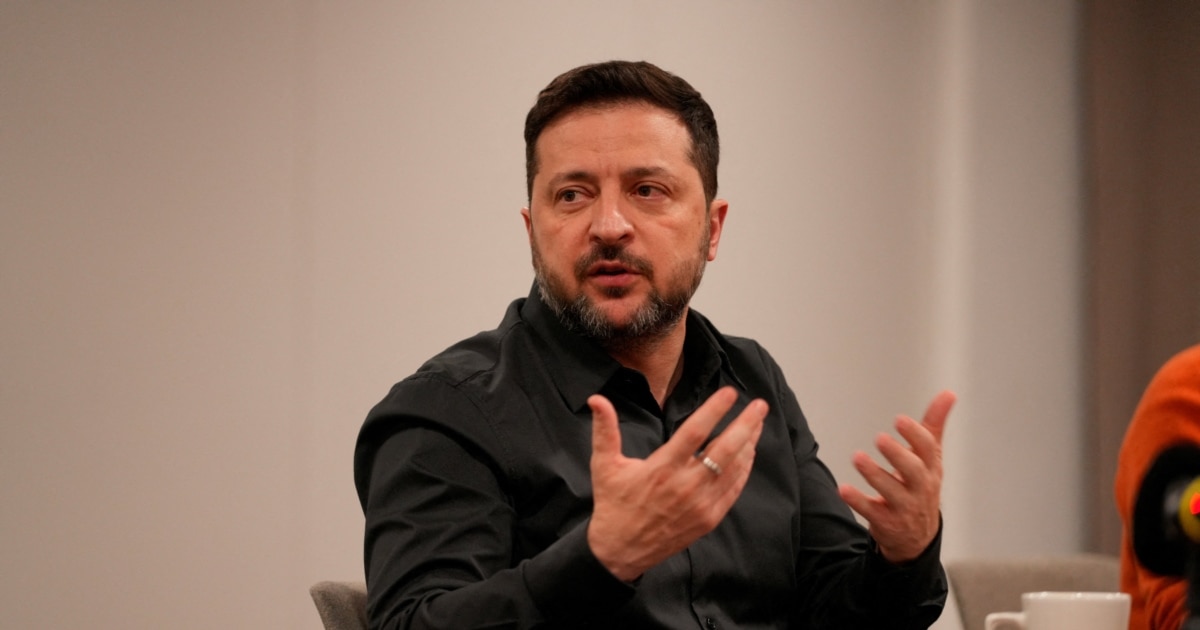
Ukrainian President Volodymyr Zelensky said on November 13 that negotiators from the United States raised a sensitive proposal: whether Ukraine would withdraw its remaining forces from the Donbas in exchange for NATO membership. Speaking to journalists, Zelensky described the question as having been posed by American representatives and said it was the first time such an idea had been tabled in talks he was aware of.
"The Americans asked: Would Ukraine withdraw from Donbas if [Ukraine] becomes a member of NATO?" Zelensky said. He stressed that Ukraine rejects in principle the surrender of its territory but indicated Kyiv could consider presenting to the Ukrainian public a comprehensive package of security guarantees if Washington and other NATO partners could confirm concrete assurances. Zelensky said any such option would require detailed proposals that are not yet available, and that he is not in a position to make such a decision unilaterally.
Donbas, the eastern region that includes the administrative areas of Donetsk and Luhansk, has been a focal point of conflict since 2014 when Russia-backed separatists seized parts of the territory. Moscow expanded its control over large swaths of eastern and southern Ukraine after launching a full-scale invasion in 2022 and later proclaimed the annexation of Donetsk and Luhansk—moves widely rejected by Kyiv and most of the international community.
Zelensky made clear, in his remarks, that Ukraine would not recognise the occupied areas as Russian territory. He said Kyiv would weigh the advantages and disadvantages of any potential deal and present them to Ukrainian citizens, but he repeatedly underlined the need for specific, binding guarantees before considering territorial compromises.
The Ukrainian president’s comments followed a trilateral round of talks in Abu Dhabi on November 10 and 11 involving representatives from the United States, Russia and Ukraine. The diplomatic exchanges in the United Arab Emirates produced no substantive breakthrough toward ending the war, though the delegations agreed to begin preparations for a large prisoner exchange. In a separate sequence of meetings after the multilateral talks, U.S. envoys Jared Kushner and Steve Witkoff—who are acting as diplomatic representatives of former President Donald Trump—held separate meetings with both President Vladimir Putin and President Zelensky.
Washington has not publicly confirmed Zelensky’s account of the question posed by U.S. negotiators. Earlier in the conflict, some U.S. officials had said that formal NATO membership for Ukraine was not on the negotiating table but that Kyiv could be offered security guarantees comparable to those provided by alliance membership. Russia has consistently opposed Ukraine’s accession to NATO and has demanded that large areas of the Donetsk region be placed under Russian control as a precondition for ending the war—demands Kyiv rejects and that have been a major obstacle to any peace settlement.
Zelensky’s disclosure is significant because it illuminates the contours of diplomatic discussions at a critical juncture in a conflict approaching its fifth year. The prospect of trading territorial control for security guarantees and a path to alliance membership would raise profound legal, political and moral questions in Ukraine and among its partners. Any proposal that touches on the status of occupied territories could also intensify domestic debates in Kyiv, complicate relations with NATO allies and provoke a predictable backlash from Moscow. For now, Zelensky’s account remains a unilateral disclosure of what he says was raised by U.S. negotiators; Washington’s reaction has not been made public, and Ukrainian leaders say they would require concrete and binding guarantees before moving toward any agreement that affects Ukraine’s internationally recognised borders.
Radio Free Europe/Radio Liberty reported the remarks and the details of the Abu Dhabi meetings. The comments add to a string of high-stakes diplomatic engagements and underscore how unresolved questions over territory, security guarantees and alliance ties continue to shape the prospects for any negotiated end to the war.