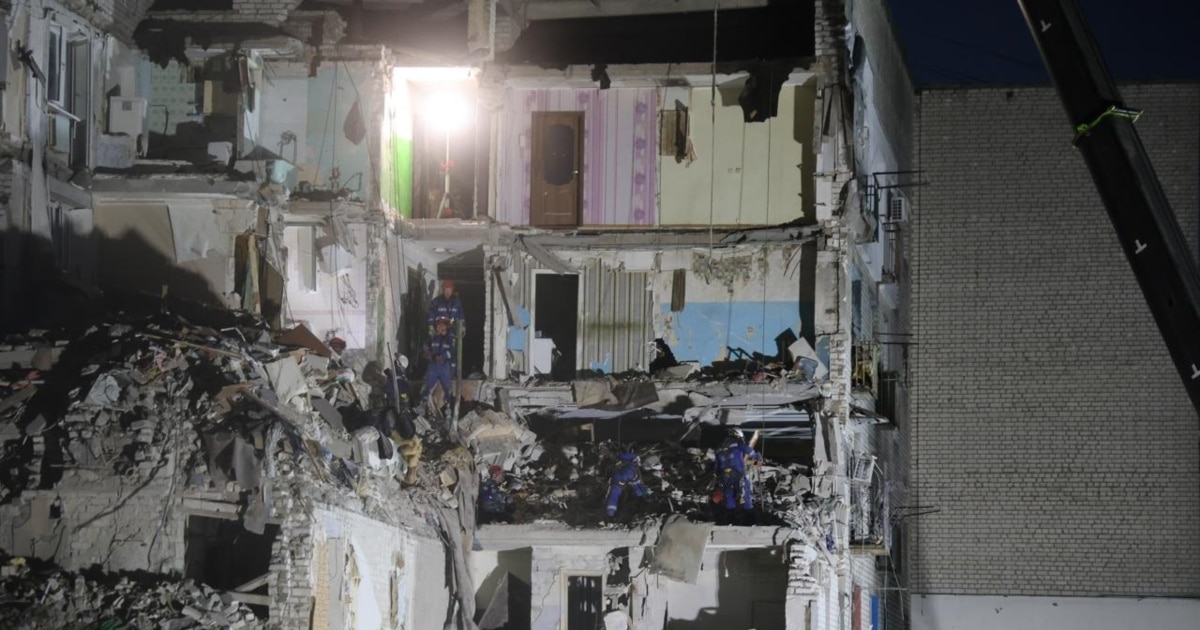
Zelensky: Emergency rescue operations continue in Kyiv after strikes; 10 people remain unreachable
President Volodymyr Zelensky said on July 3 that emergency rescuers were working at three strike sites in Kyiv after Russian attacks, with much of the debris cleared but 10 people still not responding to contact. He also reported multiple recent civilian casualties and injuries elsewhere in Ukraine and urged international partners to bolster air defenses to protect civilian infrastructure.
By Clémence Desjardins
876 views
Ukrainian President Volodymyr Zelensky said on July 3 that emergency rescue operations were continuing at three locations in Kyiv where Russian strikes hit, and that rescuers had already cleared a significant portion of the rubble. Despite that progress, Zelensky said, 10 people remained unreachable and that search efforts would continue "as long as necessary."
Zelensky provided an overview of other recent attacks across Ukraine, saying Russian forces had struck a garage cooperative in Kryvyi Rih where seven people were reported injured. He also said a nighttime strike on a private house in Kharkiv region wounded six people, three of them children. In Kherson, a doctor was killed in a strike on a regional hospital, and in Sumy region four people were killed, including a mother and her young daughter.
The Ukrainian president framed these strikes as part of a broader pattern of Russian attacks on civilian infrastructure. He urged international partners to provide more capable air and missile defenses—describing reliable protection of Ukraine’s skies as a prerequisite for effective diplomacy—and called specifically for support with anti-ballistic capabilities.
Russian forces have repeatedly attacked Ukrainian regions using a range of weapons, the report noted, including strike drones (бпЛА), missiles, KAB-guided bombs and multiple-launch rocket systems (MLRS). Ukrainian authorities and several international organizations have repeatedly qualified many of these strikes as war crimes, arguing that attacks on hospitals, schools, energy and water infrastructure and other civilian objects are deliberate and carry grave humanitarian consequences.
The article also summarized analyses by lawyers, genocide researchers and human rights activists who say that, during the full-scale war, Russia has committed a range of actions that could fall within definitions of genocidal conduct under the 1948 UN Genocide Convention. Those cited concerns include public statements by Russian officials denying Ukrainian nationhood and calling for the elimination of those who reject that position; targeted attacks on systems essential to civilian life aimed at depriving the population of electricity, heat, water and medical care; persecution and killings in occupied territories of people with pro‑Ukrainian positions; efforts to dismantle Ukrainian cultural institutions and education; and the deportation or forced transfer of children. The Genocide Convention obliges states to prevent and punish acts committed with intent to destroy, in whole or in part, a national, ethnical, racial or religious group.
Russian authorities deny they are deliberately targeting civilian infrastructure and reject accusations that their military operations amount to intentional strikes on civilian populations and services. The article noted this official Russian denial alongside the continuing pattern of reported strikes and their human toll.
The report also mentioned efforts by Russian regulators to restrict access to independent media: Roskomnadzor has sought to block the Krym.Realii website in Russia, while Radio Svoboda and Krym.Realii have been designated "undesirable" organisations in Russia. The outlet encouraged readers in restricted areas to use mirror sites and virtual private networks to access reporting.
The developments underscore ongoing civilian vulnerability across Ukrainian regions under regular Russian attack, the challenges faced by rescue teams at strike sites, and the legal and diplomatic debates about how to classify and respond to the strikes. Ukrainian appeals for stronger air defenses and international support continue amid urgent rescue and recovery operations and mounting human rights and accountability concerns.