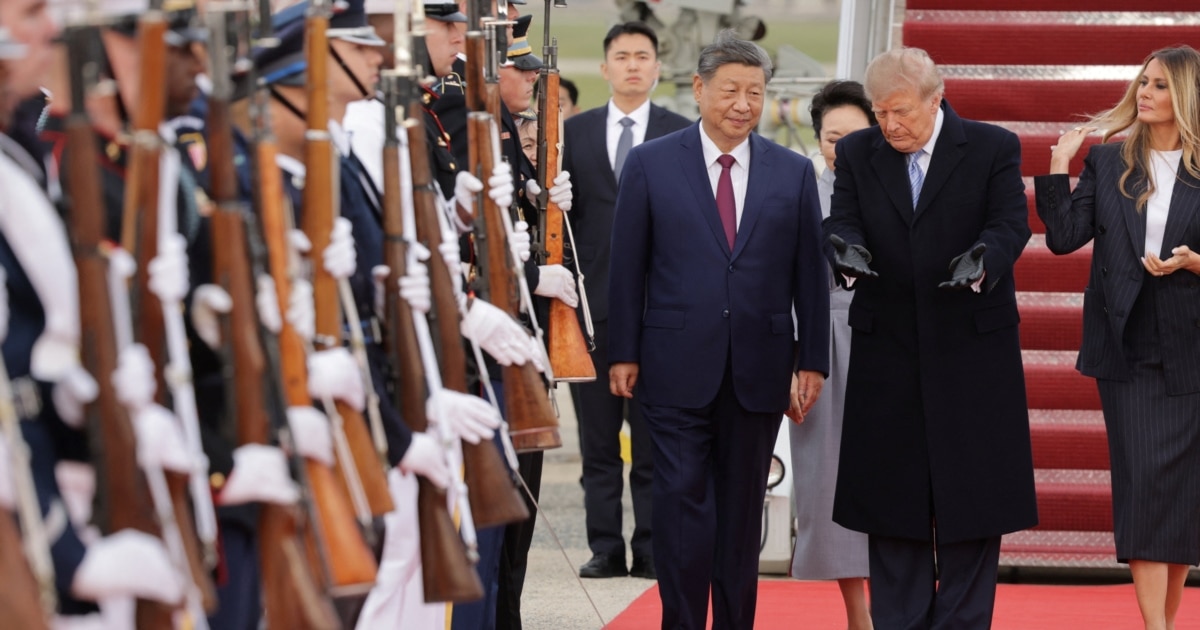
Xi Jinping Meets Donald Trump in Washington: 'Two Countries Should Be Partners, Not Rivals' — Talks Focus on Taiwan, Iran, Trade and Tech
Chinese President Xi Jinping met U.S. President Donald Trump at the White House on September 24 in a high-profile visit that addressed trade tensions, Taiwan's status, artificial intelligence and the ongoing war involving Iran. Xi urged rapid diplomatic de-escalation of the Iran conflict and called on the United States to exercise foresight and caution on Taiwan, while both sides extended a temporary tariff pause and engaged U.S. technology leaders.
By Clémence Desjardins
1,162 views
Chinese President Xi Jinping and U.S. President Donald Trump met at the White House on September 24 for talks that covered a wide range of strategic and economic issues, including trade, the future of Taiwan, developments in artificial intelligence, and the war involving Iran. The meeting — Xi’s first visit to Washington in more than a decade and the second face-to-face encounter between the two leaders this year — reflected efforts by both capitals to stabilize an often fraught bilateral relationship.
According to Chinese state media and reporting by international outlets, Xi used the meeting to press both the United States and Iran to resolve their differences through dialogue, urging that the conflict be reduced quickly and through negotiations. Xi also reportedly called for the prompt reopening of the Strait of Hormuz, a critical global oil transit route affected by regional tensions. These appeals underscore Beijing’s interest in avoiding wider regional violence and protecting energy and commercial flows.
Taiwan featured prominently in the discussions. Beijing regards the island as part of its territory and has repeatedly objected to U.S. arms sales to Taipei. Chinese state reports said Xi asked President Trump to approach the question of Taiwanese “independence” with foresight and prudence. Reuters cited anonymous sources who said that in earlier preparatory talks Beijing floated the idea of cooperating to pressure Iran in exchange for potential U.S. concessions on arms sales to Taiwan, though China has not officially confirmed those reports.
Economic and trade issues were a central practical focus. Senior economic officials from both countries agreed to extend a pause on the tit-for-tat tariff increases that had been implemented during an earlier phase of the U.S.–China trade war. U.S. officials announced after talks between the U.S. Treasury Secretary and China’s vice premier that the tariff ceasefire would be extended until January 20, staving off a scheduled resumption in November. The article noted that, at earlier points in the dispute, tariffs imposed by both sides had reached very high levels. U.S. officials also said Beijing had shown progress on purchase commitments, including for Boeing aircraft.
Xi arrived in the United States Thursday evening and was personally welcomed by President Trump at Joint Base Andrews — the first time in 11 years that a U.S. president met a visiting foreign leader at that base, a protocol move that underscored the ceremonial significance Trump afforded to the visit. The White House hosted an official state dinner that evening, inviting senior executives from major U.S. technology companies including Apple, Amazon, Alphabet, OpenAI, Tesla and NVIDIA. The inclusion of leading tech firms highlighted the strategic importance of advanced technologies and AI in U.S.–China competition and cooperation.
Beyond bilateral matters, the meeting took place against a backdrop of shifting regional alignments. The article referenced pressures felt by Central Asian states such as Kazakhstan amid great-power competition, and the broader geopolitical calculus involving Russia and the Shanghai Cooperation Organization. Analysts say outcomes from the summit could affect efforts to isolate or engage other regional actors and might influence how states balance ties with Washington and Beijing.
While both leaders framed parts of the meeting in conciliatory terms — Xi said he hoped relations between Beijing and Washington would become more stable and declared that "two countries should be partners, not rivals" — significant points of disagreement remain. Taiwan’s future, the potential transfer or restriction of advanced technologies, and differing approaches to the Iran conflict present continuing sources of tension. Observers will be watching whether the tariff extension and any tacit understandings on sensitive security issues translate into lasting de-escalation, or whether unresolved disputes re-emerge later this year.
The White House, Chinese official media and international news agencies provided the primary accounts of the summit. Reuters’ reporting on potential back-channel trade-offs was cited but not confirmed by Beijing’s official outlets, leaving some reported proposals unverified. As both capitals manage domestic political pressures and regional security risks, the bilateral meeting in Washington represented a high-stakes attempt to negotiate limits to competition while addressing immediate threats to regional peace and global commerce.