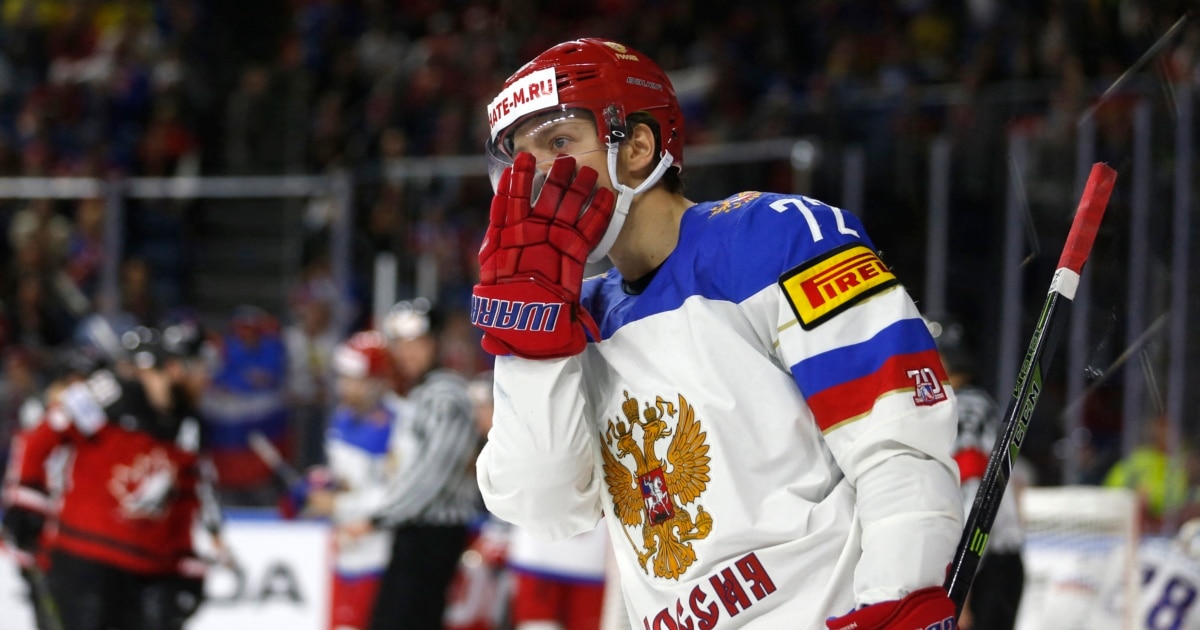
World Hockey in Peril as Nations and Sponsors Vow to Boycott Reinstated Russian Teams
A recent Court of Arbitration for Sport ruling ordering the International Ice Hockey Federation to reinstate Russian teams has triggered a cascade of boycotts by national federations, host nations and major sponsors. With tournaments imminent, Canada and several leading European hockey countries have said they will refuse to play Russia, citing the ongoing war in Ukraine and security and moral concerns.
By Alexander Walter
921 views
A decision by the Court of Arbitration for Sport (CAS) to require the International Ice Hockey Federation (IIHF) to reinstate Russian teams has provoked a rapid and politically charged backlash from a growing list of countries, national associations and corporate sponsors. The ruling, handed down on October 30, ordered Russia's return to international competition beginning with the World Junior Hockey Championships scheduled to take place in Canada next month. The IIHF said it disagreed with the court but would comply, while warning the reintegration would pose serious practical and security challenges.
The CAS concluded that the IIHF’s justifications for maintaining the exclusion — which had been in place since Russia launched its full-scale invasion of Ukraine in 2022 — “were not supported by sufficient evidence.” The court, however, offered no detailed roadmap for how to reintegrate Russian teams after more than two years of exclusion, a period during which international competition structures and political alignments have shifted.
Canada moved quickly to block any Russian or Belarusian participation on its territory. Ottawa’s announcement on November 3 signaled that Russian athletes would not be permitted to represent their countries in the Canadian-hosted tournament, a pivotal decision given that the World Junior championship would have been the first major event to include Russia since the 2022 Beijing Olympics.
At least six prominent European hockey nations — Sweden, the Czech Republic, Norway, Denmark, Latvia and Finland, the reigning men's world champions — have publicly said they will refuse to play against Russian teams despite the CAS ruling. The united front from countries that are among the sport’s traditional powers underscores the degree to which political and ethical concerns are driving sporting decisions in the current environment.
Germany’s ice hockey federation (DEB), which is due to host the 2027 World Championships, warned that the CAS decision “fundamentally changes the situation” for host nations. DEB Chairman Frank Lutz said allowing Russia to participate would have “serious consequences” in terms of security, politics and economics, and the federation is now analyzing its options. Several long-standing corporate sponsors of the men's world championship — including Sweden’s AJ Products, German workwear maker STRAUSS and Czech automaker Skoda Auto — have also said they will reassess their support if Russian teams are reinstated.
Ukraine reacted angrily to the CAS ruling. Ukrainian officials stressed that hundreds of the country’s athletes have been killed and many sports facilities destroyed since Russia’s invasion, and they warned against allowing Moscow to use sports participation to rehabilitate its international image. Ukraine’s foreign ministry official Andriy Sybiha said there should be “no impunity on ice,” arguing that Russia should not be allowed to hide its crimes behind a national jersey.
Moscow, by contrast, downplayed the pushback. Russian Sports Minister Mikhail Degtyarev characterized the international objections as limited in scope, saying rhetorically that the “world is much bigger than Scandinavia or the Baltic states.” The Kremlin’s stance and Degtyarev’s comments underscore how sports have become a proxy battleground for broader geopolitical tensions surrounding the war in Ukraine.
The IIHF, while indicating it will act in accordance with CAS, has highlighted numerous immediate obstacles to reinstating Russia. In a statement issued after the ruling, the federation cited visa and entry requirements, security provisions, logistical constraints and competition-format implications — all exacerbated by the short time frame before some scheduled events. The CAS ruling does not affect the Women's World Championships, which begin on November 6 in Denmark; Russian women’s teams will not take part in that tournament.
The clash between the court ruling and the political reactions of states and sponsors raises fundamental questions about the governance of international sport when a competing state is accused of grave violations on the battlefield. Russian men’s teams have been historically successful — winning five world championships and an Olympic gold since 1992, and following in the Soviet tradition of decades of dominance — but their potential return now faces sustained resistance rooted in accountability for the war in Ukraine and concerns about security, fairness and the integrity of international competition.
As the calendar for major tournaments approaches, organizers, national federations and sponsors must weigh legal obligations stemming from the CAS decision against security assessments, public opinion and solidarity with Ukraine. The standoff exposes a broader dilemma for international sport: whether and how to separate politics and human-rights considerations from athletic competition when allegations of mass violence and territorial aggression are at stake.