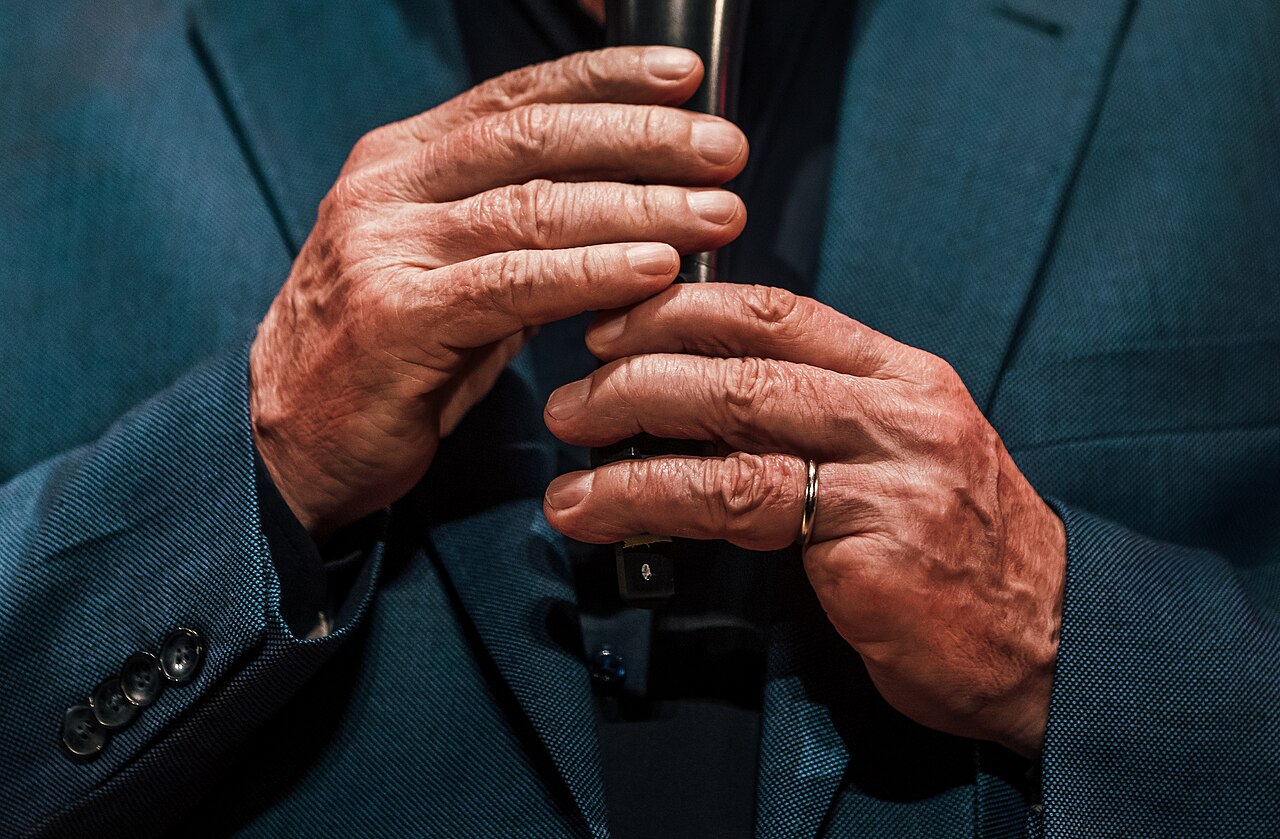
Working Man’s Hand | Lula’s re-election raises hope for social recovery in Brazil
Lula’s return to Brazil’s presidency has raised hopes of social recovery and reconciliation after years of political polarisation under Jair Bolsonaro. But deep-rooted inequalities affecting women, Black communities and low-income workers remain a major challenge, leaving Lula’s government under pressure to turn the optimism of his supporters into meaningful social change.
By Maryam Raz
1,119 views
The most iconic image from Brazil’s recent political turning point was not a campaign poster, but a simple image of a raised hand: the left hand of Luiz Inácio Lula da Silva (commonly referred to as Lula), a centre-left politician from the Workers’ Party (PT) and the winner of the election, raised high up as a sign of victory. He previously served as president from 2003 to 2011, and his previous governments emphasized fighting poverty and hunger and improving access to education. Lula was a metalworker in the past and lost his pinky finger in an accident in a factory decades ago. For his supporters that missing finger and the visibly hardened palm of a working man represent the ultimate symbol of the working class, a literal imprint of factory labour that found its way into the highest office of the country. Poetry, songs and symbolic imagery have long been part of the cultural expression of left-wing movements in Latin America.
The streets of major urban centres across Brazil are flooded with crowds. Among people celebrating in the streets of Brazil, there are those holding rainbow flags in support of LGBTQ+ rights and human rights, carrying slogans with phrases against climate change and deforestation. There are women, children, Black and white citizens, those dressed in indigenous costumes of the Amazon, many proudly making an L sign with their thumb and index finger in support of Lula.
That victory celebration followed the announcement of the second round of the presidential election in Brazil. The first round of the election was led by Lula’s opponent, Flávio Bolsonaro, leading into a tightly contested runoff where Lula ultimately secured victory, leaving Brazil’s political division, at least from an outsider perspective, significantly polarized.
This political division was of use particularly to far-right politician Jair Bolsonaro, Flávio’s father, a former military captain who counted on a wave of nationalist, conservative, and anti-establishment anger to win the presidency and rule the country. Bolsonaro’s governance relied notably on cultural polarization, a populist appeal that fractured Brazilian society. While he presented himself as a figure who was determined to fight corruption, his administration was immersed in controversies and economic tensions; and most importantly his period in office alienated minority groups, environmental advocates, and working-class unions who felt directly targeted by his policies.
During the COVID-19 outbreak, Jair Bolsonaro was among the heads of state who downplayed the pandemic. The human cost of his decisions during the pandemic made the structural disparities in Brazil even more evident. While wealthier Brazilians could isolate or access private healthcare, low-income workers, Black communities, and indigenous populations in regions like the Amazon suffered significantly. Public health experts and human rights organizations noted that Bolsonaro’s rhetoric and institutional inaction, ranging from his refusal to back safety mandates to the weakening of health protections for Amazonian tribes, accelerated fatalities among populations already struggling with poverty and a lack of basic infrastructure. Brazil recorded hundreds of thousands of deaths during the pandemic and Jair Bolsonaro remained in power from 2019 to 2022. It is worth noting that the deep-rooted disparities are ongoing structural problems in Brazil, though they worsened significantly during the Bolsonaro administration.
In January 2023, Bolsonaro’s supporters stormed Brazil’s Congress, the Supreme Court and the presidential palace, rejecting his 2022 election defeat to Lula, Brazil’s elected president at the time. Bolsonaro left Brazil for the United States shortly before Lula’s inauguration and was there when this took place. Nonetheless, in 2025, Bolsonaro was sentenced to 27 years and 3 months in prison for the role he played in plotting to overturn the presidential election. He is currently under house arrest.
Understanding the history of Flávio Bolsonaro’s father is crucial in reading Brazil’s current social state because Jair Bolsonaro’s eldest son is also a far-right politician. He has conservative positions and has raised concerns about social progress and women’s rights just like his father. Flávio also sympathizes openly with the Trump administration, particularly when referring to national security. His approach towards the U.S. was so concerning that many read his policies as an open door to U.S. interference in Brazil’s independence. Following the decisive October election, Flávio Bolsonaro was ordered by a court to hand over his passports because of the ongoing investigation over his possible involvement in money laundering. Nonetheless, he left Brazil and declared that he refused to acknowledge the results of the presidential election.
All this makes Lula’s return to power something more than a simple electoral victory. This period of political change in Brazil has ignited hope for social reconciliation. Having a working man in the country’s highest office symbolizes hope for healing deep civic fractures and addressing severe social inequalities that disproportionately affect marginalized communities, particularly women and low-income workers. The human narrative of a worker’s hand raised in victory represents what human and women’s rights activists are hoping for Brazil; that is the new government’s delivery of social progress and recovery. And all this positive attitude and hope for a better future, encouraged by songs, smiling people and beautiful pictures are merely declarations for change and improvement. What looks like celebration could actually be read as expressing expectations.
But structural inequality issues in Brazil are deep and extremely old. According to data compiled by the Brazilian Institute of Geography and Statistics (IBGE), poverty rates are particularly high in the North and Northeast compared with the wealthier southern states. This is not merely a geographic division as race and gender also play a highly impactful role in Brazil’s layered marginalization. IBGE data indicates that poverty rates among Black and mixed-race Brazilians are higher than those of white Brazilians. Women, particularly Black women, suffer these socioeconomic hurdles significantly, facing wider gender wage gaps and higher rates of informal and precarious labor. For all these citizens, the true test of Brazil’s political transition under Lula is whether government policies can dismantle these disparities and offer a solution to these old and long-suffered social inequalities.