Will Germany Turn Toward Russia Instead of Supporting Ukraine? The Significance of the AfD’s New Electoral Triumph
In Mecklenburg–Western Pomerania on September 20, the far-right Alternative for Germany (AfD) won a landslide regional victory, highlighting a deepening crisis for Chancellor Friedrich Merz’s CDU and raising worries about the future of German support for Ukraine. Analysts say the results reflect economic discontent, lingering pro-Russian sentiment in parts of eastern Germany, and could reshape debates over sanctions, energy policy and Germany’s role in Europe.
By Christopher Manley
820 views
On September 20, state elections in Mecklenburg–Western Pomerania produced a dramatic upset: the far-right Alternative for Germany (AfD) finished first with 38.3% of the vote, narrowly defeating the Social Democratic Party (SPD), which took 35.5%. The result marks a humiliating setback for Chancellor Friedrich Merz’s Christian Democratic Union (CDU), which failed to cross the five-percent threshold to enter the state parliament by only 0.1 percentage point — the first time in postwar German history that the CDU has been shut out of a state legislature.
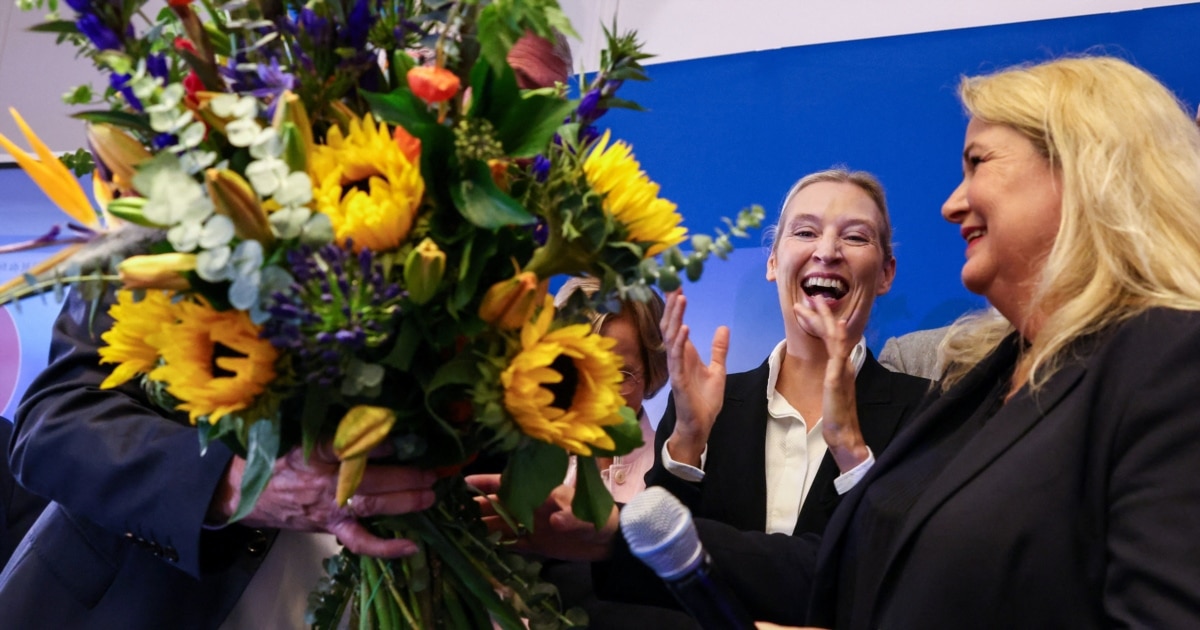
AfD candidate Leif-Erik Holm hailed the result in victory remarks, declaring that people wanted change and entrusting his party with governance in the region. Yet other parties have been clear that they will not form a coalition with the AfD, leaving the new regional dynamics complicated even as the party celebrates a second major state victory this year after its earlier success in Saxony-Anhalt.
Chancellor Merz described the CDU’s performance as a "catastrophe" and warned that the result reflected an erosion of public trust in democratic institutions. He framed urgent reform as an antidote to rising authoritarian tendencies on both the left and the right, saying reforms were necessary to counter what he called an "authoritarian poison" spreading through society. Despite intense discussion in German media and politics about his future, Merz insisted he would remain in office and take responsibility for pursuing the reforms he says are needed to restore confidence.
Analysts say the AfD’s gains are driven in large part by economic frustration. Markus Tsiner, a senior analyst at the German Marshall Fund, told Radio Free Europe/Radio Liberty that many voters in eastern Germany remain attached to the idea that closer ties with Russia could revive economic advantages such as cheaper energy supplies. Local voters interviewed at polling stations complained about access to affordable housing, stagnant wages and cuts to social services — grievances that helped push some to vote for radical alternatives.
The electoral shift has clear implications for Germany’s posture toward Ukraine and Russia. The AfD explicitly calls for ending weapons deliveries to Ukraine, opposes Ukrainian membership in NATO and the EU, and advocates revoking sanctions on Russia while restoring full trade and gas supplies, including through repaired Nord Stream pipelines. AfD co-leader Tino Chrupalla has urged a renewed debate about energy relations with Russia and said Germany should cultivate "good relations with all great powers," including Moscow.
Reports from Reuters earlier this month, citing unnamed sources, suggested that AfD leaders may be preparing talks as early as 2027 with Kirill Dmitriev, a close ally of President Vladimir Putin, about the possible resumption of Russian gas supplies. AfD figures and Dmitriev did not comment publicly on those reports. The Kremlin publicly called the AfD’s success "natural," with spokesman Dmitry Peskov arguing that Germans had sought an alternative after shifting away from cheaper Russian gas.
Despite the AfD surge, experts caution that translating state-level victories into immediate federal policy changes is neither automatic nor guaranteed. Polls by INSA now put the AfD at 29% nationally, ahead of Merz’s CDU/CSU bloc at 20%, yet the next federal elections are not until 2029. Tsiner told Radio Free Europe/Radio Liberty that while short-term support for Ukraine from Germany is unlikely to evaporate quickly — and the CDU has been a consistent backer — the long-term picture is murkier. If the domestic economic situation improves, support for extreme parties could wane; conversely, sustained dissatisfaction could increase pressure to redirect public spending away from foreign aid toward social programs.
For Ukraine, the rise of the AfD in German state politics is a worrying signal. Germany remains a leading donor of military aid to Kyiv, and any significant shift in Berlin toward détente with Moscow or toward reducing support would have strategic consequences for Ukraine’s security. For observers of democratic resilience, the elections underline how economic grievances, regional histories and geopolitical narratives can combine to challenge mainstream parties and place pressure on the institutions that underpin European responses to aggression. The immediate outcome is political uncertainty in Germany; the longer-term implications for Ukraine and for Europe's unity on sanctions and security policy remain a key concern.