Why France’s presidential election decides almost everything
As France heads toward a 2027 election Macron cannot contest, this piece explains why the presidency concentrates so much power that a deeply divided electorate can still hand one person extraordinary legitimacy, and the whole political system revolves around that single choice.
By Martin Bertrand
1,120 views
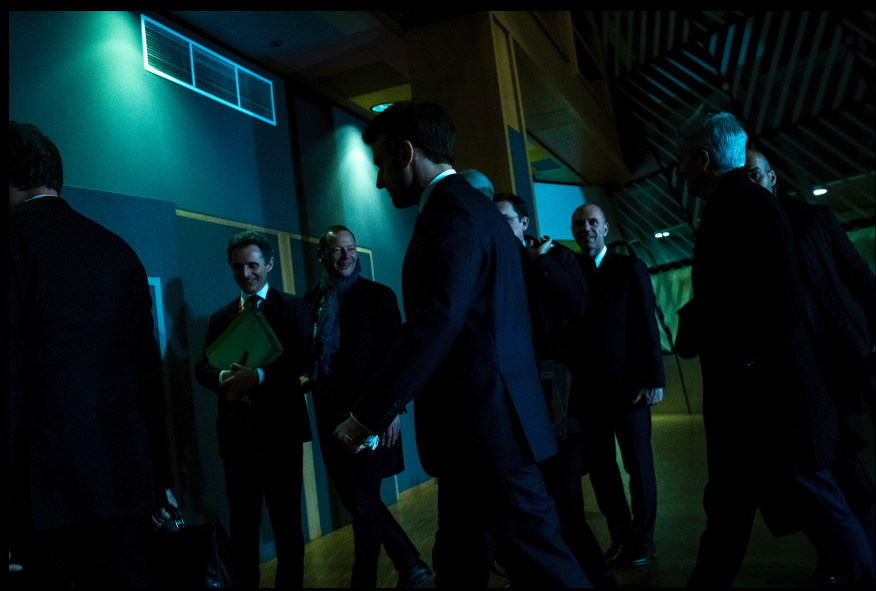
Photo: President of France Emmanuel Macron at the summit of Heads of State and Government of the European Union at the European Council in Brussels, Belgium, 20 March 2025.
France has a Parliament, a prime minister and political parties competing for seats just like its European neighbours. Yet every five years, almost the entire political system starts revolving around one person. That is the first thing an international reader needs to understand about 2027: France is not simply choosing a ceremonial head of state. It is choosing the person around whom much of the country’s political life can be organised.
The president appoints the prime minister, chairs the Council of Ministers, can dissolve the National Assembly, call certain referendums, make senior state appointments and serves as commander in chief of the armed forces.
France is also represented at the European Council by its president, while Germany sends its chancellor and Italy or Spain their prime ministers. Yet the Constitution gives the government its own legitimacy: Article 20 states that it “determines and conducts the policy of the Nation” and is accountable to Parliament. The Fifth Republic is therefore a hybrid system, neither fully presidential nor fully parliamentary. In practice, however, the balance changes dramatically depending on whether the president controls the National Assembly.
It was largely built that way on purpose. The Fourth Republic gave Parliament much greater weight but suffered from chronic governmental instability, while France was going through decolonisation and the Algerian War. Charles de Gaulle returned to power in 1958 with something few politicians could ever reproduce: the authority of the wartime leader of Free France. The new Constitution strengthened the executive. Michel Debré, one of its principal architects, famously described the president as the “keystone” of the new parliamentary system.
That concentration of power was controversial almost immediately. François Mitterrand, then one of de Gaulle’s fiercest opponents, published Le Coup d’État permanent in 1964, attacking what he saw as the transformation of the new institutions into a system of personal power. The contradiction that followed is particularly revealing. Mitterrand became president in 1981, remained at the Élysée for fourteen years, longer than any other president of the Fifth Republic, and did not dismantle the powers he had spent years criticising. In 1984, asked whether he felt like a monarch, he rejected the word but acknowledged that the powers of the French president were “very great” and greater than those held by heads of state in other democracies. “I accommodate myself to them,” he said of the institutions.
The comparison with monarchy has never completely disappeared from French political culture. The argument is not simply that France somehow misses its kings, but that its political history repeatedly returns to the question of incarnation and authority. Can such a centralised country, with its tradition of revolt and political division, really be governed without a powerful figure at the top? Emmanuel Macron himself gave an unusually explicit answer before becoming president. In 2015, he called the “figure of the king” the great absence in French politics and argued that the Revolution had left an emotional and symbolic void later occupied by figures such as Napoleon and de Gaulle.
Direct presidential elections gave this conception of authority a democratic instrument. De Gaulle was initially elected in 1958 by an electoral college. Four years later, he submitted direct election by universal suffrage to a referendum. On 28 October 1962, 62.25 percent voted yes. The first presidential election by direct universal suffrage of the Fifth Republic followed in 1965. It is an important distinction: France had already directly elected Louis-Napoléon Bonaparte president in 1848. What changed in the 1960s was the balance inside the new Republic. From then on, the president could claim a personal mandate directly from the entire electorate.
De Gaulle took that legitimacy seriously. In 1969, he tied his political future to a referendum on Senate reform and regionalisation. The proposal was rejected and he resigned the following day. His successors did not all share that conception of presidential responsibility. Mitterrand, for example, remained in office after losing the legislative elections of 1986 and 1993, but accepted the parliamentary verdict by appointing prime ministers from the opposing majority. Jacques Chirac did the same after dissolving the National Assembly in 1997 and losing the election he had called. He then spent five years in cohabitation with Socialist prime minister Lionel Jospin.
The first cohabitation produced one of the great moments of French political theatre. During the 1988 presidential debate, Chirac, still Mitterrand’s prime minister but now running against him, insisted that they were simply “two candidates, on equal terms”. Mitterrand replied: “You are absolutely right, Mr Prime Minister.” The punchline endured because everybody understood the institutional reality behind it: Mitterrand was president, but after losing the legislative elections he had been forced to share executive power with his principal political opponent.
That balance became harder to reproduce after the presidential term was reduced from seven to five years in 2000 and legislative elections began to follow the presidential vote. From 2002 to 2017, the mechanism worked almost perfectly: voters elected a president, then gave that president a parliamentary majority a few weeks later. The legislative election increasingly became a second act of the presidential contest, reinforcing what constitutional scholars describe as the presidentialisation of the regime. But the pattern is not automatic. Macron’s coalition lost its absolute majority in 2022, and the fragmented Assembly produced by the 2024 elections has made the limits of presidential power much more visible.
The 2017 presidential election nevertheless shows what makes the system so striking. Macron received 24.01 percent in the first round, Marine Le Pen 21.30 percent, François Fillon 20.01 percent and Jean-Luc Mélenchon 19.58 percent. Four radically different political choices were separated by less than five percentage points. In the street, the electorate was divided almost four ways. Two weeks later, one of those candidates was president.
That is the French paradox. A deeply fragmented electorate can still place extraordinary political legitimacy in the hands of one individual. Parliament can restrict that power, as recent years have shown, and cohabitation remains constitutionally possible. But the entire system still starts with the presidential contest. In 2027, Emmanuel Macron cannot seek a third consecutive term. France will therefore choose a new occupant of the Élysée, and with that choice potentially a new political direction for France and a different voice for one of the European Union’s most influential states.