Who Controls the French Media Ahead of the 2027 Presidential Election?
By Martin Bertrand
1,044 views
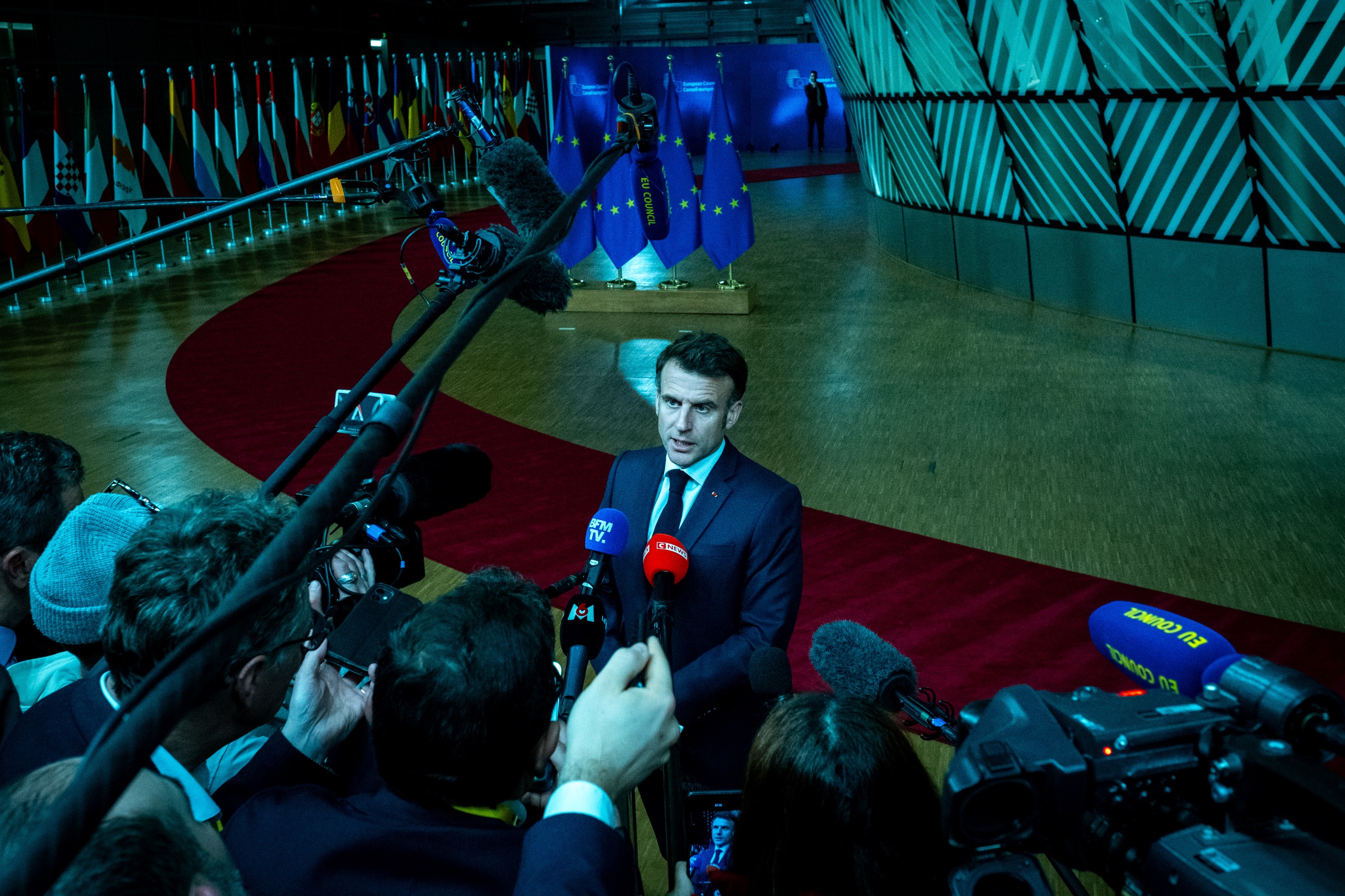
Photo: President of France Emmanuel Macron at the summit of Heads of State and Government of the European Union at the European Council in Brussels in Belgium on 20th of March 2025.
As France approaches its 2027 presidential election, millions of voters will encounter political arguments through television debates, newspaper headlines and social media. Yet much of the country's private news industry is owned by a relatively small number of billionaires whose main businesses extend far beyond journalism. Their power raises a basic democratic question: who decides what the French public will hear about their society and the election campaign?
France's concentration of media ownership is well documented. The 2025 Euromedia Ownership Monitor describes a market increasingly shaped by acquisitions by major industrial groups. The Bolloré family's media interests include CNews, Europe 1 and Le Journal du Dimanche. Bernard Arnault's LVMH group owns Les Echos, Le Parisien and Paris Match. Rodolphe Saadé's shipping group CMA CGM controls BFM TV, RMC and La Provence, while the Dassault family owns Le Figaro and Bouygues controls TF1.
These owners have commercial interests in sectors affected by government regulation, taxation, public contracts and economic policy. That does not mean every newsroom is instructed how to report. But a proprietor can influence a publication without dictating individual articles: choosing an editor, approving budgets or setting strategic priorities can reshape its journalism.
The crisis at Le Journal du Dimanche in 2023 showed how consequential a management appointment can become. On 23 June, the paper's owner, Lagardère, appointed Geoffroy Lejeune, formerly editor of the far-right magazine Valeurs actuelles, to lead the weekly's newsroom. The decision came as Lagardère was preparing to be acquired by Vivendi, then controlled by Vincent Bolloré. Journalists feared a sharp change in editorial direction and went on strike. For forty days, the newspaper did not appear. The newsroom's protest ended on 1 August without securing Lejeune's removal. An agreement provided departure arrangements for employees who wished to leave, and at least sixty journalists reportedly expressed that intention. The episode demonstrated something tangible: management could appoint an editorial leader despite overwhelming newsroom opposition, with consequences for the people producing the paper.
Helmut Brandstätter, an Austrian member of the European Parliament and former editorin-chief of Kurier, sees precisely this vulnerability. "When a handful of owners control much of the media, they can shape which issues get attention and whose voices are heard," he told us. "The real test of editorial independence is whether journalists can publish a story that goes against their owner's interests."
Gaspard Gantzer, who worked as communications adviser to President François Hollande, offers a historical qualification. Industrial groups already owned major French media when he was at the Élysée, but he says he did not personally perceive pressure on newsrooms. "I have the impression, perhaps wrongly, that this has changed since 2017," he said, singling out the Canal+ channels, particularly CNews.
The channel has also attracted regulatory scrutiny. In June 2026, France's audiovisual regulator, Arcom, formally ordered CNews to comply with its pluralism obligations after reviewing 168 hours of programming from March 2025. It found a persistent imbalance in the expression of viewpoints, particularly in debates on politics, security and immigration. Arcom said that presenters' dominant positions, recurring like-minded commentators and the prominence of opinion over factual reporting contributed to the imbalance.
For Gantzer, the broader development is an increasingly opinion-driven news environment, though he stresses that continuous-news channels are not identical. He sees more reporting on BFM TV, more international coverage on LCI, more politics on Franceinfo and more debate on CNews. Greater editorialisation is not necessarily objectionable, he argues, provided audiences recognise the kind of programme they are watching.
The distinction becomes critical during an election. Repeated commentary can give a familiar pundit's assessment the appearance of expertise, while deciding which subjects deserve airtime can make some political concerns seem central and others marginal. The abundance of discussion does not necessarily mean a diversity of evidence or perspectives.
Alternatives remain. Subscription-funded Mediapart, the investigative and satirical weekly Le Canard enchaîné, and newer independent outlets such as Blast provide journalism outside the major industrial groups. Public broadcasters offer another source of information. Gantzer considers these counterweights essential. Helmut Brandstätter argues for stronger protections, including transparent public funding and editorial statutes for newsrooms. "Public money must never become a means of buying favourable coverage," he said.
The question for 2027 is therefore not whether French media should agree on politics. It is whether journalists can investigate powerful interests, including those of their own owners, and whether voters can distinguish independently established facts from political opinions repeated across influential platforms.