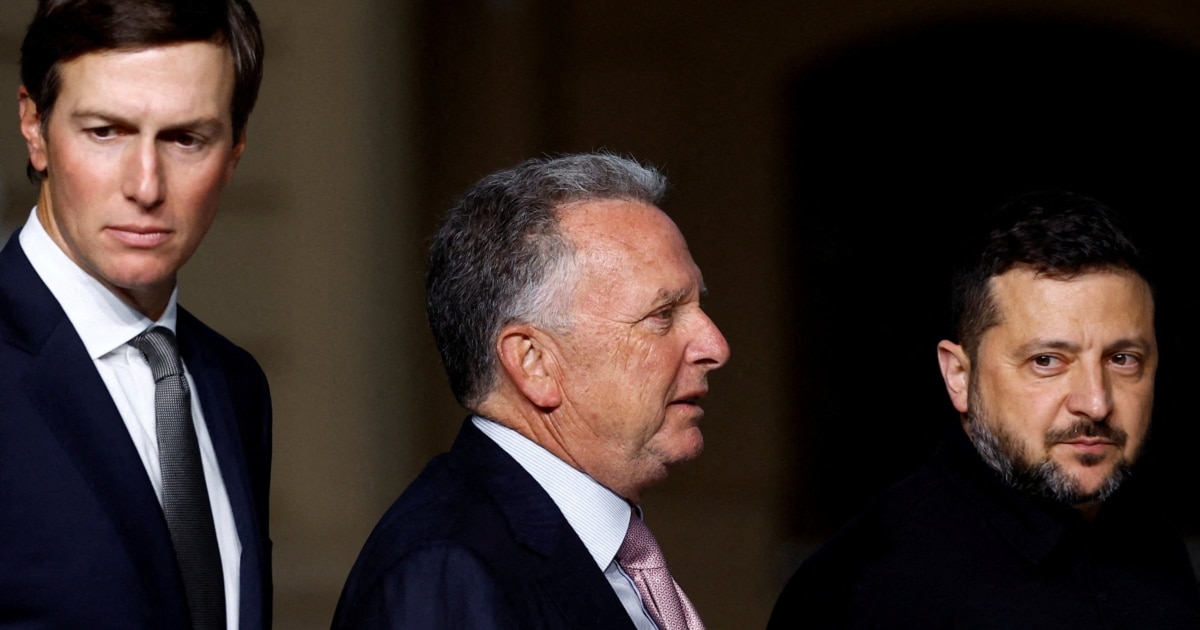
White House unveils broad European security framework tied to Ukraine guarantees ahead of talks with Russia
The White House has presented a wide-ranging plan to link security assurances for Ukraine with a new European security architecture, outlining mechanisms for permanent consultations, crisis communications, military transparency and reciprocal measures to reduce the risk of escalation. The initiative, shared publicly by presidential adviser Jared Kushner ahead of planned three-way talks in Abu Dhabi, has prompted concern among Russia experts who warn that negotiating NATO positions or Europe’s security arrangements could create a dangerous precedent.
By Clémence Desjardins
885 views
The White House on November 5 unveiled a proposed framework that would tie security guarantees for Ukraine to a broader, long-term European security architecture, setting out mechanisms intended to reduce risks of escalation and provide for post-conflict stability. The initiative, disclosed publicly by President Donald Trump’s senior adviser Jared Kushner on social media, comes as the administration prepares for three-way talks in Abu Dhabi next week involving the United States, Ukraine and Russia.
According to Kushner’s outline, the plan includes a range of measures aimed at institutionalising crisis management and reducing the chance of military escalation. These measures include permanent security consultations among concerned parties, the creation of crisis communications mechanisms, increased transparency in military activities, and reciprocal steps designed to lower the risk of unintended confrontation. Kushner said the initiative envisages a long-term agreement on security and stability in Europe.
Kushner emphasized that the proposal would be grounded in respect for each country’s sovereignty and territorial integrity. He stated that no state would be able to veto another country’s security choices or alliances, and that NATO would retain its central role in the collective defence of Europe. He also said that consultations on the plan had preceded the public announcement, including meetings in Brussels with representatives of Ukraine, NATO and other European officials.
The White House announcement followed a meeting at the White House on the same day between President Trump and Kirill Dmitriev, the Russian president’s special representative. Mr. Trump signalled optimism about a potential deal, describing a forthcoming agreement as “big and magnificent” and suggesting it would cover more than Ukraine alone. Kushner said the negotiations would continue in a format he referred to as “Shell Bay,” and that Russia would be included in the peace process.
The proposal has provoked scepticism among specialists on Russia and European security. Aleks Raufoglu, the Washington correspondent for AzadliqRadio, reported that linking the security guarantees for Ukraine to a broader European security framework has raised questions among experts about the initiative’s scope and potential implications for NATO.
Glen Howard, president of the Saratoga Foundation and a long-time analyst of Russian strategic affairs, told AzadliqRadio that the plan’s reliance on a wider European security system was particularly troubling. Howard recalled remarks by Kremlin foreign-policy adviser Yuri Ushakov, who last week called for NATO to return to its pre-1997 posture — effectively urging a rollback of the alliance’s eastward enlargement. "Since when does Russia have a say over NATO’s future and the abolition of its eastern flank?" Howard asked, warning that placing NATO’s military positions on the negotiating table could establish a dangerous precedent for both Russia and future U.S. administrations.
John Herbst, a former U.S. ambassador to Ukraine and director of the Eurasia Center at the Atlantic Council, also expressed caution. Herbst said European participation in the process could help sustain support for Ukraine and potentially encourage a firmer U.S. stance, but he stressed that Europe’s leverage over the Trump administration is limited compared with Moscow’s levers of influence. He questioned why Washington was focusing on post-war security mechanisms before securing from Russia a clear commitment to halt fighting. "A genuine commitment by Russia to stop hostilities would be real progress," Herbst said, but he added that such an outcome appears unlikely. He warned that President Vladimir Putin still seeks comprehensive control over Ukraine, while suggesting that President Trump is pressing Kyiv to consider concessions over parts of the Donbas region.
The White House’s announcement marks a new diplomatic push by the Trump administration to reframe discussions about Ukraine within a wider European security dialogue. That approach aims to bring multiple actors to the table and to institutionalise measures intended to lower the risk of renewed hostilities. But the response from regional and Russia experts indicates deep unease: negotiating aspects of NATO’s posture or broader European security arrangements in parallel with discussions aimed at ending the war in Ukraine could carry profound strategic consequences and set precedents that reverberate across the continent.
As the Abu Dhabi talks approach, officials and analysts will be watching to see whether Moscow will make any binding commitments to cease hostilities and what, if any, concrete mechanisms for oversight and enforcement the White House proposal would include. The debate over sequencing — whether to secure a cessation of fighting before negotiating long-term security arrangements, or to pursue both simultaneously — is likely to shape reactions in Kyiv, Brussels and capitals across Europe.