What Democrats’ Control of Congress Could Mean for Kosovo-Serbia Relations
With Democrats winning control of both houses of the U.S. Congress, American experts say Capitol Hill may scrutinize the Trump administration's approach to Serbia more closely and press for coordinated action with European partners. While they do not expect an immediate major diplomatic initiative, analysts say the change creates opportunities — and risks — that Kosovo could shape through its own policies toward the Serb community and by strengthening ties with U.S. lawmakers.
By Doruntina Baftiu
1,064 views
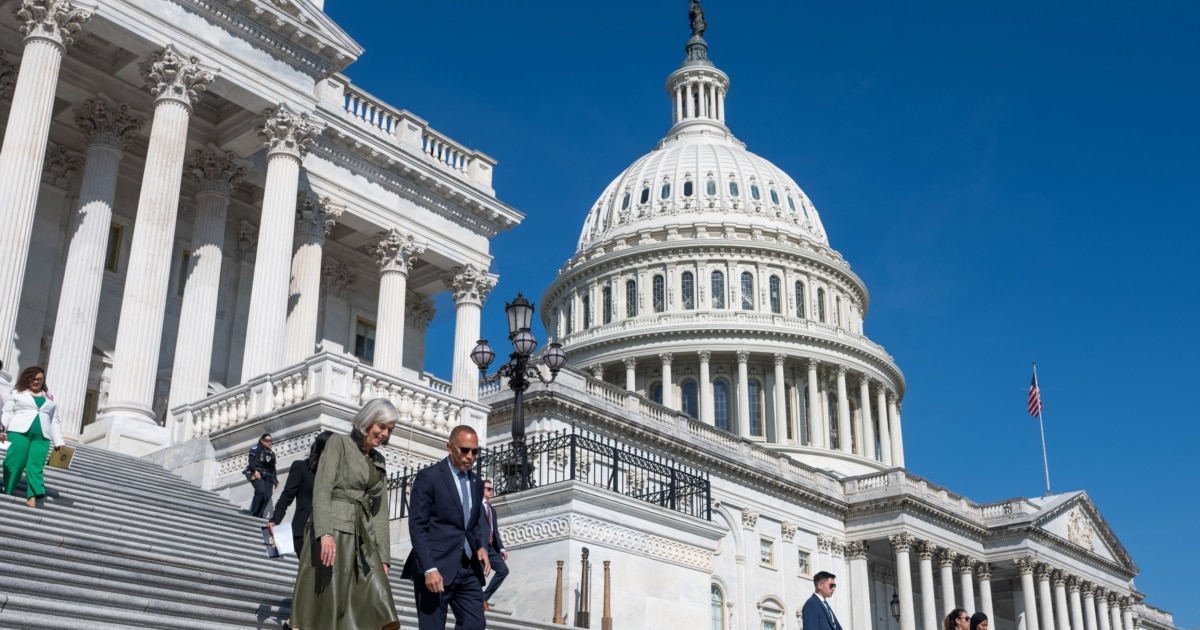
The Democratic Party's victories in the U.S. midterm elections and its control of both the House of Representatives and the Senate have prompted questions about how U.S. foreign policy toward the Western Balkans might change — and what that could mean for Kosovo. American experts interviewed by Radio Free Europe/Radio Liberty say Congress under Democratic leadership is likely to increase oversight of the Trump administration's dealings with Serbia and to pay closer attention to developments in Kosovo-Serbia relations. At the same time, they warn that any immediate, large-scale diplomatic initiative is unlikely.
Robin Brooks, a former director for Central Europe and the Balkans at the U.S. National Security Council, noted that Kosovo remains an important U.S. partner even if it is not at the forefront of most American lawmakers' daily concerns. She said the new Congress — which begins work in January — will initially be preoccupied with domestic issues such as high prices and drug and fuel costs. Nevertheless, she explained, congressional scrutiny can extend to foreign-policy decisions, particularly where administration actions appear to conflict with U.S. laws, values, or norms.
That oversight, Brooks said, could touch on how Washington asks other countries to cooperate on issues such as deportations to the United States, and could translate into closer examination of dealings between the U.S. administration and Belgrade. She urged Kosovo not to tether its foreign-policy ambitions entirely to one administration, arguing that efforts to win favor with the current U.S. administration had previously led Kosovo into initiatives that offered limited long-term benefit.
Edward P. Joseph, a professor at Johns Hopkins University, predicted that a Congress controlled by Democrats would apply increased pressure to reassess the Trump administration's policy toward Serbia. Joseph said recent political shifts in Serbia — including the rise of the Student List in local elections that ended 14 years of rule by President Aleksandar Vučić’s Serbian Progressive Party — could further focus U.S. attention on the region and prompt Washington to seek deeper engagement to stabilize relations between Kosovo and Serbia.
Joseph urged Kosovo’s prime minister, Albin Kurti, to seize a rare window of opportunity to change his approach toward the Serb community in Kosovo and toward Belgrade. He warned that if Kosovo continues with unilateral measures in northern areas without coordination with Western allies, it will face intensified criticism and pressure from Washington and Brussels.
Daniel Fried, a former U.S. ambassador and senior State Department official, echoed the view that a change in American congressional leadership could create space for "more creative diplomacy" in the region and for closer U.S.-European cooperation aimed at encouraging Serbia toward European integration. But he cautioned against expecting sweeping new initiatives in the near term.
Both Fried and Brooks emphasized that Kosovo can act to shape its own trajectory by strengthening democratic institutions, the rule of law, and its relationships with lawmakers from both U.S. parties. Brooks pointed out one concrete area where U.S. legislators might help: persuading five European Union countries that do not recognize Kosovo — Spain, Greece, Romania, Cyprus, and Slovakia — to reconsider their positions. Achieving such recognition, she suggested, would significantly bolster Kosovo’s international standing.
In short, analysts see the Democratic takeover of Congress as likely to increase U.S. scrutiny of Balkan policy, including questions about Washington’s engagement with Belgrade and Pristina. That scrutiny could create incentives for Kosovo to pursue more inclusive policies toward its Serb minority and to deepen engagement with transatlantic partners. But experts stress patience: immediate breakthroughs are unlikely, and much will depend on the ability of Kosovo’s leaders to use the moment to propose credible, cooperative policies rather than unilateral measures that could heighten tensions.