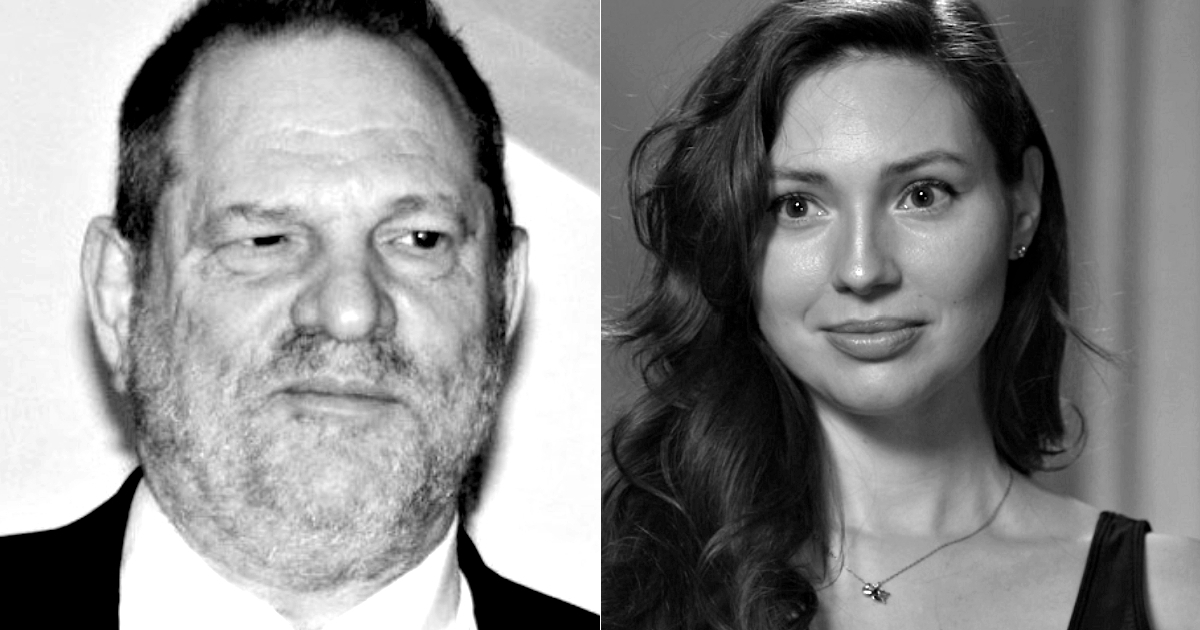
Weinstein Retrial Opens in Manhattan; Prosecutors Say He 'Wielded His Power Like a Weapon' Against 'Fragile, Sheltered' Jessica Mann
A third New York criminal trial of Harvey Weinstein began Monday as Manhattan prosecutors told jurors the former film executive used his influence to prey on a 'fragile and sheltered young woman' who says he raped her at a Midtown Manhattan hotel in 2013. Weinstein's defense counters that the relationship was consensual and points to years of exchanged emails to support that account.
By Paul Serran
926 views
A third New York trial for Harvey Weinstein opened this week as prosecutors portrayed the disgraced film producer as a powerful figure who used his influence to exploit a vulnerable woman. Assistant District Attorney Candace White told jurors during opening statements that Weinstein "wielded his power like a weapon" against Jessica Mann, whom prosecutors described as a "fragile and sheltered young woman" and a former aspiring actor who alleges she was sexually assaulted in midtown Manhattan in 2013.
The proceeding marks the latest chapter in a convoluted series of prosecutions and appeals that have followed Weinstein since allegations of sexual misconduct against him emerged publicly. In 2020, the once-powerful Hollywood executive was convicted in New York of rape and a criminal sexual act and sentenced to 23 years in prison. That verdict was later overturned by New York’s Supreme Court on the grounds that testimony from uncharged accusers had been improperly used at trial.
Following the reversal, Weinstein faced a retrial in 2025 in which a jury convicted him of one count of first-degree criminal sexual act based on an allegation by Miriam Haley dating to 2006. In that retrial he was acquitted on a similar charge involving another woman, and a mistrial was declared on the third-degree rape charge related to the allegations by Jessica Mann. The current trial is focused solely on the count involving Mann.
Prosecutors say the charge stems from an encounter at a DoubleTree hotel in Midtown Manhattan on March 18, 2013. White urged jurors to see Weinstein as a bully and a figure whose status in the entertainment industry demanded compliance. "It was his world and everyone was just living in it," she said, arguing that Mann naively believed meeting Weinstein offered a professional opportunity and that he feigned interest in her acting career while preying upon her vulnerability.
Weinstein, who has denied Mann’s accusations and all allegations of nonconsensual sex, mounted a different narrative through his defense. Jacob Kaplan, a defense lawyer who has worked with Marc Agnifilo, told jurors that Weinstein and Mann engaged in a lengthy "consensual sexual relationship." Kaplan accused Mann of having "slept her way into Hollywood" and argued that she "was always in control of her actions." He highlighted a series of emails exchanged between Weinstein and Mann, which the defense characterized as "verbal snapshots" of a "supportive", "caring" and "mutually beneficial" relationship that spanned roughly four years, saying those communications undercut the prosecution’s account.
The case comes against the backdrop of Weinstein’s separate prosecution in Los Angeles, where he was tried in 2022 and convicted on three counts, including forcible rape, forced oral copulation and sexual penetration in a case involving an unnamed victim. That conviction led to a 16-year sentence in 2023 that is to be served after any New York term. The overlapping prosecutions, split across jurisdictions, highlight complex questions about how allegations from many years ago are prosecuted and the proper use of multiple accusers’ testimonies in criminal proceedings.
Opening statements concluded as jurors prepared to hear witnesses and evidence in the days ahead. Observers note the trial’s broader significance beyond the parties involved: it continues to test the legal system’s handling of historical sexual-assault allegations and carries resonances with the #MeToo movement that first brought Weinstein’s conduct into public view. Weinstein has publicly denied the nonconsensual nature of the encounters and has criticized elements of the movement, with one recent report quoting him as describing #MeToo as "March to the Money Pile." The current proceedings will determine whether jurors accept the prosecution’s contention that Weinstein abused his power or the defense’s assertion of consensual relations spanning years.