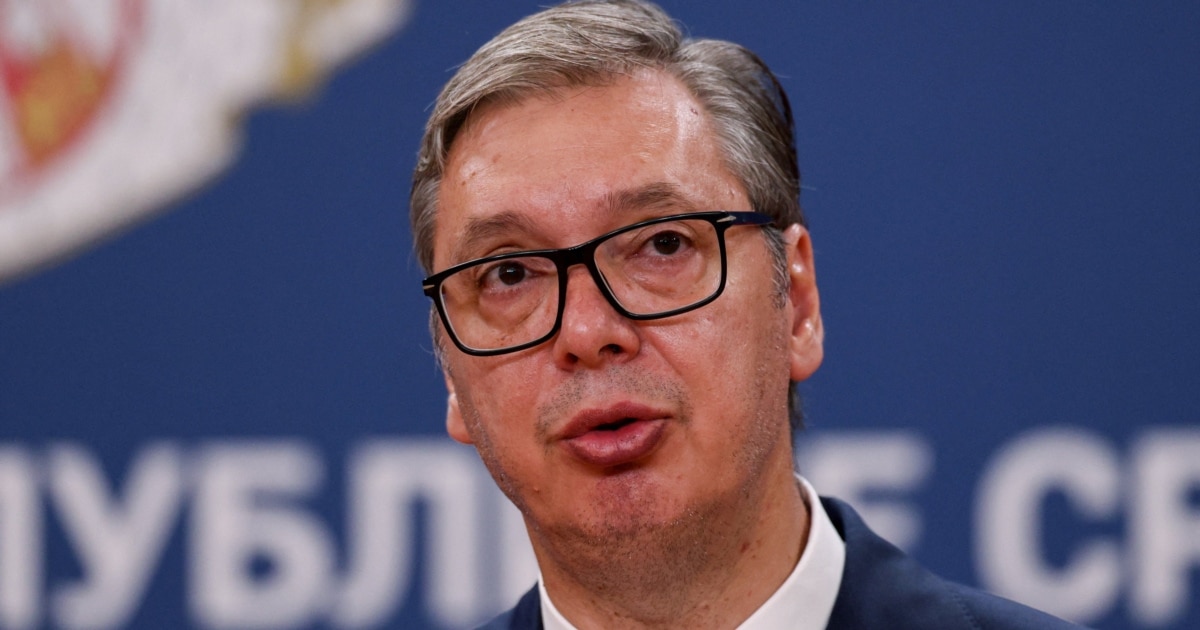
Vučić says Hague wanted Mladić to die behind bars; Serbia will respect family's burial wishes
Serbian President Aleksandar Vučić has accused the Hague tribunal of wanting Ratko Mladić to die in custody rather than in Serbia, calling that stance "anticivilizacijsko ponašanje, bez presedana i bez opravdanja." Vučić said Mladić will be buried where his family wishes and that Serbia will assist with repatriation and a dignified burial if the family chooses Serbia.
By Christopher Manley
936 views
Serbian President Aleksandar Vučić said on Wednesday that the Hague tribunal wanted Ratko Mladić — the former commander of the Bosnian Serb Army convicted of genocide and other war crimes — to die behind bars, and that the tribunal did not want him to die in Serbia. Speaking to reporters in Osečina, Vučić described that apparent preference as "anticivilizacijsko ponašanje, bez presedana i bez opravdanja." He said the Serbian government would abide by the wishes of Mladić’s family regarding the location of his burial.
"Mi smo sada videli da je Hag želeo Mladićevu smrt iza rešetaka, ne u blonici, posebno nisu želeli da dopuste da general umre u Srbiji, tamo gde je želeo," Vučić told journalists, repeating his assertion that the tribunal preferred Mladić’s death to occur in custody rather than on Serbian soil. He added that "Ukoliko porodica bude želela da Mladić bude sahranjen u Srbiji, mi ćemo pomoći da to bude učinjeno na dostjanstven i pristojan način," promising government assistance if the family opts for burial in Serbia.
Vučić also said that logistical teams had been sent to The Hague to assist with arrangements to transfer the body to Serbia. The president’s comments come in the immediate aftermath of Mladić’s death on August 27 at the age of 85 in a hospital in The Hague, where he was serving a life sentence following his conviction by the International Criminal Tribunal for the former Yugoslavia (ICTY).
Mladić was sentenced in 2021 after being found guilty on 10 of 11 counts, including genocide for the killing of around 8,000 Bosniak men and boys in Srebrenica in July 1995, as well as crimes against humanity and war crimes related to the siege of Sarajevo, persecution and forced displacement of civilians, murder, and the taking of United Nations peacekeepers as hostages. The tribunal found him responsible for a broad campaign of atrocities and upheld his life sentence, while acquitting him on charges of genocide in six Bosnian municipalities dating to 1992.
The handling of Mladić’s remains and the question of where he will be buried are politically sensitive in the Balkans, where memories of the 1992–1995 war in Bosnia and Herzegovina remain raw and where former wartime leaders continue to be polarizing figures. Vučić’s public remarks criticizing the tribunal and promising state assistance for burial arrangements signal a willingness by Serbian authorities to facilitate repatriation if the family requests it, while framing the Hague’s treatment of Mladić as unjust.
Earlier media reports from Republika Srpska outlets, including Banja Luka’s Alternativna Televizija (ATV), quoted Serbia’s justice minister, Nenad Vujić, as saying that Mladić would be buried "uz najviše državne počasti" — with the highest state honors — if he is returned to Serbia. The Serbian government has not provided detailed official confirmation of honors or the timeline for any transfer of remains, and Vučić said authorities currently had no definitive information on the burial location beyond that it would be determined by the family.
The death of Ratko Mladić closes the final chapter of a long judicial process that confirmed his culpability for some of the worst atrocities committed in Europe since World War II. It also reopens debates over justice, memory, and accountability across the region, with implications for inter-state relations, reconciliation efforts, and how societies confront legacies of mass atrocity. For now, the immediate questions are logistical and ceremonial: whether and how Mladić’s body will be returned to Serbia, what kind of official commemoration — if any — will be allowed, and how both domestic and regional actors will respond to those decisions.