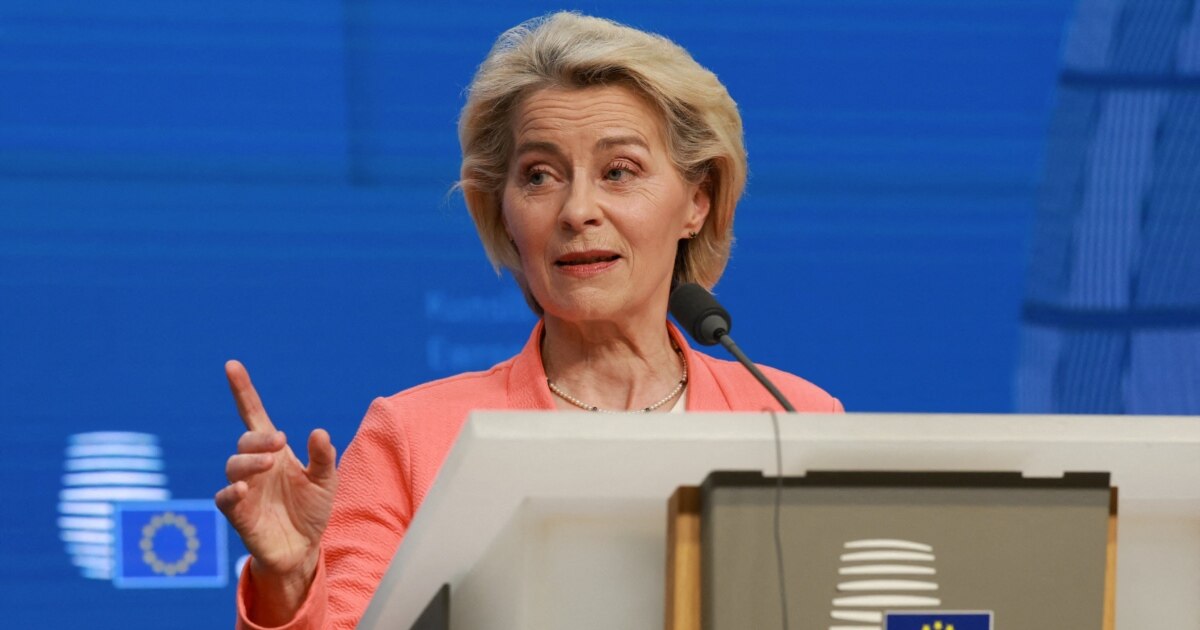
Von der Leyen meets Aliyev in Baku as jailed AbzasMedia journalists urge EU to press human rights
European Commission President Ursula von der Leyen held a one-on-one and expanded meeting with Azerbaijani President Ilham Aliyev in Baku on July 1, where both leaders stressed boosting trade and cooperation and discussed a comprehensive cooperation agreement. Ahead of her visit, journalists imprisoned in connection with the AbzasMedia case sent von der Leyen an open letter asking her to raise human rights and the detention of independent journalists publicly during her talks.
By Christopher Manley
923 views
European Commission President Ursula von der Leyen visited Baku on July 1 and held both a private one-on-one meeting and a wider-format discussion with Azerbaijani President Ilham Aliyev, the Azerbaijani presidential press service said. After the talks the two leaders issued statements highlighting deepening economic ties between Azerbaijan and the European Union and signalled continued work on a comprehensive cooperation agreement.
According to state news agency AZERTAC, President Aliyev emphasized Azerbaijan’s role as the EU’s principal trade partner in the South Caucasus, saying that “ticarətin 70 faizdən artığı məhz Azərbaycanın payına düşür.” He also told reporters that roughly half of Azerbaijan’s gas exports currently go to EU member states, underscoring the energy dimension of ties between Baku and Brussels.
Von der Leyen described the EU as already being Azerbaijan’s largest investor and trading partner and said those relations should be expanded. She was quoted as saying that “biz bunu daha da irəli aparmalıyıq” and that “Biz müfəssəl əməkdaşlıq sazişi üzərində işlərimizi davam etdiririk ki, Azərbaycanla Avropa İttifaqı arasında ticarət genişləndirilsin,” indicating that negotiations on a more formal, wide-ranging cooperation agreement are continuing.
The European Commission chief arrived at Heydar Aliyev International Airport where she was received by Azerbaijan’s foreign minister, Ceyhun Bayramov, and the European Commissioner for Neighbourhood and Enlargement, Marta Kós, along with other officials. Von der Leyen is scheduled to travel to Yerevan, Armenia, after her meetings in Baku.
Von der Leyen used her social media account to frame the visit in regional terms, writing in Azerbaijani: "Avropa İttifaqı Cənubi Qafqazın sülh, firavanlıq və inteqrasiya içində parlaq gələcəyinə inanır. Biz bu gələcəyin qurulmasına kömək etmək istəyirik" and adding that she had come to deepen partnership across sectors from trade to transport and energy: "Mən həm də Avropa İttifaqı ilə Azərbaycan arasındakı tərəfdaşlığı dərinləşdirmək üçün buradayam – ticarətdən nəqliyyata, enerjidən iqtisadiyyata qədər hər bir sahədə."
The Baku visit coincided with public appeals from jailed journalists and activists. A group of journalists detained in connection with the AbzasMedia case sent an open letter to von der Leyen ahead of her arrival, urging the EU Commission chief to raise human rights concerns and the treatment of critical voices directly with Azerbaijani officials — and to do so openly rather than only behind closed doors. The letter warned that while the EU pursues energy and economic cooperation with Azerbaijan, human rights should not be relegated to the background.
The AbzasMedia prosecutions began in November 2023 with arrests on accusations including smuggling and other charges. In June of the following year, Baku’s Serious Crimes Court handed down sentences: AbzasMedia director Ülvi Həsənli, editor-in-chief Sevinc Vaqifqızı, journalist Hafiz Babalı and AzadlıqRadiosu employee and economist Fərid Mehralızadə were each sentenced to nine years in prison; journalists Nərgiz Absalamova and Elnarə Qasımova received eight-year terms; and deputy director Məhəmməd Kekalov was sentenced to seven years and six months. Human rights groups and the detained journalists’ supporters have framed the prosecutions as part of a wider crackdown on critical media.
Human rights organizations say there are currently some 328 political prisoners in Azerbaijan, a figure repeatedly rejected by Baku, which insists that those listed have been convicted for specific violations of the law. The open letters from jailed journalists and a separate appeal from a group of imprisoned activists welcomed recent positive dynamics between Baku and Brussels but argued that a credible, durable partnership must rest on respect for human rights, the rule of law and fundamental freedoms.
Officials from the European Commission and Azerbaijani authorities had not issued a public response to the journalists’ appeals as of the time of the meeting. The talks occur in the context of the EU’s Eastern Partnership framework, established in 2009, under which discussions with Azerbaijan on a comprehensive partnership have been ongoing since 2017 but have not yet been concluded. Other Eastern Partnership participants have seen differing outcomes: Ukraine, Moldova and Georgia have advanced towards EU candidate status (though Georgia’s process has faced setbacks), Belarus suspended its participation, and Armenia signed a comprehensive partnership agreement years earlier.
The juxtaposition of high-level economic and energy cooperation talks with appeals from detained journalists highlights the persistent tension between strategic interests and human rights concerns in EU relations with Azerbaijan. The immediate outcome of von der Leyen’s Baku visit centers on continued negotiations and reaffirmed commercial links; activists and imprisoned media workers say they will be watching to see whether human rights receive equal priority in those discussions.