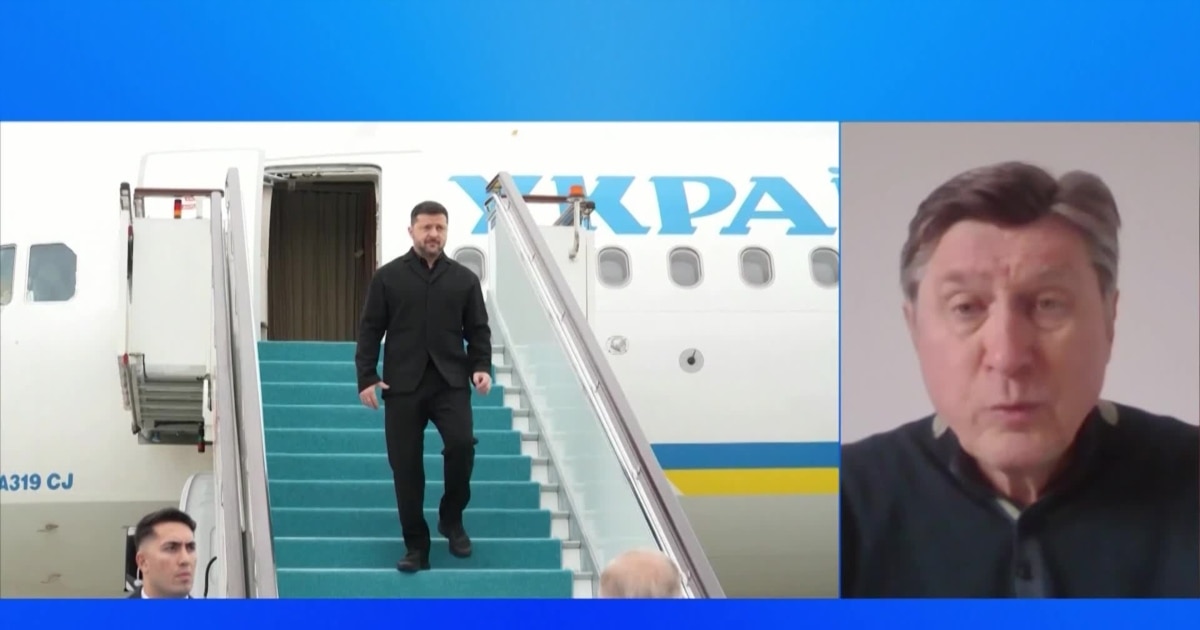
Vladimir Fesenko: 'Ceasefire in Oleshky Shows a Full Halt to Fighting Is Possible'
Speaking live on Current Time, Vladimir Fesenko, head of the Center for Applied Political Studies "Penta", argued that the temporary ceasefire observed in Oleshky demonstrates the feasibility of a comprehensive halt to hostilities. He discussed what the evacuation of Oleshky residents might mean for peace negotiations, addressed speculation about a possible Putin–Zelensky meeting in Florida, and considered Europe's role in any negotiation process.
By Clémence Desjardins
1,084 views
In a live broadcast on Current Time, political analyst Vladimir Fesenko said the recent temporary ceasefire in Oleshky demonstrated that a complete cessation of fire is feasible. Fesenko, who leads the Center for Applied Political Studies "Penta," addressed a range of questions arising from the situation in Oleshky — notably the evacuation of residents, the diplomatic prospects for direct talks between Russian and Ukrainian leaders, and the role European actors might play in any negotiation process.
The evacuation of civilians from Oleshky was a focal point for the broadcast. Fesenko was asked what that humanitarian movement signals in the broader context of efforts to negotiate a ceasefire and eventual peace. While the live interview covered multiple angles, the central observation Fesenko offered — encapsulated in his assessment that the Oleshky ceasefire has demonstrated the possibility of a full halt to fighting — frames the episode as more than a localized lull: it may be a test-case for wider confidence-building measures.
Oleshky, a city in the Kherson region that has figured in reporting about civilian suffering and shortages, has been the subject of recent evacuations and humanitarian concern. Current Time and other outlets have highlighted the dire humanitarian circumstances there, including reports about hunger and the exodus of residents. Fesenko’s comments come amid that reporting and place the humanitarian dimension at the center of political calculations about ceasefires and negotiations.
Beyond the immediate humanitarian implications, the broadcast probed the diplomatic fallout: could a temporary local ceasefire be scaled into more durable agreements, and could it create momentum for high-level meetings? Fesenko addressed questions about the public discussion over a possible meeting between Russian President Vladimir Putin and Ukrainian President Volodymyr Zelensky in Florida. The prospect of such a meeting has been raised in various diplomatic and media circles, but any summit between the two leaders would depend on a constellation of security guarantees, mutual willingness to negotiate, and third-party mediation — factors that Fesenko noted complicate the pathway from localized truces to summitry.
The analyst also examined Europe's current role in facilitating talks. In the live conversation he discussed how European states and institutions might contribute to negotiations, whether by offering mediation, guaranteeing humanitarian corridors, or applying diplomatic pressure. Europe’s potential influence, Fesenko suggested, depends on its ability to present credible incentives and protections that address both immediate civilian needs and longer-term security arrangements, although detailed prescriptions were not the primary focus of the broadcast.
Fesenko’s intervention on Current Time underlines the link between humanitarian developments on the ground and diplomatic possibilities. If local ceasefires can be shown to reliably protect civilians and allow humanitarian access, they could become the basis for confidence-building measures that make broader negotiations more practicable. At the same time, the precariousness of such pauses — and the political obstacles to translating them into national-level agreements — remained a clear subtext of the conversation.
The Current Time broadcast drew on a wider stream of reporting about the conflict’s impact on civilians and the evolving diplomatic landscape. For users whose access to the site is blocked, the program page included a link intended to be shared with those affected by censorship. Fesenko’s remarks add to the ongoing debate about whether episodes like the Oleshky ceasefire represent isolated humanitarian reprieves or a replicable model that could help move the warring parties toward sustained talks and, ultimately, a negotiated end to hostilities.