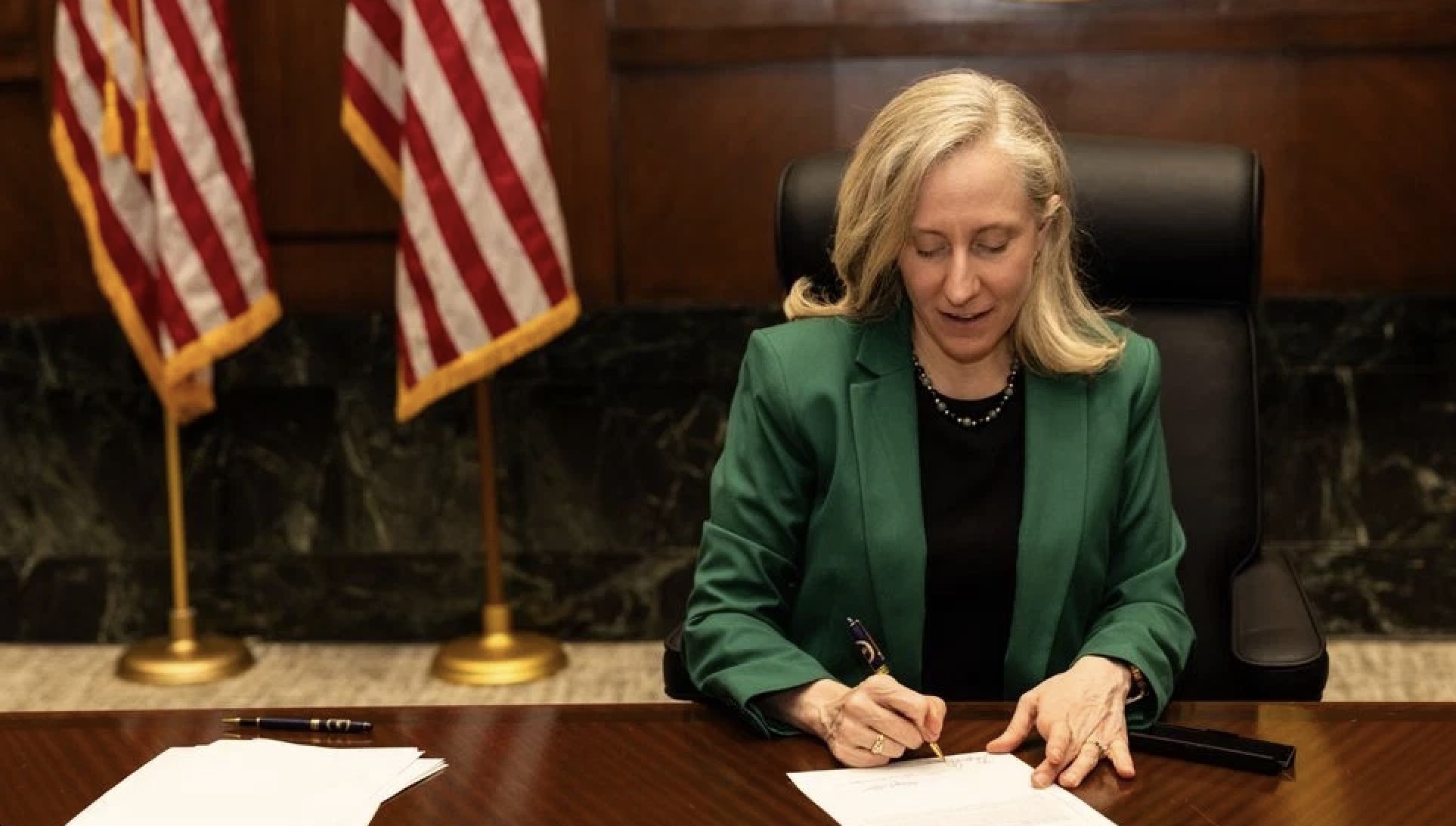
Virginia Governor Signs Bill to Join National Popular Vote Interstate Compact, Bringing Total to 222 Electoral Votes
Virginia Governor Abigail Spanberger on Tuesday signed HB965 into law, formally joining the Commonwealth to the National Popular Vote Interstate Compact (NPVIC). The move raises the total number of electoral votes pledged to the compact to 222, leaving 48 votes short of the 270 threshold needed for the compact to take effect.
By Jim Hᴏft
1,150 views
Virginia Governor Abigail Spanberger signed legislation on Tuesday placing the Commonwealth into the National Popular Vote Interstate Compact (NPVIC), a multi-state agreement intended to direct participating states’ electoral votes to the winner of the national popular vote once jurisdictions holding a combined 270 electoral votes have joined. The governor signed HB965, a measure that had been debated in the Virginia legislature, formally adding Virginia’s electoral votes to the compact.
With Virginia’s entry, the compact now includes jurisdictions representing 222 electoral votes, leaving 48 electoral votes short of the 270 required for the agreement to become operative. The League of Women Voters, cited in reporting about the development, said in an analysis that “Six additional states with 65 electoral votes (Arizona, Michigan, New Hampshire, Nevada, Pennsylvania, and Wisconsin) are especially promising places for obtaining the 48 electoral votes needed before 2028.” Those six states together hold more than enough electoral votes to cross the threshold if they join the compact.
Under the terms of the NPVIC, participating states agree to award all of their electoral votes to the presidential candidate who receives the most votes nationwide, rather than awarding them to the candidate who wins the popular vote within the state. Supporters of the compact have argued that it ensures the candidate with the highest nationwide vote total would be elected president, while critics contend it could render state-level outcomes less determinative of electoral results. The compact takes effect only when states totaling at least 270 electoral votes have enacted it.
The Gateway Pundit, which reported the signing, framed the development as a significant and controversial shift in how presidential elections might be decided. The outlet referenced prior reporting on the compact, including an instance it described as a 2019 veto by Nevada Governor Steve Sisolak of a state-level bill related to the compact and legal challenges that have been brought against similar measures in other jurisdictions. The Gateway Pundit also highlighted actions by Democratic governors and state legislators in other states who have supported or pursued adoption of the compact.
Reactions to the signing were immediate and varied. Conservative and right-leaning commentators and social media accounts criticized the move, with one tweet quoted by local outlets saying: "BREAKING – Outrage is erupting across Virginia after Abigail Spanberger signed HB965 into law, effectively rendering Virginians’ presidential votes null and void, with the measure handing the states electoral votes to the national popular vote winner regardless of states results." The tweet was posted by the account Right Angle News Network. Advocates for the compact argue their goal is to align the Electoral College outcome with the national popular vote, while detractors warn it could shift presidential campaign attention and leverage to different regions of the country.
The signing sets up a consequential political question for the coming years: whether additional states with the electoral votes identified by the League of Women Voters will enact the compact, and whether the compact will reach the 270-vote threshold required to become binding. If that threshold is reached, participating states would begin allocating their electoral votes based on the national popular vote rather than state-by-state outcomes.
Legal and constitutional questions around the compact have been raised in the past and remain a subject of debate among scholars, lawmakers and activists. Opponents have pointed to potential conflicts with state legislation and the original design of the Electoral College, while proponents emphasize the compact as a legislative mechanism to reflect the national popular will without a constitutional amendment. As more jurisdictions consider the measure, the debate over its practical and legal implications is likely to continue on both state and federal stages.
The bill signed by Governor Spanberger and the broader effort to secure the remaining electoral votes identified by supporters will be watched closely by both proponents and opponents of the compact, with implications for how future presidential elections could be conducted if the 270-vote threshold is ultimately met.