UN warns El Niño could be unprecedented, urges urgent global mobilization to avert humanitarian catastrophe
The United Nations and the World Meteorological Organization have warned that the current El Niño may be unusually powerful, with a peak expected in December and effects likely to last into 2027. UN officials urged governments, development banks and international financial institutions to provide funds and take early action to protect millions of vulnerable people from extreme heat, floods, droughts, hunger and displacement.
By Christopher Manley
1,163 views
The United Nations on Wednesday issued an urgent appeal to governments and international financial institutions to mobilize now to limit the human toll of an unusually intense El Niño event that is sweeping the globe. UN and World Meteorological Organization officials told reporters in Geneva that the phenomenon could be “unprecedented in strength,” with a peak expected in December and consequences that are likely to reverberate for years.
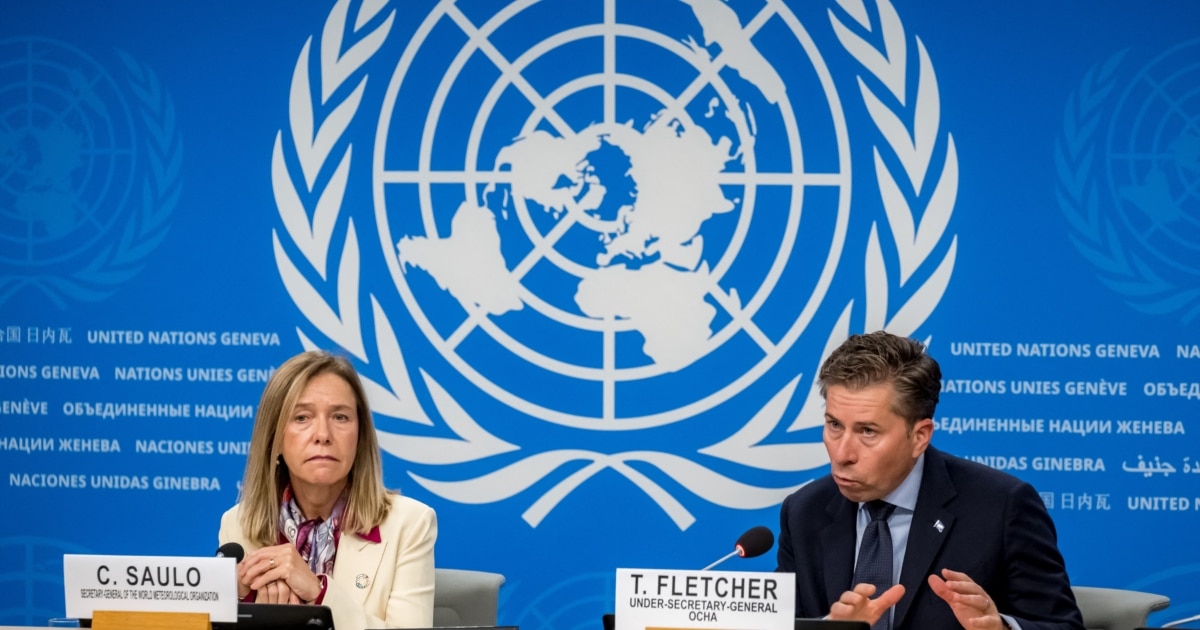
“Current El Niño could be unprecedented in power: beyond the monitoring charts we have used over the past four decades,” said Celeste Saulo, head of the World Meteorological Organization (WMO). Saulo and the UN’s aid chief, Tom Fletcher, warned that extreme weather events linked to El Niño — including heatwaves, floods and droughts — are already being observed and are expected to intensify, producing cascading humanitarian impacts.
“What we are seeing already are extreme weather events and we expect them to multiply and produce knock-on effects as El Niño intensifies,” Saulo said, urging preventive action to protect the most exposed communities before it is too late. “We cannot stop El Niño, but we can prevent many of its worst consequences for people,” she added.
Fletcher described the developing El Niño as a destructive force with the potential to unleash chaos across multiple regions, naming Latin America, East and Southern Africa, Asia and the Pacific among those at high risk. He stressed that the consequences will not be short-lived: “Long-term impacts will be felt for months and potentially for years... because crises overlap.” Fletcher pointed to ongoing conflicts and large-scale displacements, rising prices for fuel, fertilizer and food, and significant cuts in aid as factors that amplify vulnerability.
The UN warned that tens of millions of people could be pushed into humanitarian need and that as many as 50 million people could face hunger if timely action is not taken. Fletcher emphasized the immediacy of the threat, saying the next two weeks are “critical for action,” and cautioned that the global humanitarian system cannot cope alone with a shock of this magnitude.
To begin addressing immediate needs, Fletcher said the UN had made $50 million available to assist 11 countries considered directly at risk, specifically naming Chad, El Salvador, Ethiopia, Somalia and South Sudan among recipients. But he called on governments, development banks and international financial institutions to pre-position larger pools of funding “before damage occurs,” enabling anticipatory action that could reduce suffering and limit costly emergency responses.
The WMO and UN explained the science behind the warning: El Niño is a natural climactic phenomenon characterized by unusually warm sea surface temperatures in the central and eastern Pacific near the equator, which disrupt wind patterns, atmospheric pressure and global rainfall. It typically recurs every two to seven years and usually lasts nine to 12 months, with peaks often occurring between November and February. The current outlook projects that sea-surface temperatures in the tropical Pacific could rise as much as 3.8 degrees Celsius above average in the November–January period — figures well above those typical for El Niño events.
Scientists note that this El Niño is occurring on top of long-term warming driven by human-caused climate change, increasing the likelihood of record-breaking temperatures worldwide. The recent El Niño contributed to 2023 becoming the second-warmest year on record, while 2024 set a global temperature record.
Early impacts are already being reported in several areas. Central America is suffering severe drought, with livestock deaths and destroyed crops among the immediate consequences. UN officials warned that El Niño’s effects will not be confined to directly hit countries: disruptions to food and fuel supplies, economic shocks and forced migration could spread the impacts globally, raising the risk of new conflicts and large-scale displacement.
The UN appeal frames this as not only a climate and environmental crisis but also a looming humanitarian emergency and a test of international preparedness. By calling for coordinated, anticipatory funding and action, UN and WMO leaders are urging a shift from reactive relief to prevention and resilience-building to limit the worst outcomes for millions of vulnerable people worldwide.