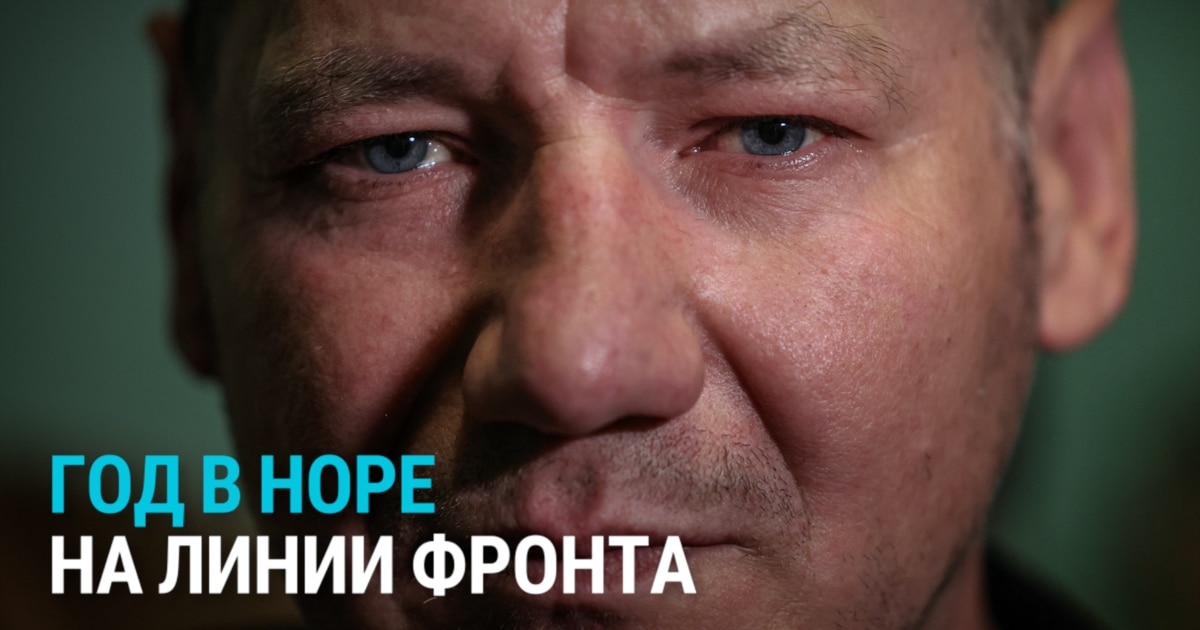
Ukrainian Soldier Held Position for 346 Days in 'Kill Zone' at Chasiv Yar, Leaves Frontline in March 2026
Sergey Krinitsky spent 346 days holding a frontline trench in what his commanders described as a "килл-зоне," enduring repeated drone strikes and artillery fire even after Russia announced it had taken the nearby city. He departed the position in March 2026 and was subsequently awarded the title "Герой Украины," Reuters reports, highlighting the prolonged dangers faced by Ukrainian defenders on the eastern front.
By Vanessa Bergmann
859 views
A Reuters account of frontline fighting has detailed the experience of Ukrainian serviceman Sergey Krinitsky, who spent 346 days holding a defensive position in what has been described as a "килл-зоне" at Chasiv Yar. According to the report, Krinitsky remained on the line for several months even after Russia announced it had captured the nearby city, enduring persistent drone activity and shelling that made the position exceptionally hazardous.
The length of Krinitsky’s deployment at the trench — nearly a full year — underscores the protracted and dangerous nature of the fighting in and around Chasiv Yar. Reuters’ reporting paints a picture of constant threat: personnel at the position faced repeated attacks from unmanned aerial systems and other munitions while continuing to hold the line. The sustained exposure to such conditions is representative of the intense pressures confronting soldiers and, by extension, civilians in contested urban areas.
Krinitsky left the position in March 2026 and was subsequently awarded the title "Герой Украины." The award is an official recognition of acts deemed exceptionally meritorious by Ukrainian authorities. Reuters’ coverage focused on Krinitsky’s persistence and the tactical circumstances that forced defenders to remain in exposed locations for extended periods, even when opposing sides issued competing claims over territorial control.
The report emerged amid ongoing scrutiny of conduct and conditions on battlefronts where urban fighting and drone deployments have reshaped operational dynamics. Extended standoffs around towns and cities raise immediate humanitarian concerns, including the safety of frontline forces and the protection of civilians in nearby areas. Krinitsky’s story, as presented by Reuters, is one personal account that illustrates broader questions about how modern battlefields affect individual soldiers and communities.
While the details in the Reuters piece center on Krinitsky’s time at the trench and his recognition, the account also feeds into a larger narrative about the human cost of prolonged conflict. Holding a static position in an environment described as a "килл-зоне" for 346 days implies significant strain on personnel, including psychological and physical risks associated with repeated exposure to incoming fire and the constant threat posed by drones. Such conditions can have lasting consequences for veterans, families, and local populations.
The circumstances around Chasiv Yar — where claims of capture have been part of the information environment — illustrate how battlefield declarations and on-the-ground realities can diverge. Reports like Reuters’ serve to document individual experiences that may contrast with official statements, offering ground-level perspectives on the unfolding conflict. Krinitsky’s departure from the frontline in March 2026 and his subsequent decoration provide a concrete endpoint to his nearly year-long rotation in an exceptionally dangerous position.
By chronicling the ordeal of a single serviceman, the report also raises questions about accountability, the conduct of hostilities, and the protection of persons in armed conflict. Observers and rights monitors often point to sustained urban combat and the widespread use of drones as factors that increase civilian and combatant vulnerability. Krinitsky’s story is therefore significant not only as an account of personal endurance but also as an example of conditions that merit continued attention from humanitarian and rights-focused organizations.
The Reuters account, relayed in local reporting, thus offers a detailed human vignette within the broader conflict: a soldier who remained in a perilous position for nearly a year, faced ongoing drone assaults, and left the frontline in March 2026 with high state recognition. Such narratives contribute to the record of how the war has been experienced by those on the front lines and underscore the intense risks that persist in contested battlefield zones.