Ukrainian Forces Say They Destroyed Russian Plan to Seize Kramatorsk and Sloviansk; ISW Reports Limited Infiltration Near Dobropillia
Ukrainian commanders say a recent operation wiped out a Russian attempt to encircle and capture the cities of Kramatorsk and Sloviansk, shifting the frontline balance and forcing Russian troops onto the defensive. Independent analysts at the Institute for the Study of War reported a separate, geolocated incident of Russian infiltration near Dobropillia but found no proof Russian forces have secured positions inside the town.
By Alexander Walter
803 views
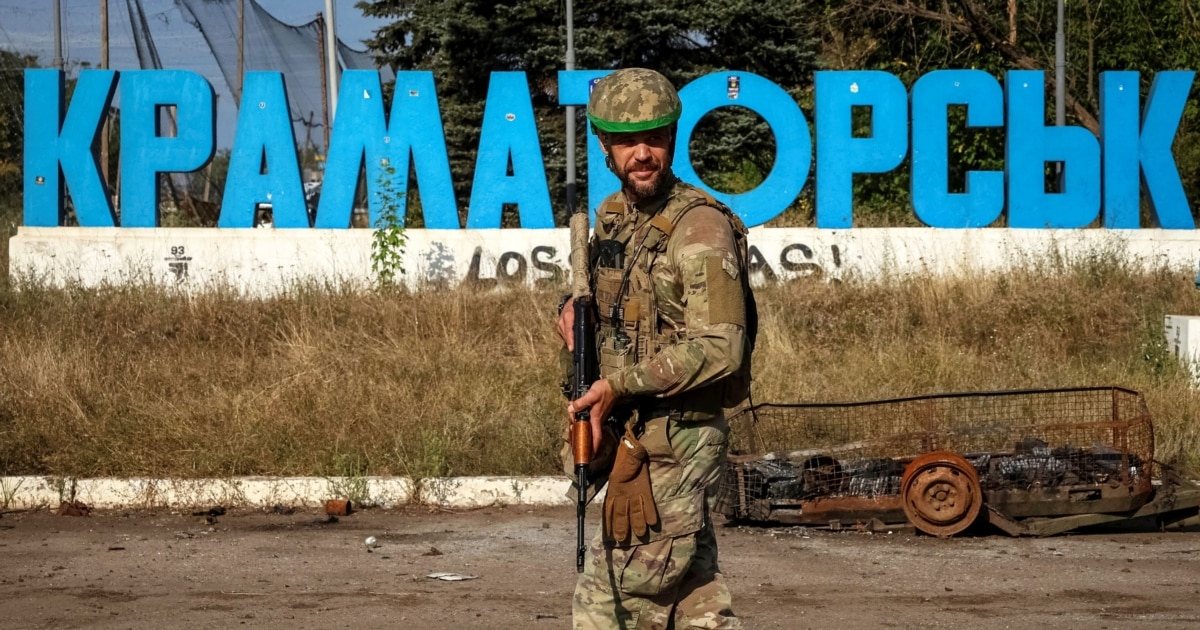
Ukrainian military officials say they have foiled Russian plans to capture the eastern Ukrainian cities of Kramatorsk and Sloviansk, destroying what they described as one of the enemy’s planned encirclement formations. The claim was made by Maksym Zhorin, deputy commander of Ukraine’s Third Army Corps, who said the operation—identified by Ukrainian forces as "Vivaldi"—resulted in the complete elimination of a Russian "pincer" intended to trap and remove Ukrainian units from the area.
According to Zhorin, the destruction of that formation not only halted Russian advances but allowed Ukrainian forces to push the attacker back. "This enabled us not only to stop the opponent’s advance, but to force it back," he said, adding that Russian troops in sectors under the responsibility of his units are now focused on defense rather than offensive operations. Zhorin said Ukrainian actions compelled the adversary to stabilize and hold existing positions and that the outcome inflicts a significant morale blow on Russian forces, as reflected in the reaction of pro-war online commentators.
The Ukrainian account came as the American think tank Institute for the Study of War (ISW) reported separate developments in the region. In its October 18 report, ISW said Russian forces recently conducted an operation that involved infiltration into the southeastern part of the town of Dobropillia. ISW published geolocated footage that appears to show a Russian serviceman raising a flag in that area—an action the institute described as indicative of an infiltration operation.
Ukrainian military representatives have publicly denied claims by Russian sources that Dobropillia has been captured or encircled. ISW noted that it currently has no evidence that Russian forces have consolidated or entrenched themselves within the municipal boundaries of Dobropillia. The institute’s reporting underscored that while Russian units may be conducting localized infiltration or probing attacks, these actions do not necessarily equate to established control over towns or cities.
ISW analysts also noted broader trends in the conflict, saying that Russian advances have slowed significantly since March 2026 and have remained at a low tempo. The organization reported that in some cases Russian forces have lost more ground than they have gained, indicating an uneven and at times deteriorating operational picture for Moscow’s forces in certain sectors.
The Ukrainian account of thwarted encirclement efforts near Kramatorsk and Sloviansk carries operational and humanitarian implications. If Russian forces were planning to encircle and seize these cities, such maneuvers would have heightened risks to civilians, potentially increasing casualties, displacement, and the targeting of urban infrastructure. Preventing an encirclement limits the immediate threat to population centers and helps maintain Ukrainian lines of communication and supply.
Independent verification of the precise tactical situation on the ground remains difficult amid active hostilities and competing information from both sides. Analysts caution that battlefield claims often reflect local gains or setbacks that can change rapidly. Nonetheless, the Ukrainian narrative—that an intended Russian pincer was destroyed and that Russian troops have shifted into defensive postures in certain sectors—if corroborated, would represent a setback for Moscow’s plans in the Donetsk region.
The unfolding events around Kramatorsk, Sloviansk and Dobropillia will be closely watched by military analysts and rights monitors. Any large-scale shifts in control of towns carry consequences for civilian safety and the wider conduct of the war, underlining the continued importance of independent verification and reporting on frontline developments.