Ukrainian Drone Campaign Strikes Major Russian Energy Sites, Straining But Not Toppling Sector
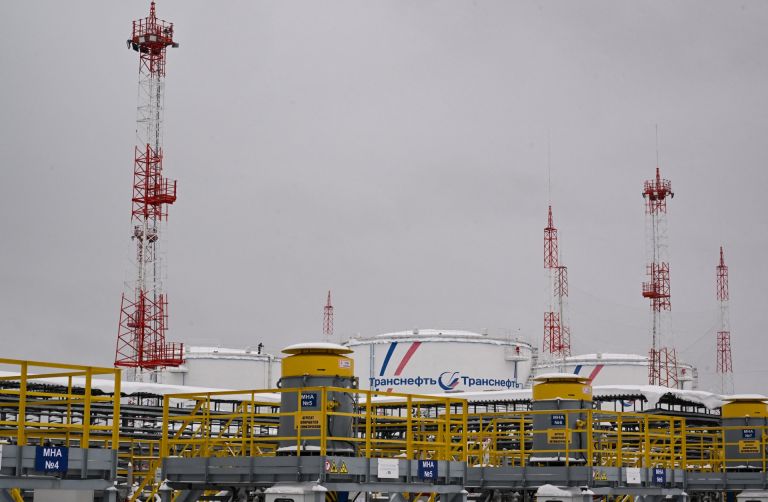
A wave of Ukrainian drone strikes has hit significant elements of Russia's oil infrastructure, including Gazprom Neft's Moscow Kapotnya refinery and Transneft's Solnechnogorsk pumping station on May 17. While analysts judge these attacks unlikely to precipitate a systemic collapse of Russia's oil and gas sector or fundamentally change Moscow's war strategy, they are imposing recurring operational disruptions and financial costs on Russia's oil companies amid a global market that continues to support Kremlin revenues.
By Vanessa Bergmann
989 views
On May 17, a concentrated Ukrainian drone attack struck the area in and around Moscow in what local accounts described as one of the largest such operations against the Russian capital region since the start of the full-scale war. The targets reportedly included Gazprom Neft's oil refinery in the Kapotnya district of southeastern Moscow — which supplies fuel to the capital — along with the Solnechnogorsk fuel-loading station near the village of Durikino and other energy and industrial nodes, including the Volodarskoye pumping station and microelectronics facilities in Zelenograd that serve Russia's defense sector. Russia's Defense Ministry claimed to have downed hundreds of drones across more than a dozen regions, but multiple strike drones penetrated the capital's defenses, igniting fires at several sites. Days later, industry sources told Reuters that the Kapotnya refinery — which processed roughly 11.6 million tonnes of crude in 2024, yielding millions of tonnes of gasoline, diesel and bitumen — had halted processing "to mitigate risks," with a restart expected to take several days. Ukrainian President Volodymyr Zelenskyy called the strikes "entirely justified," and the operation was widely read as part of a deliberate, escalating campaign against Russia's energy backbone rather than a one-off.
That campaign is grounded in a stark cost asymmetry: a relatively inexpensive long-range drone can inflict damage measured in the hundreds of millions of dollars, and Ukraine has decentralized its drone production to keep the program resilient. The strategy aims to drain Kremlin revenue, generate domestic fuel shortages, and force Russia to spread thin its air defenses — protecting refineries and ports from the Black Sea to the Baltic, often at the expense of front-line coverage. The cumulative toll has been real. Earlier waves of strikes drove Russia's average refining throughput to multi-year lows and contributed to gasoline shortages in several regions, prompting the Kremlin to impose fuel-export restrictions and, at times, ration sales. The International Energy Agency has assessed that the strikes would suppress Russian refinery runs well into 2026.
Yet the sector has proven more durable than a tally of damaged facilities might suggest. Russian operators have repeatedly brought damaged units back online and activated idle or spare capacity, limiting the net decline in processing even when a sizable share of nominal capacity is offline at peak. Crucially, Russia has also offset lost refining by redirecting crude originally destined for domestic processing into export markets, helping to maintain crude shipment volumes even as refined-product flows fall. This adaptability is the central reason analysts judge a near-term systemic collapse unlikely, even as the strikes bite.
The strikes also carry political and military implications. By imposing economic costs and demonstrating that energy infrastructure is vulnerable, the campaign seeks to pressure Moscow by complicating domestic energy management and signaling the reach of Ukrainian capabilities. However, because the Kremlin continues to receive revenue support from the global oil market, the immediate inducement to change strategic decisions appears limited. That revenue cushion has, if anything, been reinforced by external developments: higher oil prices stemming from the parallel conflict involving Iran, together with a related easing of certain sanctions, have helped replenish Russian coffers even as the drone campaign chips away at refining margins.
Looking forward, the interplay of several variables will determine whether the campaign produces cumulative strategic effects: the frequency and precision of Ukrainian strikes, the resilience and repair capacity of Russian infrastructure operators, the ability of Russia to reroute flows or bring spare capacity online, and broader developments in global oil supply and demand that influence prices. For now, the strikes represent a meaningful operational and financial strain on targeted firms without evidencing a near-term systemic threat to the overall Russian oil and gas sector.
The strikes on May 17, and the campaign of which they are a part, therefore underscore a sustained pressure point in the conflict: energy infrastructure. While not decisive on its own, the campaign complicates Russia's energy logistics, imposes costs that accrue over time, and remains an important dimension of the broader contest between Kyiv and Moscow.