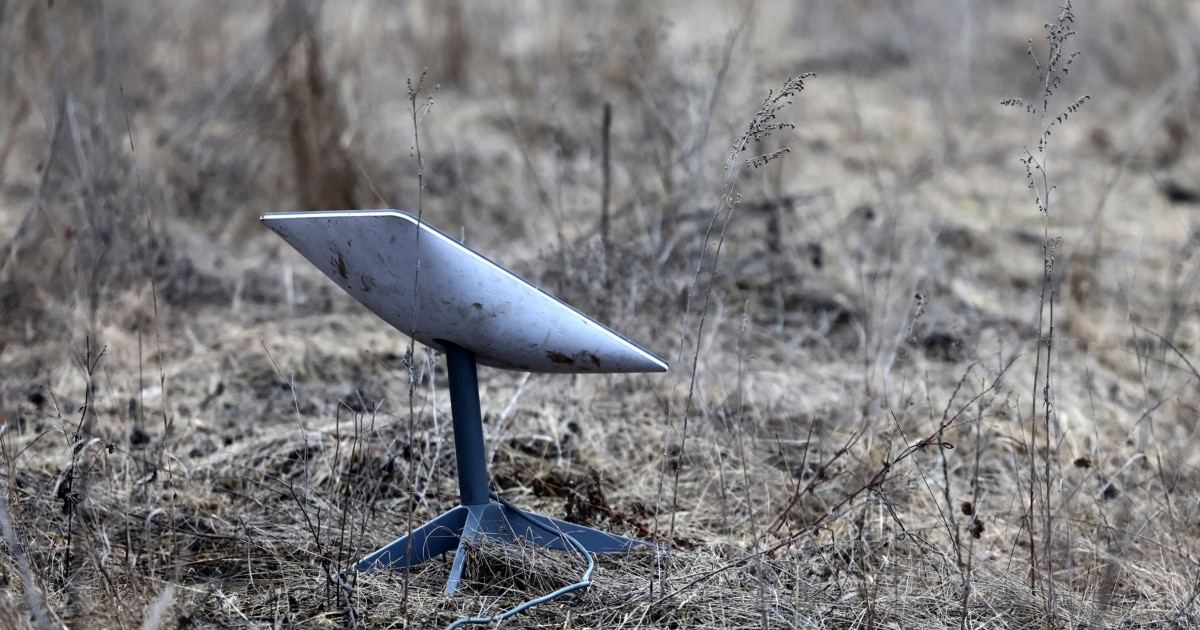
Ukraine Says Starlink and Starshield Satellite Links Restored at Speeds Above 400 km/h
Ukraine’s defence minister announced that Starlink’s satellite internet service and its military Starshield variant have been returned to stable operation at speeds exceeding 400 kilometres per hour, a move officials say is vital for front-line units, drones, logistics and communications. The restoration follows two weeks of disruptions that started on October 14 and fuelled a dispute between Kyiv and Washington as well as questions about SpaceX and its owner Elon Musk, prompting Ukraine to seek alternative satellite partners.
By Christopher Manley
1,013 views
Ukraine’s satellite internet connections provided by SpaceX’s Starlink service and its military-focused Starshield variant have been restored to stable operation at speeds above 400 kilometres per hour, the country’s defence minister said on Thursday.
“Connection is operating steadily,” Defence Minister Yevhen Khmara was quoted as saying by Interfax-Ukraine. “This is another example that direct dialogue and the president’s consistent high-level position produce results. This result is primarily important for the front, for the troops, for the operation of unmanned aerial vehicles, for logistics and communications.”
The announcement marks the latest development in a disruption that began on the night of October 14, when Ukrainian officials first reported intermittent service problems with Starlink and Starshield hardware. Those disruptions had particular operational implications: Reuters reported that Starshield terminals had been losing connectivity when moving at high speed, hampering the use of loitering strike drones, drone-catchers, reconnaissance and some logistics tasks that depend on reliable satellite links.
On October 24, Ukrainian media, citing defence ministry sources, said technicians had restored some capacity and were testing operation at speeds above 161 kilometres per hour. Officials said further testing and verification continued, and Thursday’s statement from Khmara indicated the systems were functioning at substantially higher speeds.
The outages prompted intense scrutiny because of the central role Starlink has played in Ukraine’s communications and battlefield operations since Russia’s full-scale invasion. Media reports tied the restrictions to strained ties between Kyiv and Washington — in particular disagreements over Ukrainian strikes on Russian oil refineries — and various outlets attributed the initiation of limitations either to actions by the White House or to decisions by SpaceX. Some reports named Elon Musk, SpaceX’s owner, as a factor in the disruptions.
US President Donald Trump rejected suggestions that the White House had ordered restrictions, saying the administration had asked Elon Musk to restore service speed. Musk did not publicly comment on the matter at the time of the reports. Ukrainian President Volodymyr Zelenskyy had earlier noted conflicting accounts about whether full access had been returned.
In response to the outage and concerns about external control over vital satellite links, Ukraine has accelerated efforts to diversify and strengthen its satellite communications. On October 22, the Ukrainian defence ministry signed a document indicating intent to cooperate with Finland-based satellite imagery firm ICEYE and technology company Nokia. Officials said such cooperation would help Ukraine gain more control over satellite communications infrastructure in the future.
Analysts and military officials say reliable satellite internet is not only a force multiplier for reconnaissance, targeting and drone operations, but also underpins logistics, command-and-control and civilian communications in contested areas. Interruptions in such services therefore have immediate battlefield consequences and broader political implications, especially when the cause involves state-level diplomacy or decisions by private technology companies.
The restoration of Starlink and Starshield service is likely to relieve some operational constraints for Ukrainian forces, but the episode has already prompted Kyiv to seek technical and contractual arrangements that reduce dependence on a single foreign provider. It also renewed public debate over the governance and oversight of dual-use technologies that can shape wartime capabilities and civilian protections during prolonged conflict.