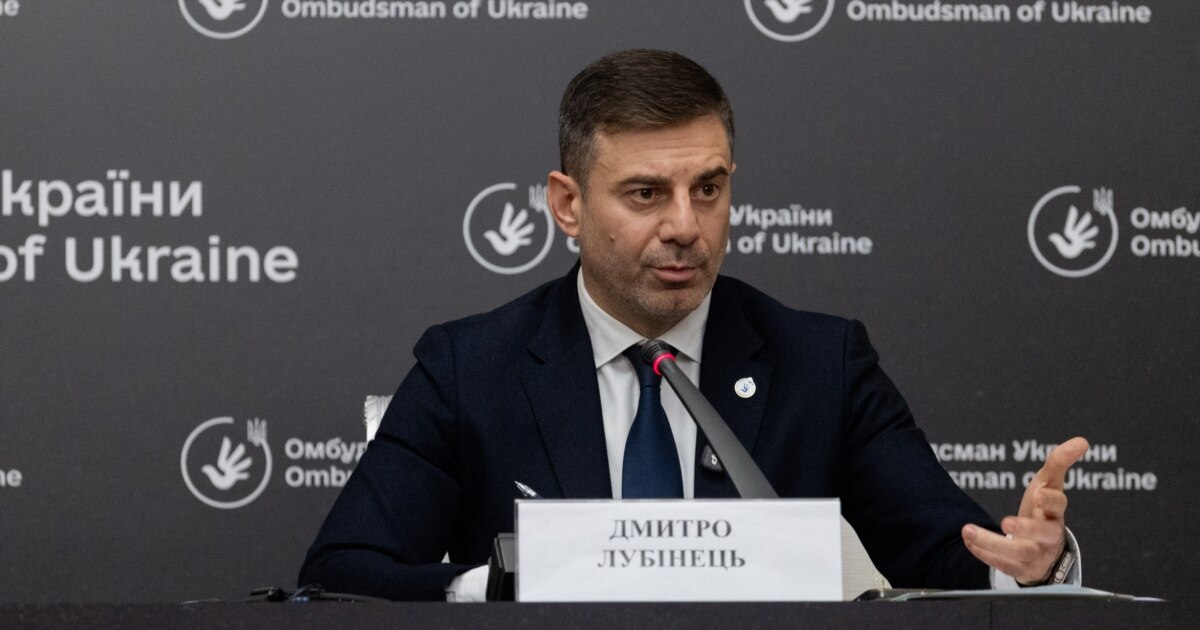
Ukraine rights commissioner: Russian vehicles filmed during Oleshky 'ceasefire' were conducting demining under Ukrainian control
Dmytro Lubinets, Ukraine’s parliamentary human rights commissioner, said Russian military vehicles seen moving during a humanitarian 'ceasefire' in occupied Oleshky were marked with red crosses and used for demining operations under Ukrainian supervision, then returned to their prior positions. The statement comes amid conflicting claims from the Ukrainian General Staff and international media that the pause was exploited for rotation, fortification and ammunition resupply.
By Clémence Desjardins
1,070 views
Ukraine’s parliamentary human rights commissioner, Dmytro Lubinets, addressed footage showing Russian military vehicles moving in the occupied town of Oleshky during a humanitarian 'ceasefire', saying on November 2 that the equipment had been deployed to conduct demining operations and returned to their previous locations once the work was completed.
Lubinets told reporters that the vehicles visible in the video were clearly marked with red crosses and were being used specifically for demining under the explicit control of the Ukrainian side. He said the prohibition on concentrating and moving military equipment during the ceasefire had been written directly into the relevant agreement, and that he had personally reviewed the footage, contacted responsible officials, and convened a meeting to verify the situation.
"The footage clearly shows Russian military equipment marked with red crosses," Lubinets said. "This equipment was used for demining under the clear control of the Ukrainian side. After demining was completed, the military vehicles returned to where they had been earlier." He added that representatives of both sides had confirmed this sequence of events.
Lubinets also explained why people evacuated from Oleshky were not routed directly to the city of Kherson. He said logistics for evacuation were developed using information from the Armed Forces of Ukraine and that proposals to move civilians directly into Kherson were rejected because that route crosses the frontline. "No one ever suggested otherwise to me," he said, adding that officials had warned him not to support proposals that would move evacuees directly to Kherson because it would put people on the line of contact.
The commissioner’s account contrasts with statements from Ukraine’s General Staff and reporting by international media. Earlier on November 2, the General Staff accused Russian forces of using the humanitarian pause during the mission in occupied Oleshky to strengthen positions, rotate units, expand anti-drone measures along roads and increase logistics, including deliveries of ammunition. British broadcaster Sky News published footage and a report suggesting Russian forces moved heavy equipment and munitions under the cover of the ceasefire.
The Kremlin urged inquiries about any troop movements during the ceasefire to be directed to the Russian Ministry of Defence, while also describing the regrouping of forces as routine. Both Moscow and Kyiv announced the temporary 'ceasefire' during the night of October 27; the pause ran through November 1.
The humanitarian pause in Oleshky was arranged with international mediation. United States First Lady Melania Trump, cited as a mediator in the agreement, called the mission successful, noting the delivery of critical assistance and the evacuation of nearly 800 people, although she did not specify how many reached Ukrainian-controlled territory. Trump expressed hope that the Oleshky operation could serve as a basis for longer-term peace between the two countries.
Oleshky was occupied by Russian forces in the first days of the full-scale invasion in February 2022. The town sits on the left bank of the Dnipro River, which now forms the de facto boundary between Ukrainian-controlled and Russian-occupied parts of Kherson region. The differing accounts over whether Russian forces used the humanitarian pause for demining under supervision or to regroup and reinforce positions underscore the challenges of verifying military and humanitarian activity in contested areas and raise questions about compliance with the laws and norms governing humanitarian pauses.
The dispute also highlights broader concerns about the use and possible abuse of negotiated pauses in fighting: independent verification and clear, enforceable guarantees are essential to ensure that ceasefires fulfil their humanitarian purpose and do not become opportunities to gain tactical advantage. Media outlets and officials continue to offer conflicting narratives, leaving accountability and independent confirmation central to assessing whether parties adhered to the agreed terms during the Oleshky mission.
This article is based on reporting by Radio Free Europe/Radio Liberty and Krymr.Realii, Lubinets’s November 2 press briefing, statements from the Ukrainian General Staff and public reporting by Sky News, as well as comments attributed to the Kremlin and the Russian Defence Ministry.