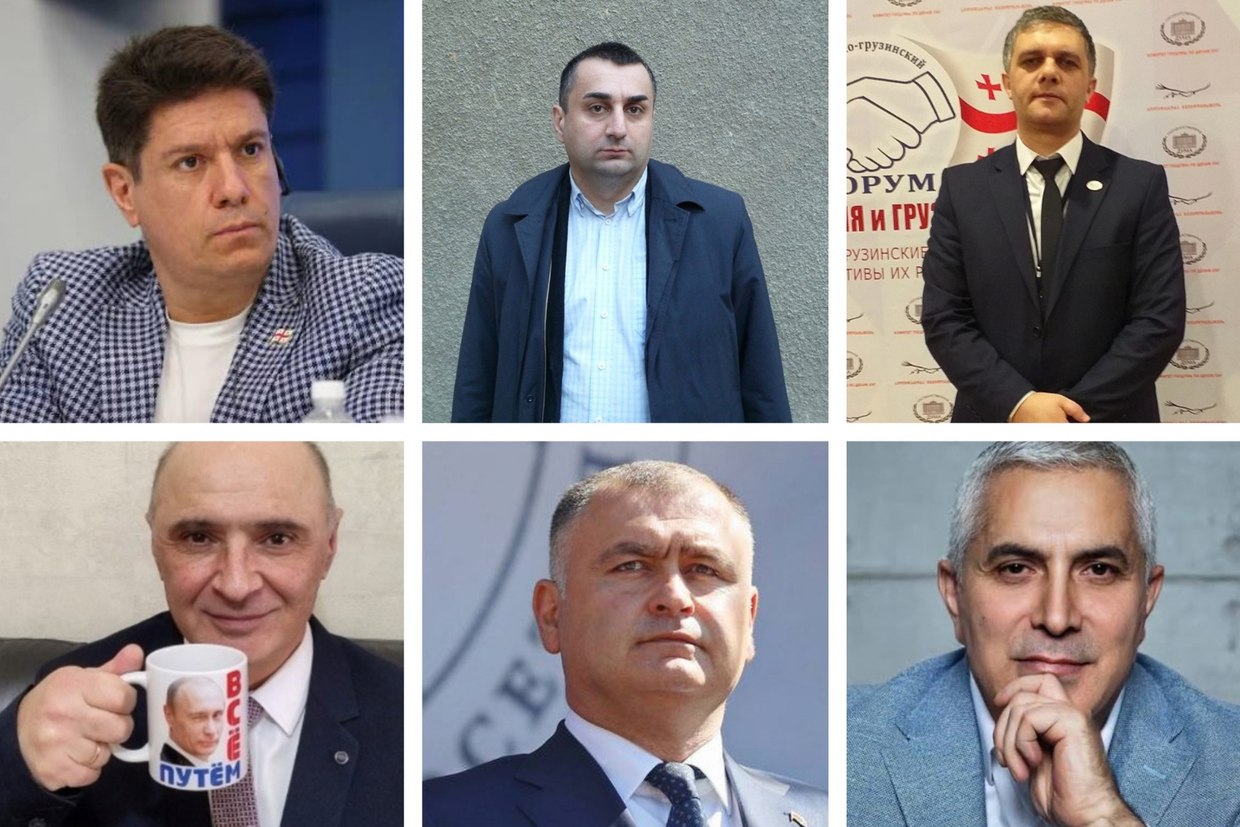
UK sanctions four Georgians — including Tbilisi mayor’s brother‑in‑law — and South Ossetian leaders over links to Russian‑held Donetsk
The UK has placed asset freezes, travel bans and other restrictions on four Georgian nationals and two South Ossetian figures as part of a wider package targeting those it says threaten Ukraine’s sovereignty. Among the Georgians sanctioned are members and affiliates of the pro‑Russia Solidarity for Peace movement and Paata Abuladze, the brother‑in‑law of Tbilisi mayor Kakha Kaladze, who the UK says visited Russian‑controlled Donetsk.
By Lana Kokaia
866 views
The United Kingdom has imposed sanctions on four Georgian nationals and two figures linked to South Ossetia as part of a broader measures package aimed at individuals and entities the UK says threaten Ukraine’s sovereignty, territorial integrity and independence. The Georgian targets include Mamuka Pipia, Giorgi Iremadze, Nikoloz Mzhavanadze and Paata Abuladze — the latter identified by the UK as the brother‑in‑law of Tbilisi Mayor Kakha Kaladze. The South Ossetian figures named are current and former presidents Marat Kambolov and Alan Gagloev.
The UK sanctions involve asset freezes, bans on travelling to the UK, restrictions on trust services and prohibitions on serving as a company director. British officials said the package totals 31 individuals, entities and ships designated under its Russia sanctions regulations. The British Embassy in Tbilisi highlighted that several of the listed people have links to the occupied Georgian regions of Abkhazia and South Ossetia.
The British government says the four Georgians were sanctioned chiefly on the grounds that they participated in and publicised a delegation of Georgian politicians to Russian‑occupied Donetsk, where they met the head of the self‑styled Donetsk People’s Republic. Mamuka Pipia, identified as leader and international secretary of the Solidarity for Peace party — which has advocated restoring diplomatic relations between Georgia and Russia — is accused of leading that delegation and promoting Russian disinformation narratives.
Giorgi Iremadze, a member of Solidarity for Peace’s political council and founder of the Union of Young Eurasians of Georgia, is alleged to have joined the Donetsk visit and to have promoted or supported policies that destabilise Ukraine. Nikoloz Mzhavanadze, founder of Sezoni TV and head of the Taonews portal, is also reported to have taken part in the delegation and was included in the sanctions list on that basis.
Paata Abuladze is described in the UK notice as a Georgian political and military commentator and is named for his involvement in the Donetsk trip. The sanctions record notes he is the husband of the Tbilisi mayor’s step‑sister. Abuladze responded on social media after the announcement, appearing on a Facebook Live broadcast in which he said the UK had “congratulated” him by sanctioning him. He added, referencing his wife’s birthday, “Give them my big thanks. You won’t be able to give me a bigger present for my wife’s birthday, so don’t even try.”
Two South Ossetian figures were also targeted. Alan Gagloev, who served as South Ossetia’s president from 2022 to 2026 and is now described by the UK as an adviser to Russian President Vladimir Putin, was sanctioned on the grounds that he obtained a benefit from or supported the Russian government in that role. Marat Kambolov, who became South Ossetia’s president on 30 September, is said by the UK to have obtained benefits from Russia during his tenure as a director or equivalent manager at Russia’s Kurchatov Institute between 2015 and 2025; the British notice highlights the institute’s operations in Russia’s energy sector and its links to Russian state interests.
The British Embassy in Georgia framed the designations as part of a response to what it called Russia’s broader pattern of disregarding the sovereignty and internationally recognised borders of its neighbours, including Georgia. The embassy also condemned attempts by Russia to consolidate control over Georgia’s occupied regions and referenced the so‑called presidential election held in South Ossetia on 18 September as an example of that consolidation. The UK reiterated its commitment to supporting Georgia’s territorial integrity within its internationally recognised borders.
The sanctions follow earlier UK measures against Georgian officials over human rights and rule‑of‑law concerns. In December 2024, the UK sanctioned five senior Interior Ministry officials over alleged roles in violent attacks against journalists and peaceful protesters. In April 2025 the UK placed financial sanctions on judges Levan Murusidze and Mikheil Chinchaladze for alleged serious corruption, and later imposed sanctions on other senior officials, including Prosecutor General Giorgi Gabitashvili, over alleged roles in rights abuses during protest responses. EU member states have also taken individual measures against Georgian figures, and the EU has suspended visa‑free travel for Georgian diplomatic and service passport holders.
The UK statement and the individuals named underline continuing Western scrutiny of connections between Georgian political actors, media figures and Russia amid the ongoing war in Ukraine and concerns about influence operations and the erosion of democratic norms. The designations may sharpen scrutiny of pro‑Russian currents within Georgian civil and political life and add a diplomatic layer of pressure related to occupations in Abkhazia and South Ossetia.