Ufa court fines pensioner 10,000 rubles over rally defending Bashkort language education
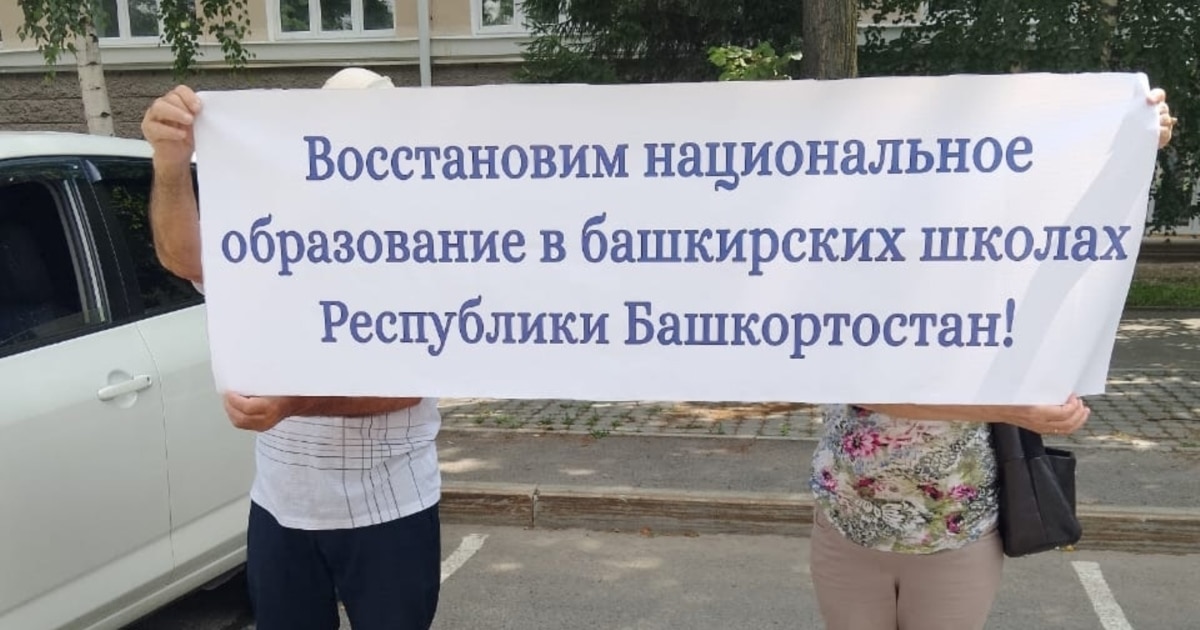
A Kirov district court in Ufa has fined 70-year-old activist Fayma Gazizova 10,000 rubles for taking part in a July 3 picket calling for restoration of Bashkort-language education. The action, which involved five participants and was held outside the Bashkortstan Ministry of Education and Science, has prompted administrative cases and a short detention for another activist from the Aktamyr group.
By Blake Marriott
1,129 views
A district court in Ufa has imposed a 10,000-ruble fine on pensioner and language-rights activist Fayma Gazizova for participating in a street action in support of Bashkort-language education, according to a decision issued on July 15. The Kirov district court found Gazizova administratively liable under the provision on violations of picket procedures (Article 20.2, part 5 of the Russian Code of Administrative Offenses), a case that local media outlet 7x7 drew attention to.
The administrative protocol against Gazizova was drawn up on July 3 following a small protest held in front of the Bashkortstan Ministry of Education and Science building in Ufa. Organizers say five people took part in the event, carrying slogans including "Башкортстан мәгариф министры Илдар Мәүлетбирдинга – вазифасыннан китәргә!", "Башкортстан мәктәпләрендә милли мәгарифне торгызыйк!", and "Федератив дәүләттә мәгариф бертөрле генә була алмый!". Those attending say ministry representatives invited them into the building to talk, but the participants refused and later dispersed on their own.
Gazizova accepted responsibility in court and asked the judge not to impose an administrative arrest, citing her status as a pensioner and her need to care for an elderly husband. The court instead imposed a monetary penalty. The decision follows a separate enforcement action linked to the same protest: earlier, Ufa authorities detained and ordered three days of administrative arrest for 67-year-old Irek Agishev, the head of the local Aktamyr organization, which has campaigned for Bashkort-language education and the opening of national-language kindergartens and schools since its founding in 1994.
The Kirov district court treated Agishev’s action as a mass public event that required prior agreement with authorities; Agishev rejected the charge, telling the court that he had been conducting an individual (solo) picket. Activists and observers say these cases reflect pressure on grassroots campaigns that advocate for stronger protections for minority-language education.
Aktamyr, a group that describes itself as supporting Bashkort public education, has a history of agitating for compulsory Bashkort-language instruction and has publicly opposed several regional decisions, including a campaign against proposals to commemorate the late LDPR leader Vladimir Zhirinovsky in Bashkortstan at the end of 2025. The organization’s activities have brought it into repeated contact with regional authorities.
The prosecutions come against a wider legal and demographic backdrop: since 2018, the Russian federal policy no longer obliges schools to teach national minority languages as part of the core curriculum, leaving instruction in these languages to parental choice. Language specialists and activists have warned that this change has had a negative impact on Bashkort and other regional languages. Census data cited by authorities and analysts show a decline in the number of Bashkort speakers: according to the 2021 census, the number of people who reported knowing Bashkort fell by about 6 percent compared with a decade earlier. Current figures indicate roughly 1.08 million people in Russia know Bashkort; some 941,000 reportedly use it in everyday life, down from 1.37 million in 2002.
International institutions have also flagged risks to these languages. UNESCO’s Atlas of the World’s Languages classifies both Tatar and Bashkort as "Potentially vulnerable". Human-rights and language-advocacy groups say administrative penalties for peaceful demonstrations — even small pickets — and the broader policy shift away from compulsory instruction place minority languages under increased pressure, with consequences for cultural rights and the ability of communities to pass languages on to new generations.
The fines and short detentions in Ufa add to a pattern of administrative enforcement against activists who organize or take part in small-scale public actions defending minority-language education and other civic causes. Local activists and rights monitors say these measures create a chilling effect on public dissent and civic mobilization around linguistic and cultural rights in Bashkortstan and elsewhere in Russia. The report was originally published by Azatlyk (RFE/RL).