UAE Exits OPEC on May 1, Deepens Strategic Ties with the United States Across Energy, Defense and AI
The United Arab Emirates will leave OPEC effective May 1, a decision President Trump called “ great ” that could reshape regional energy routes and reduce U.S. gasoline prices. Beyond hydrocarbons, the UAE has expanded cooperation with the United States through major arms purchases, hosting U.S. military bases, joint counterterrorism actions, large trade and investment deals, and substantial commitments to American AI and critical-minerals projects.
By Steve Postal
882 views
The United Arab Emirates announced that it will leave the Organization of the Petroleum Exporting Countries (OPEC) effective May 1, a shift that observers say could have material consequences for global energy flows and U.S. fuel prices. President Trump publicly approved the move, describing it as “ great ” and praising the UAE’s leadership. In 2025 the Emirates was OPEC’s third-largest crude producer, with output reported at 3.82 million barrels per day, and it operates the Habshan-Fujairah oil pipeline — officially the Abu Dhabi Crude Oil Pipeline (ADCOP) — a key route designed to reduce reliance on the Straits of Hormuz. Analysts argue that the UAE’s withdrawal may lower gasoline prices in the United States and strengthen the Emirates’ position as an alternate energy corridor that can bypass Iran and the Hormuz chokepoint.
The announcement arrives against a backdrop of close strategic cooperation between Washington and Abu Dhabi that extends well beyond petroleum. The UAE has been a significant buyer of U.S. defense equipment. In March, U.S. approvals included more than $7.5 billion in sales detailed to include long-range discrimination radar and materials to track ballistic missiles ($4.5 billion), anti-UAV/drone technology ($2.1 billion), air-to-air missiles ($1.22 billion), and F-16 upgrades and munitions ($644 million). Previous U.S. foreign military sales to the Emirates have totaled nearly $30 billion, a relationship the State Department said has helped make the UAE “a net security provider for the region.” Those prior sales listed by officials encompass a wide range of platforms and munitions: F-35 Joint Strike Fighter aircraft; MQ-9B Remotely Piloted Aircraft; Mine Resistant Ambush Protected Vehicles; CH-47F Chinook cargo helicopters; Terminal High Altitude Area Defense missiles; both new and refurbished AH-64E helicopters; Large Aircraft Infrared Countermeasures systems; MK-82, MK-84, GBU-39 Small Diameter Bombs, GBU-58 Paveway II, and KMU-572 JDAM munitions; and AIM-120C8 AMRAAM, AGM-154C JSOW, AGM-154E JSOW-ER, AGM-88E AARGM, Patriot, Javelin, AIM-9X Sidewinder, and AGM-114 Hellfire missiles.
U.S. forces maintain a substantial presence in the Emirates, using bases that enable American power projection across the Middle East. The United States operates at least three bases in the UAE, including Al Dhafra Air Base — which hosts U.S. Air Force and Army elements and approximately 3,500 U.S. personnel — as well as Al Minhad Air Base and the Fujairah Naval Base. These facilities have supported operations directed at regional threats and provided logistics and presence that U.S. officials say are central to deterrence, particularly regarding Iran.
Abu Dhabi has also cooperated with the United States on counterterrorism. UAE authorities have reported dismantling cells linked to Iran’s Wilayat Al Faqih and, separately, a Hezbollah/Iran-connected cell operating within the Emirates in recent months. The UAE has publicly committed funds to regional stability efforts as well: in February it provided $1.2 billion intended to facilitate a U.S.-backed peace plan in Gaza and to pursue initiatives aimed at de-radicalization. The Emirates has a history of working with U.S. forces on the battlefield and in hostage cases; U.S. leaders, including President Trump and former Secretary of State Mike Pompeo, credited the UAE for help in returning Danny Burch in 2019, a U.S. national believed to have been held by Houthi-aligned forces. U.S. and Emirati forces have also collaborated in operations such as the 2016 Battle of Mukalla in Yemen, a 36-hour effort praised by General Jim Mattis in which Emirati-led forces helped liberate the port of Mukalla from Al Qaeda in the Arabian Peninsula.
On its domestic counterterrorism list, the UAE has designated numerous groups as terrorist organizations, including Al-Qaeda, Hezbollah, the Houthis, the Islamic State and the Muslim Brotherhood. The UAE publicly lobbied for reclassification of the Houthis after they were removed from the U.S. Foreign Terrorist Organization list under the Biden administration; the Trump administration restored the Houthis to that list in January 2025, reflecting a point of policy alignment with Abu Dhabi.
Economic and technological ties between the two countries have also deepened. The UAE has been the largest Gulf trade partner of the United States for nearly two decades, with total bilateral trade reported at $39 billion in 2025 and a U.S. trade surplus with the Emirates of $19.5 billion in 2024 — the third-largest surplus worldwide. High-profile investment and trade deals announced during President Trump’s 2025 visit to Abu Dhabi amounted to more than $200 billion in commitments, according to officials. Those included a Boeing-GE related investment ($14.5 billion investment from Etihad Airways), a $4 billion primary aluminum smelter project in Oklahoma involving Emirates Global Aluminum, and an ExxonMobil/Occidental Petroleum/EOG Resources agreement with Abu Dhabi National Oil Company for oil and gas production valued at $60 billion. An RTX-related deal with Emirates Global Aluminum and the UAE’s Tawazun Council to help secure U.S. critical mineral supply chains was also among the agreements described by officials.
Strategic industrial cooperation has extended into rare-earths and artificial intelligence. In October 2025 Abu Dhabi’s sovereign wealth fund ADQ contributed $600 million toward a $1.8 billion consortium to mine rare earths and lithium for the U.S. and Western markets, an effort framed as countering Chinese dominance in those sectors. In AI, UAE companies and funds have pledged or deployed substantial capital to U.S. infrastructure. DAMAC said in January 2026 that it had already invested $12 billion of a $20 billion pledge for U.S. data centers; the UAE joined Pax Silica — the State Department’s initiative on AI and supply chain security — as its ninth signatory in January 2026, and Pax Silica had 13 members at that time. U.S.-UAE cooperation also includes large proposed AI investment vehicles: the U.S.-UAE Business Council noted that MGX, together with Microsoft and Blackrock, is a partner on an AI infrastructure investment fund that aims to mobilize up to $100 billion, and that MGX is a founding member of the Stargate Project, which plans to invest up to $500 billion in AI infrastructure.
The two governments have formalized cooperation in the sector as well. President Trump brokered the U.S.-UAE AI Acceleration Partnership, signed during his May 2025 visit, which held an inaugural meeting in April 2026. In May 2025 the countries inaugurated a 5GW UAE-U.S. AI Campus in Abu Dhabi intended to host American-operated data centers and cloud services for the region. Earlier in 2025, the UAE pledged a 10-year, $1.4 trillion investment target in AI infrastructure, semiconductors, energy, quantum computing, biotechnology and manufacturing, framed partly as commitments to American digital infrastructure.
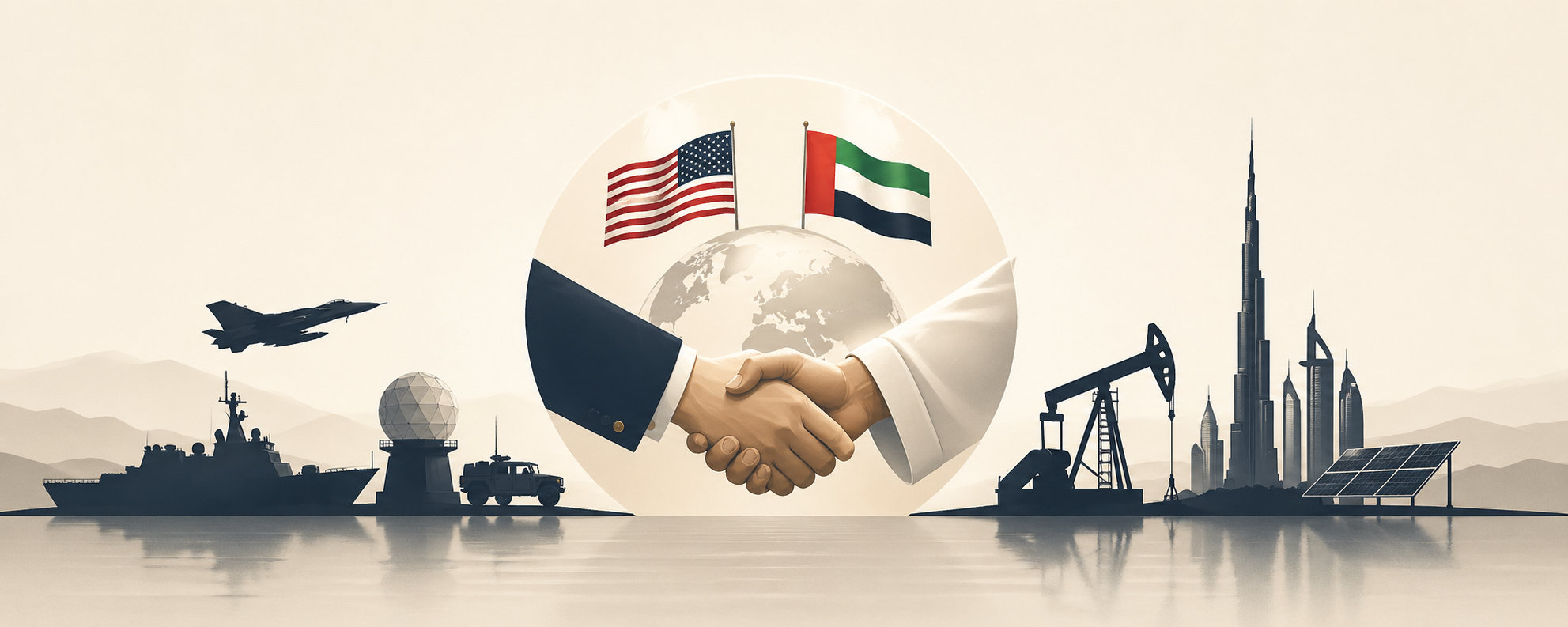
UAE departure from OPEC thus comes at a moment when Abu Dhabi is simultaneously expanding its economic, military and technological ties with Washington. Observers say leaving OPEC could reshape energy geopolitics by strengthening alternative export corridors and reducing chokepoint risk, while the depth of bilateral cooperation across defense, trade, and advanced technologies underscores the UAE’s growing role as a strategic partner for the United States in the region.