
UAE and Saudi Arabia Conduct Strikes Inside Iran but Pursue Different Strategies, Raising Risks for Gulf Security
The United Arab Emirates and Saudi Arabia each carried out covert military strikes inside Iran during the wider Iran war, according to reporting by The Wall Street Journal and Reuters, marking the first credible confirmation that Gulf Arab states moved from absorbing Iranian attacks to directly striking Iranian territory. The Journal reported on May 11 that the UAE conducted strikes against Iran, including an attack on an oil refinery on Lavan Island in the Persian Gulf in early April, while Reuters reported the following day that the Saudi air force had hit Iran in late March in an effort to pressure Tehran into easing its assault on the kingdom. Neither Abu Dhabi nor Riyadh has publicly confirmed the operations, and analysts say the two governments pursued markedly different strategies—the UAE adopting a more aggressive, Israel-aligned posture and Saudi Arabia favoring limited strikes meant to deter further Iranian operations—a divergence that could heighten the risk of Iranian retaliation and complicate regional diplomacy.
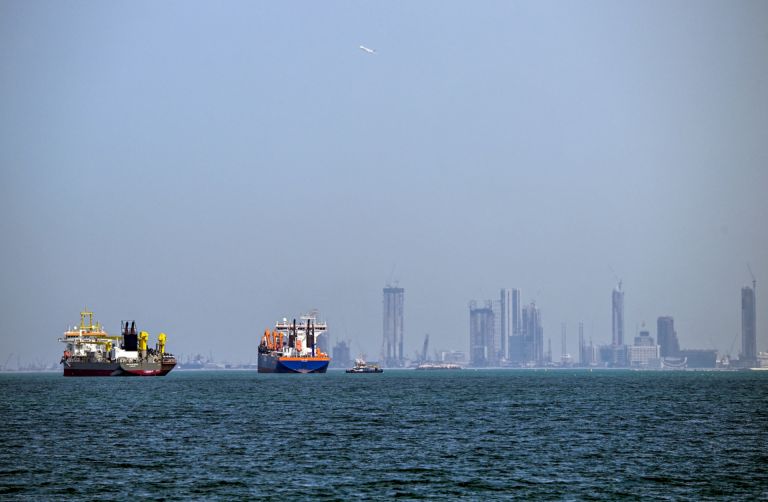
The single most concrete instance of Emirati involvement cited in the reporting was the April 8 strike on the Lavan Island refinery, an operation that disabled a significant share of the facility's production capacity. Its timing was especially fraught: the attack came around the moment a U.S.-brokered, two-week ceasefire was being announced—a truce reached less than two hours before a Trump deadline for Tehran to reopen the Strait of Hormuz, mediated in part by Pakistan. Iran acknowledged at the time that the site had been hit by an unspecified enemy and responded by firing missiles and drones at the UAE and Kuwait; Iranian state media had earlier accused Abu Dhabi, and at points Kuwait, of enabling attacks on Iranian territory, including alleged strikes launched from rocket systems based near Dubai and in Ras Al Khaimah. Washington, for its part, quietly welcomed the Emirati action, with a U.S. official telling the Journal that other Gulf states wishing to join the war were encouraged to do so.
Saudi Arabia's strikes, assessed to have occurred in late March, appear to have been calibrated differently. Western officials described them to Reuters as essentially tit-for-tat retaliation after the kingdom itself came under fire, intended less to escalate than to impose a cost and reestablish deterrence. Notably, the Saudi approach was paired with diplomacy: Iranian and Western officials said Riyadh made Tehran aware of its strikes, which was followed by intensive diplomatic engagement and Saudi warnings of further retaliation, ultimately producing an understanding between the two governments to de-escalate. That sequence underscores how the Saudi leadership, while willing to strike, sought to keep the exchange contained—a contrast with the UAE's more pre-emptive, harder-edged posture.
The divergence in tactics matters for several reasons. It complicates efforts by outside actors, notably the United States and regional mediators, to manage and wind down the conflict: when close partners pursue different approaches—one favoring direct, pre-emptive pressure and the other calibrated deterrence—it becomes harder to craft a unified diplomatic response or to anticipate how Tehran will react. Analysts also warn that the UAE's more confrontational stance leaves it more exposed to retaliation from Iran or Iran-backed proxies, particularly if Tehran concludes that aggressive Emirati strikes crossed a red line. As one regional security expert noted, Iranian authorities must now reckon with the prospect of direct retaliation from the Gulf states themselves rather than only from the U.S. and Israel.
Saudi Arabia's decision to strike, even if framed primarily as deterrence, carries its own dangers. Limited strikes can still trigger reciprocal action, miscalculation, or rapid escalation if Tehran chooses to respond with greater force or to lean on proxy groups to impose costs on Riyadh and its partners. The reported timing of the Saudi strikes in mid-to-late March suggests a degree of urgency in the kingdom's calculations, aimed at blunting attacks perceived as directly threatening Saudi territory after its U.S.-backed defenses had been repeatedly breached during the conflict. The episode also created a narrative problem for Tehran, which has cast itself as the victim of an unprovoked war of aggression by the United States and Israel; more overt involvement by the Gulf states undercuts that framing, even as it raises the danger of a wider regional war.
The revelations also illuminate a shifting security environment in the Gulf, where states are balancing long-standing partnerships with Washington, deepening ties with Israel, and a growing impulse to take independent measures to protect national interests. The 2026 war shattered the fragile détente that had followed the 2023 China-brokered restoration of Saudi-Iranian relations, pushing the monarchies back toward open confrontation with Tehran. That both Abu Dhabi and Riyadh acted covertly—while publicly denying active participation, with the UAE asserting only a right to defend itself against hostile attacks—reflects their attempt to assert their security interests without formally becoming combatants and inviting the full weight of Iranian reprisal.
The disclosures arrived at a precarious diplomatic moment. The two-week ceasefire announced on April 8 had largely held but was repeatedly violated by both sides and punctuated by a continuing shadow drone war, with Kuwait, the UAE, and Iran all reporting intercepts in their territories. By mid-May, President Donald Trump described the truce as "on life support" after rejecting an Iranian proposal he deemed unacceptable—Tehran's terms reportedly included an end to the war on all fronts, the lifting of sanctions, compensation for war damage, recognition of Iranian sovereignty over the Strait of Hormuz, and guarantees against further attacks. Gulf states including Saudi Arabia, Qatar, and the UAE have urged Washington to suspend the military campaign, fearing both Iranian retaliation against the region and further damage to global energy markets, which the conflict has thrown into what Gulf governments have called the worst energy crisis in decades. Qatar and Pakistan have remained central to backchannel mediation efforts.
While details of the strikes remain limited and unconfirmed by the governments involved, the disclosure that Gulf Arab states have crossed from indirect confrontation into direct strikes on Iranian soil is a consequential development. It raises pressing questions about escalation management, the future of Gulf-Israel security cooperation, and how Tehran will choose to respond—whether by absorbing the revelations quietly to preserve its preferred narrative, or by signaling that the Gulf monarchies are now legitimate targets in their own right. The absence of a unified Gulf strategy weakens collective deterrence and raises the likelihood of asymmetric retaliation, leaving the region's near-term security outlook more uncertain than at any point since the war began.