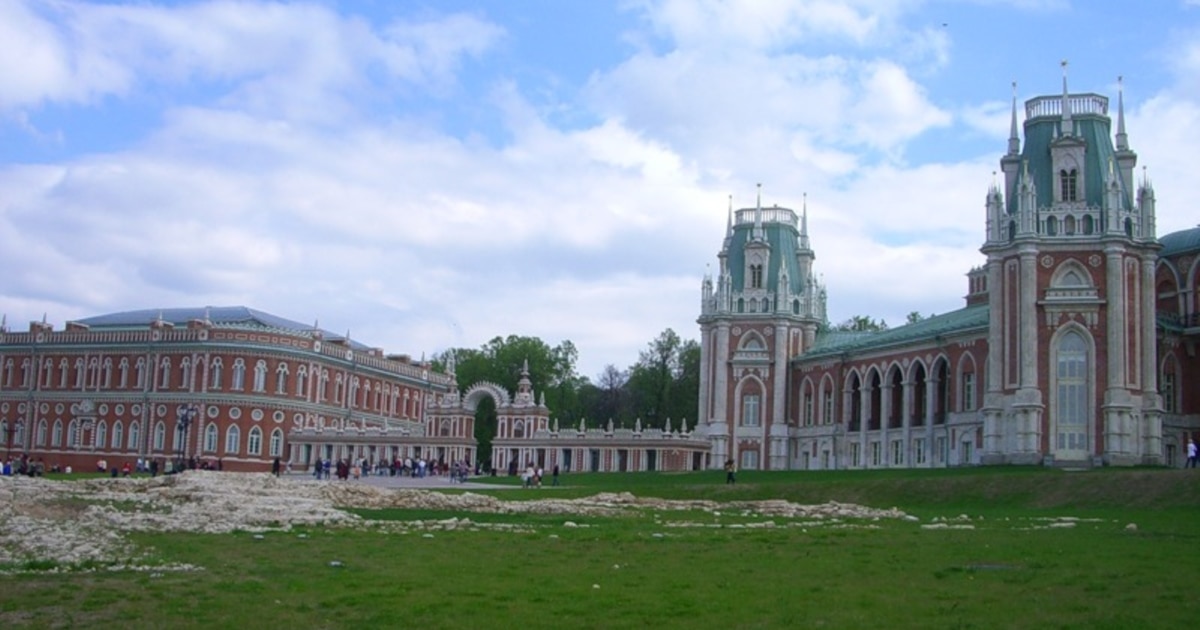
U.S. Warns of Credible Threat at Moscow’s Tsaritsyno; Russian FSB Says It Received U.S. Intelligence on Planned Attack
Russian security authorities say they received information from U.S. partners about preparations for a possible terrorist act in Moscow, and are conducting operations in response. The U.S. Embassy in Russia issued a warning to American citizens about a "credible threat" at the Tsaritsyno museum-reserve and said it is coordinating response measures with Russian authorities.
By Christopher Manley
1,026 views
Russian security authorities and the U.S. diplomatic mission in Moscow issued warnings on the same day after Washington provided information about a suspected plot to carry out an attack in the Russian capital. The Russian Federal Security Service (FSB) told the TASS news agency that it had received information from the American side through a partner channel indicating preparations for a terrorist act in Moscow and that it was conducting appropriate work in response.
Separately, the U.S. Embassy in Russia alerted American citizens to a "credible threat" of an incident with mass casualties at the Tsaritsyno museum-reserve in Moscow. The embassy's advisory urged U.S. nationals to stay away from the area, remain vigilant and avoid crowded places. The diplomatic mission added that the U.S. government was coordinating response measures with the relevant Russian authorities.
Neither the FSB nor the U.S. Embassy provided further operational details publicly concerning the nature of the alleged plot, the time frame for the threat, or any suspected perpetrators. The available information does not indicate that an attack has occurred; the statements describe intelligence about preparations and steps being taken by security services to address the potential threat.
The two statements underscore active intelligence-sharing and bilateral coordination between U.S. and Russian security services in the face of an alleged imminent threat. Such cooperation is notable given broader tensions in U.S.-Russia relations; however, both sides framed their communications in narrowly security-focused terms. The FSB’s public comment, relayed by the TASS news agency, noted receipt of information through a "partner channel" and said that corresponding work was underway.
The U.S. Embassy’s public advisory was targeted at American citizens in Russia and emphasized precautionary measures. It specifically named the Tsaritsyno museum-reserve as a location of concern and recommended avoiding that site and other crowded places. Warnings of this kind typically aim to reduce risk to civilians and allow security services to operate with fewer bystanders in affected areas. The embassy also said U.S. authorities were implementing responsive steps in coordination with Russian agencies.
At this stage, open-source reporting provides only the limited details supplied by the FSB and the U.S. Embassy. There has been no public claim of responsibility, no confirmed arrests reported in the statements cited, and no independent verification of the underlying intelligence published alongside the warnings. The absence of such detail is common in the earliest stages of counterterrorism responses, when authorities often limit public disclosures to avoid compromising ongoing operations or revealing intelligence sources and methods.
The advisory and security services’ acknowledgement have immediate implications for public safety and civil liberties in Moscow. Authorities will likely increase security measures and public warnings can affect movement, tourism, and public events. The cooperation between U.S. and Russian agencies in sharing and acting on threat information is significant for preventing potential attacks, but it also raises questions about transparency and the public’s right to information as authorities balance operational secrecy with the need to keep communities safe.
News organizations will continue to monitor official channels for updates from Russian security services, the U.S. Embassy, and other authorities about any operational developments, arrests, or changes in the threat assessment. For now, the clear guidance from the U.S. diplomatic mission is to avoid the named location, remain vigilant, and keep abreast of further announcements from local and international authorities.