U.S. Steps Raise Prospect of Targeted Military Action in Cuba as Prosecutors Indict Raul Castro
A combination of legal measures and targeted political messaging suggests Washington is laying the groundwork to justify the potential use of force against Cuba. On May 20, U.S. prosecutors unsealed an indictment against former Cuban President Raul Castro related to the 1996 downing of two U.S.-based exile planes, while Senator Marco Rubio released a Spanish-language video urging Cubans to reject the island’s military conglomerate, GAESA.
By Alexander Walter
1,088 views
Recent developments in Washington have heightened scrutiny of U.S.-Cuba relations and raised questions about whether the United States is preparing conditions that could justify the use of force against Havana. Analysts monitoring the situation say that while a full-scale invasion appears unlikely at present, there is growing evidence that U.S. policymakers are considering more limited, targeted military operations—most plausibly actions aimed at capturing or detaining high-ranking Cuban officials believed responsible for past or ongoing abuses.
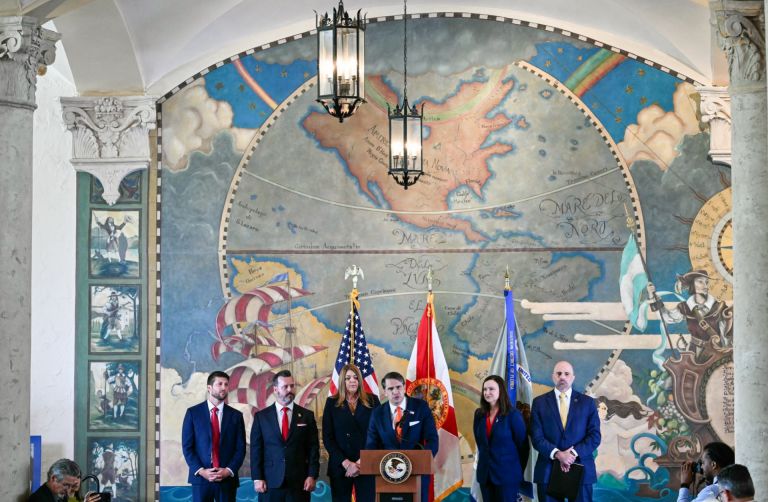
On May 20, U.S. federal prosecutors unsealed an indictment charging former Cuban President Raul Castro (who led Cuba from 2008 to 2018) on various counts tied to the Cuban government's 1996 downing of two planes piloted by U.S.-based exiles. The indictment represents a concrete legal step by Washington and signals an escalation in the United States’ willingness to pursue accountability for actions it deems criminal, even when those actions involve senior foreign political figures.
The same day, U.S. Senator Marco Rubio, who is the son of Cuban immigrants, released a Spanish-language video directed to the Cuban people. In that video he blamed recent hardships on Cuba’s communist leadership and said, "President [Donald] Trump is offering a new relationship between the U.S. and Cuba. But it must be directly with you, the Cuban people, not with GAESA," a reference to the island’s powerful military-run conglomerate. Rubio’s messaging frames GAESA as a central barrier to U.S.-Cuba rapprochement and underscores a political narrative that links economic and governance grievances on the island to the authority of the military and security apparatus.
Taken together, the legal action and high-profile political outreach are viewed by observers as complementary elements of a strategy to build domestic and international justification for more assertive measures. Targeted operations—designed to capture or remove specific Cuban leaders or figures—would aim to minimize casualties and international backlash while achieving a discrete objective. Such operations require extensive intelligence, pre-positioned forces or capabilities, and plausible legal authority or pretext, all of which appear to be factors U.S. officials are now emphasizing publicly and privately.
Despite the focus on limited operations, analysts caution that broader military options cannot be ruled out. Escalating to a larger-scale intervention would carry significantly greater risks, including protracted conflict, civilian casualties, destabilization across the Caribbean, and strained relations with allies and regional partners. It would also create complex legal and diplomatic challenges for the United States, given Cuba’s sovereignty and the potential international condemnation of overt military action.
The possibility of U.S. force against Cuba also raises operational questions about logistics, intelligence, and the island’s defenses. Cuba’s proximity to U.S. territory and the presence of established Cuban security forces and intelligence services make even targeted actions complex. Moreover, moves perceived as coercive by the population could harden nationalist sentiment and complicate any U.S. objective of fostering a new bilateral relationship with Cuban citizens and civil society.
For now, officials and analysts will be watching further legal filings, public statements by U.S. policymakers, and any shifts in the posture of U.S. military or covert capabilities in the region. The interplay between indictments, political messaging aimed at Cuban audiences, and potential operational planning will determine whether Washington’s actions remain primarily rhetorical and legal or move toward concrete military steps. Whatever the next phase, the combination of legal proceedings and diplomatic signals represents a notable intensification of U.S. pressure on Havana, with implications that extend beyond bilateral relations to regional security dynamics.