U.S. Says It Has Pressed Iran to Admit Attacks on Civilian Ships Were a 'Mistake' as Sanctions, Strikes and Fragile Dealmaking Collide
U.S. officials have sought a public admission from Iran that recent attacks on civilian vessels in the Strait of Hormuz were an error, CBS reported. While Iranian officials reportedly conceded the strikes privately, Tehran publicly blamed Washington for violating a fragile memorandum after new U.S. sanctions, complicating ceasefire arrangements and prompting U.S. strikes on Iranian targets.
By Vanessa Bergmann
973 views
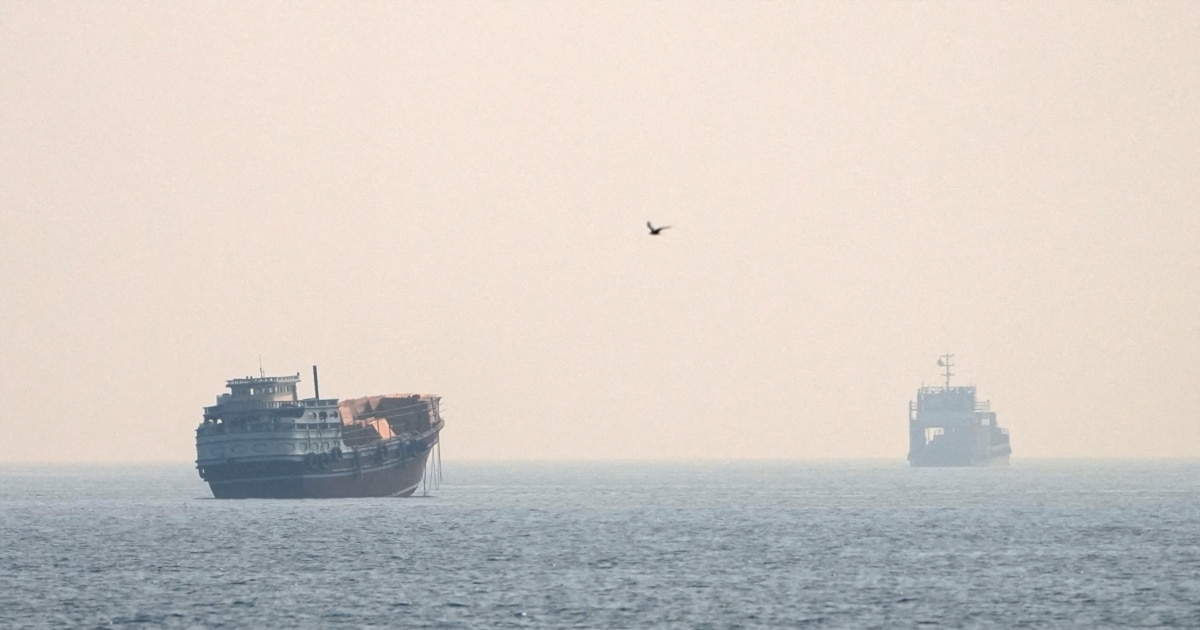
U.S. officials have been pressing Iran to publicly concede that recent attacks on civilian vessels transiting the Strait of Hormuz were made in error, according to a CBS News report citing a senior U.S. administration official. The demand comes amid a tense sequence of actions and reactions that have tested a fragile memorandum intended to halt hostilities and reopen the crucial shipping lane for 60 days while negotiators pursue a longer-term settlement.
CBS reported that in private conversations Iranian officials acknowledged the attacks were a "შეცდომის" — an admitted mistake — but that Tehran has not issued such an admission publicly. Instead, Iranian authorities have pointed the finger at the United States, accusing Washington of violating the memorandum that aimed to de-escalate the confrontation in the region.
Iran’s foreign ministry voice has been prominent in that public messaging. Iranian Deputy Foreign Minister Abbas Araqchi wrote that the agreement was undermined by actions from Washington, specifically singling out a new set of U.S. Treasury Department sanctions as a breach of the understanding. Those sanctions, announced on July 10, targeted an Iran-linked businessman identified by U.S. officials as Ali Ansari and three Iranian companies involved in currency exchange operations.
U.S. officials say Ali Ansari operated a global portfolio of assets spanning jurisdictions including Germany, the United Kingdom, Spain, Cyprus and the United Arab Emirates. The Treasury and State Department have described the network as a financial instrument used by elements of Iran’s ruling elite and members of the Islamic Revolutionary Guard Corps. The Washington moves were the first sanctions imposed since the mid-June memorandum on ending hostilities was signed, and Tehran presents them as evidence the United States has not fully honored the pact.
The memorandum itself envisaged an end to fighting, the reopening of the Strait of Hormuz for 60 days, and a period of negotiations intended to yield a final peace settlement, alongside partial relief from certain sanctions. Despite that framework, Iranian forces carried out several strikes on vessels in the Strait of Hormuz, actions that prompted U.S. retaliatory strikes against targets located inside Iran. The exchanges have heightened concern about miscalculation and the safety of commercial shipping and crew in one of the world's busiest oil transit chokepoints.
U.S. President Donald Trump has described the ceasefire as no longer in effect, even as he has said he agreed to continue negotiations with Iran. Reports say Mr. Trump instructed a negotiating team to pursue the talks; however, there has been no public confirmation of a concrete new diplomatic round from U.S. or Iranian authorities. CBS also reported that Araqchi was in Oman for talks that could relate to a potential new phase of U.S.-Iran negotiations, though official statements on that possibility have not been issued.
The dispute over whether Iran will publicly acknowledge responsibility for the strikes goes beyond a matter of language. A formal admission would be central to establishing accountability and enabling confidence-building measures that could revive the ceasefire and allow more substantive diplomacy. The U.S. insistence on a public acknowledgment indicates Washington sees such transparency as a necessary precursor to trust and to any further steps on sanctions relief or broader talks.
For now, the sequence of attacks, sanctions and limited diplomacy underscores the fragility of the current de-escalation. It highlights how quickly measures taken by either side — including targeted sanctions or military responses — can be framed as violations and provoke renewed hostilities. The situation remains volatile, with civilian maritime traffic and regional security dependent on whether both capitals can find a mutually acceptable path forward that addresses both immediate security concerns and the underlying grievances driving the confrontation.