U.S. Official Says Ceasefire with Iran Holds Despite Naval Clashes and Strikes on Gulf Targets
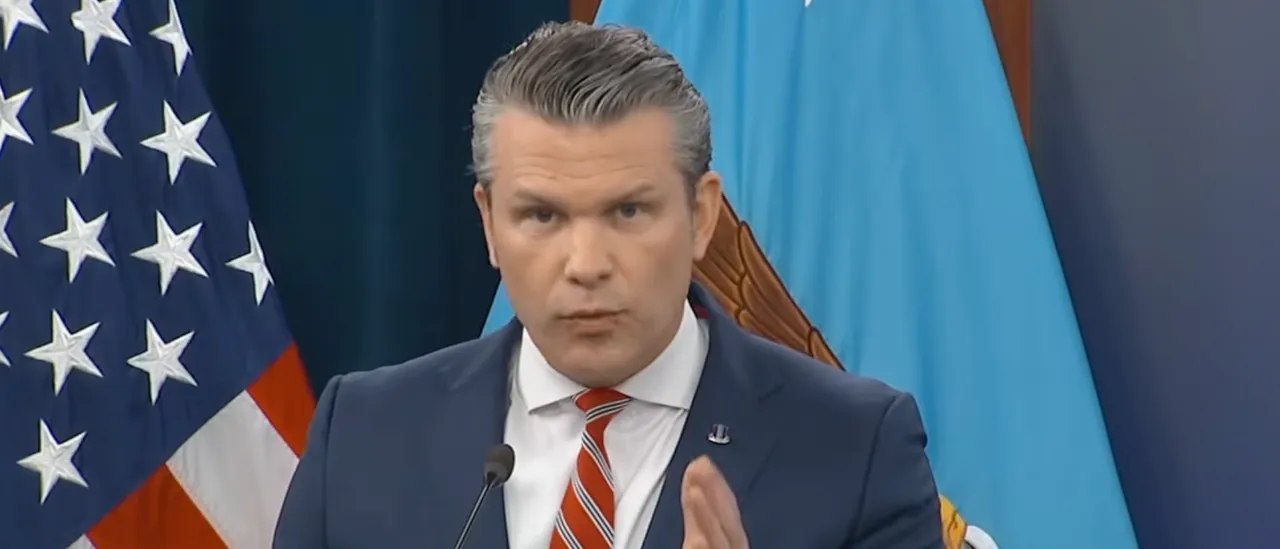
Secretary of War Pete Hegseth said Tuesday that a ceasefire between the United States and Iran remains in effect even after U.S. forces destroyed multiple Iranian vessels and Iran retaliated with strikes that included targets in the United Arab Emirates. The developments have prompted criticism from lawmakers and a warning from Iran’s foreign minister against further escalation.
By Clémence Desjardins
1,106 views
The flashpoint was the launch of a new U.S. military operation in the strait. Dubbed "Project Freedom," it began the prior day under President Trump's direction and was described by the administration as an effort to "guide" commercial vessels and tankers — many of them stranded for weeks in the Persian Gulf — safely out through the Strait of Hormuz, in defiance of Iranian threats to the waterway. Hegseth drew a sharp line between the new operation and the war that preceded it, casting Project Freedom as "separate and distinct" from the earlier campaign against Iran. He characterized it as "defensive in nature, focused in scope, and temporary in duration," with the single mission of protecting commercial shipping from Iranian aggression.
The operation triggered an immediate exchange. The head of U.S. Central Command, Adm. Brad Cooper, told reporters that U.S. forces had destroyed several Iranian small boats that attempted to interfere with the transit effort — accounts of the exact number ranged from six to eight as the administration's own figures shifted over the following hours. Central Command said two U.S.-flagged commercial vessels had safely transited the waterway under the program's protection, escorted by U.S. Navy destroyers, and reported that no American ships were struck.
Iran answered swiftly. It launched strikes on several nearby targets, including an attack on the United Arab Emirates — a U.S. ally — marking the first such assault on the Gulf state since the ceasefire came into effect. The UAE's defense ministry said its air defenses were engaging missile and drone threats originating from Iran. Iranian forces also targeted commercial shipping in the strait, including a UAE-flagged tanker hit by drones, and there were reports of an explosion aboard a South Korean vessel, though the cause was not immediately confirmed. Iran's army, for its part, denied carrying out attacks on the UAE, while acknowledging it had fired warning shots at a U.S. warship approaching the strait and forced it to turn back.
Despite the volume of fire, U.S. military leaders framed the incidents as falling short of a return to open war. Gen. Dan Caine, chairman of the Joint Chiefs of Staff, said that since the ceasefire was announced, Iran had repeatedly attacked commercial vessels, seized two container ships, and struck at U.S. forces more than ten times — but that those actions remained "below the threshold of restarting major combat operations." Caine described the activity as "low harassing fire," adding that it "feels like Iran is grasping at straws" and emphasizing that any decision to treat the exchanges as a formal breach was "a political decision above my pay grade."
The strikes and counterstrikes come several weeks after the Trump administration announced a ceasefire had been brokered. President Trump said on April 7 that a ceasefire had been agreed, and it took effect on April 8. The truce capped a war that had begun on February 28, when U.S. and Israeli forces launched Operation Epic Fury, a campaign of strikes against Iranian military and nuclear-related targets that the administration credited with crippling Iran's armed forces. The pause was reached after a last-minute mediation effort led by Pakistan, and Iran agreed to send a delegation for formal talks.
The administration has cast the ceasefire as the product of overwhelming pressure, with Hegseth asserting that Iran "begged" for the pause and that Operation Epic Fury had rendered the country's military "combat ineffective for years to come." A central, contested element of the deal involves the strait itself: the truce was tied to demands that the Strait of Hormuz be reopened to navigation, even as a U.S. naval blockade of Iranian ports and vessels remained in force. The White House extended the ceasefire — Trump said indefinitely — on April 21, while maintaining the blockade, as efforts continued toward a broader peace agreement.
The strategic stakes are considerable. The Strait of Hormuz is one of the world's most critical maritime chokepoints, carrying roughly a fifth of global oil supply, and its effective closure during the conflict sent crude prices swinging sharply. By the time Project Freedom launched, officials said well over a thousand commercial vessels and tens of thousands of crew members from dozens of countries were trapped inside the Gulf, lending urgency — and economic weight — to the push to restore safe passage.
The administration's actions have drawn criticism from lawmakers across the political spectrum, who argue the executive branch has moved military policy forward without sufficient congressional authorization. Democratic Sen. Chris Van Hollen of Maryland called the blockade "an act of WAR," posting on X on May 1: "Trump continues to blockade the Strait of Hormuz which is an act of WAR. This is just another attempt to make an end-run around Congress. No self-respecting Republican should believe this & if they do they are making even more of a mockery of their duties."
On the other side of the aisle, Republican Rep. Thomas Massie of Kentucky has pushed for a formal war powers vote. "We're being told this military action could last months," Massie wrote on X on May 5. "That's the exact circumstance in which the Founders intended for Congress to authorize war, but sadly we've now abdicated that responsibility." A proposal for a war powers resolution did not pass in the Republican-controlled House.
The criticism reflects a recurring constitutional tension over the allocation of war powers between the branches. The administration has maintained that hostilities formally ended, a position Trump conveyed directly to Congress as the conflict reached its 60-day mark, when he wrote to House and Senate leaders that there had been "no exchange of fire" between U.S. and Iranian forces since April 7 and that the hostilities begun on February 28 had "terminated" — a framing that critics say is difficult to square with the continued blockade and the naval clashes in the strait.
Iran's warning and the diplomatic track
Iran's government has pushed back strongly against Washington's campaign. Iran's Foreign Minister Seyed Abbas Araghchi warned that the United States risked being drawn into an intractable conflict by other actors. "Events in Hormuz make clear that there's no military solution to a political crisis," Araghchi said in a Monday post on X. "As talks are making progress with Pakistan's gracious effort, the U.S. should be wary of being dragged back into quagmire by ill-wishers. So should the UAE. Project Freedom is Project Deadlock." His reference to "ill-wishers" pointed to his contention that outside parties were seeking to sabotage a fragile diplomatic process, while his nod to Pakistan underscored Islamabad's continuing role as mediator in the negotiations.
Iranian state media disputed the U.S. account of events in the strait, asserting that Washington had overstated the success of the escorted transits. The competing narratives reflect how each side has sought to control the story of who is honoring, and who is undermining, the ceasefire — with Iran insisting the U.S. blockade itself constitutes a violation of the truce, and the administration insisting the blockade is consistent with it.
As the situation remains fluid, U.S. officials say further decisions about whether the recent exchanges constitute a violation of the ceasefire will be made at the presidential level. Trump, asked what Iran would need to do to formally breach the agreement, was deliberately opaque: "Well, you'll find out, because I'll let you know. They know what to do, and they know what not to do." He paired the ambiguity with a blunt threat, warning that Iranian forces would be "blown off the face of the Earth" if they attacked American ships.
For now, top U.S. military and civilian leaders emphasize that the stated objective is to protect commercial shipping and preserve freedom of navigation in a strategically vital waterway, even as critics warn the actions risk further escalation and raise questions about the proper role of Congress in authorizing military operations. With diplomacy proceeding in parallel through Pakistani mediation and both capitals trading accusations over who is endangering the truce, the coming days are likely to determine whether the ceasefire endures as a genuine pause or frays into renewed open conflict.