U.S. offers $18 million reward for information leading to arrest of two ISIS-K leaders
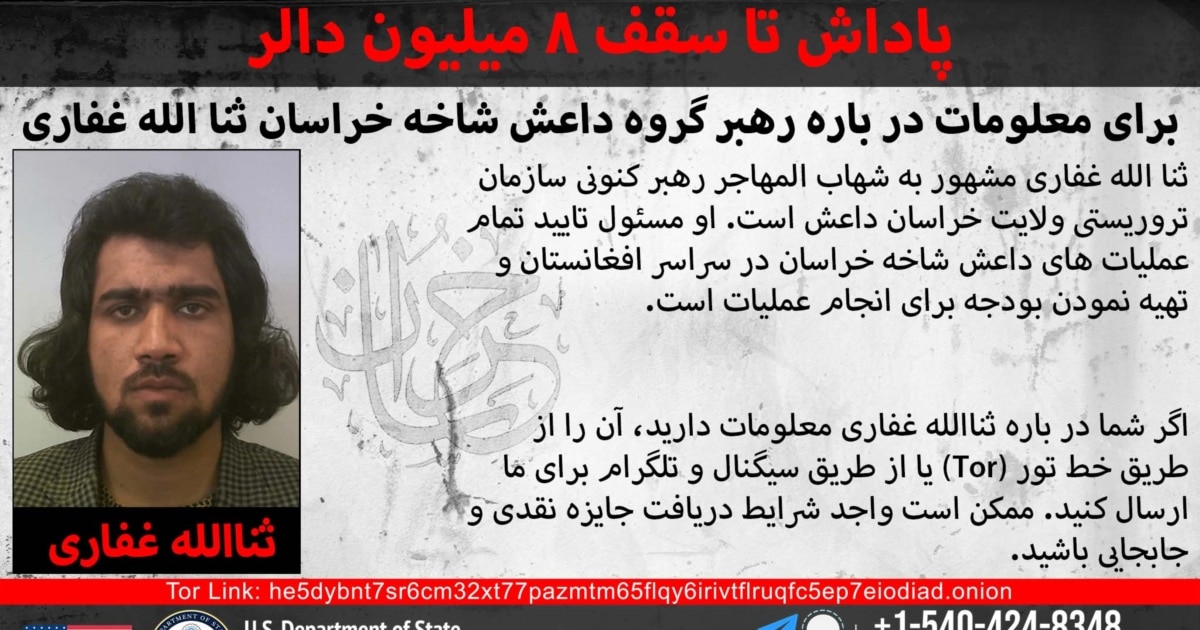
The U.S. State Department announced on August 25 that it is offering a combined $18 million through its Rewards for Justice program for information that leads to the arrest of two senior leaders of Islamic State Khorasan (ISIS-K). The department posted separate notices on X naming Sanoullah Ghaffori, known as Shahab al-Muhajir, and a second leader identified as Ubaydullah, and said the pair were responsible for organising deadly attacks on Afghan civilians.
By Alexander Walter
1,008 views
The U.S. State Department has announced an $18 million reward for information that leads to the arrest of two senior leaders of the Islamic State Khorasan Province (ISIS-K), the group blamed for some of the deadliest attacks against civilians in Afghanistan in recent years. The department's Rewards for Justice program published separate notices on the social media platform X on August 25, offering $8 million for information on Sanoullah Ghaffori—also known by the nom de guerre Shahab al-Muhajir—and $10 million for information on a second leader identified only as Ubaydullah.
The Rewards for Justice statements describe the two men as key figures in ISIS-K’s campaign of violence within Afghanistan. Ghaffori (Shahab al-Muhajir) is named as the group's current leader in the country and is described by the program as the principal figure behind a series of attacks carried out by ISIS-K. Ubaydullah is identified as responsible for the group's financial and operational affairs. The State Department said the individuals were involved in organising attacks on public gatherings, music venues, airports and other locations that resulted in the deaths of hundreds of innocent civilians.
The designation and bounty underscore longstanding U.S. concerns about the continued activity and lethality of ISIS-K inside Afghanistan. Over the past five years under Taliban rule, ISIS-K has claimed responsibility for multiple high-profile and bloody attacks across several Afghan provinces, including strikes in the capital, Kabul. These attacks have targeted both civilians and government-associated sites, worsening the security situation for ordinary Afghans and humanitarian operations alike.
By offering financial rewards for information leading to arrest, the United States is continuing a practice intended to disrupt and degrade militant networks by targeting their leadership and support structures. The Rewards for Justice program has in the past sought to incentivize tip-offs from individuals who may have information about militants’ locations, movements or networks. The announcements on X gave specific reward amounts tied to each named figure but did not provide further operational details about how the information should be submitted or how potential informants would be protected.
The announcement also reaffirmed the U.S. designation of ISIS as a terrorist organisation and reiterated concern over the group's propensity to carry out indiscriminate attacks on civilians. The Rewards for Justice posting stressed the human toll of the group's operations, noting that its members have organised attacks on locations where ordinary people gather, including music venues and transportation hubs.
Analysts say such public reward offers are intended to place additional pressure on militant leaders and to encourage defections or tips from within networks that are otherwise difficult to penetrate. The move could complicate relations between external counterterrorism actors and the de facto authorities in Afghanistan, who have themselves been battling the influence of ISIS-K even as they exercise control across the country. The statement did not address how any information might be acted upon in practice or whether the rewards could affect ongoing diplomacy or security cooperation.
For Afghans and the international community, the announcement highlights the continuing challenge posed by ISIS-K to civilian safety and regional stability. As the group continues to claim responsibility for attacks that have killed and injured many, the U.S. reward offer represents one element of a broader counterterrorism approach aimed at reducing the group's operational capacity by isolating and apprehending its senior leaders.
The Rewards for Justice notices from August 25 form part of ongoing U.S. efforts to identify and hold to account individuals it deems responsible for terrorist violence. While the impact of such bounty programs can be difficult to measure publicly, they remain a visible tool in efforts to protect civilians, disrupt extremist networks and seek accountability for those behind mass-casualty attacks.