U.S. Lawmakers Push Trump to Confront China Over Alleged Support to Iran During Xi Visit
As Chinese leader Xi Jinping visited the White House on Sept. 24–25, U.S. senators and security experts urged President Donald Trump to hold China accountable for alleged transfers to Iran of satellite imagery, weapons components and sanctioned oil revenues. Washington has not publicly confirmed whether Trump raised those allegations with Xi during their meetings, even as reports link the intelligence to attacks that killed and wounded American troops.
By Alexander Walter
931 views
American legislators and national security experts intensified calls for President Donald Trump to take tougher action against Chinese entities accused of aiding Iran, raising the pressure as Chinese leader Xi Jinping made a state visit to Washington on Sept. 24–25. Lawmakers contended that companies and other actors in China have supplied Tehran with high-resolution satellite imagery, components for missiles and drones, and oil revenue that undermines U.S. sanctions—and that such support threatens American forces and regional stability.
Senator Roger Wicker, Republican chairman of the Senate Armed Services Committee, publicly urged the president to seek answers and consequences, saying in the Senate that reports this summer alleged China provided Iran with satellite intelligence that contributed to the deaths of U.S. service members. A group of Democratic senators led by Jeanne Shaheen likewise accused the administration of failing to hold Beijing to account for the alleged support and pressed for measures targeting the specific channels of assistance.
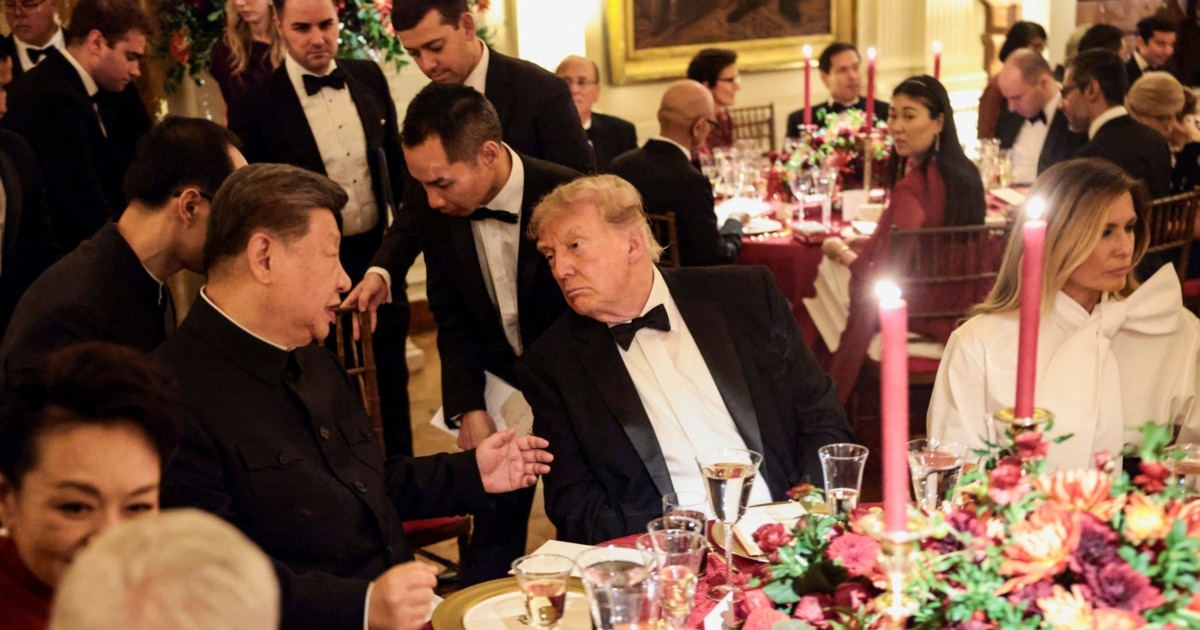
The pressure came as Mr. Trump and Mr. Xi held a widely publicized meeting and state dinner, during which the U.S. president described their talks as “excellent” and said both leaders had made “extraordinary progress” on issues they face. The White House has not disclosed whether Trump confronted Xi in private about the allegations concerning Chinese assistance to Iran. State news agency Xinhua reported that Xi urged the United States and Iran to resolve their differences through dialogue and said China supported reviving a prior agreement aimed at de-escalating tensions and reopening the Strait of Hormuz.
At the center of lawmakers’ demands are three areas, according to Senator Shaheen and other critics: the provision of satellite imagery and targeting assistance, the sale or transfer of components used in Iranian missiles and drones, and China’s continued purchase of Iranian oil—which funnels revenue to Tehran despite U.S. sanctions. Shaheen cited U.S. Treasury data indicating that roughly 90 percent of Iranian oil exports have gone to China, generating billions for Iran through a network of shadowy shipments, shell companies and Chinese refineries.
The Wall Street Journal, citing U.S. officials, reported that Chinese entities provided high-resolution imagery of a U.S. base in Jordan prior to an Iranian strike that killed three U.S. service members and wounded four others. Beijing has denied providing military or intelligence support to Tehran. The allegation remains contested, and several experts urged caution in treating those reports as established fact pending further confirmation.
Security analysts who spoke to Radio Free Europe/Radio Liberty said the broader questions extend beyond Iran. Mary Kissel of the Hudson Institute and The Kissel Group argued that U.S. policy across administrations has tolerated malign Chinese economic, military and diplomatic activities and that Washington must now hold Chinese banks, companies and state-backed actors accountable if it seeks to limit Beijing’s support for adversaries. Christopher Walker of the Center for Analysis of European Policies described any Chinese assistance to Iran as part of a wider strategic challenge in which Beijing seeks to assist governments with shared interests and to exploit perceived U.S. weaknesses.
Other observers cautioned against drawing firm conclusions without conclusive evidence. Gawdat Bahgat, a security professor tied to the National Defense University’s regional studies center, noted that neither China nor Iran has confirmed the transfer of satellite imagery or weapon components. He also emphasized Beijing’s clear economic interest in maintaining ties with Tehran, particularly access to discounted oil, and expressed skepticism that China would abruptly halt its purchases. Republican Senator John Kennedy warned that Xi could use Chinese influence to reopen the Strait of Hormuz, echoing concern that Beijing’s relationship with Tehran has tangible strategic consequences.
The debate underscores a fraught diplomatic moment: U.S. lawmakers want concrete steps to impose costs on Chinese entities believed to be aiding Iran, while the Biden administration and the Trump White House’s immediate responses have been cautious and circumspect in public. As Xi and Trump met again on Sept. 25 before Xi’s return to Beijing, the underlying questions of evidence, accountability and the wider implications for U.S.-China competition remained unresolved—leaving Congress and policy experts to press for clearer action should further evidence corroborate the claims against Chinese actors.