U.S. Lawmaker Says Washington Will Step Up Efforts to Revive Russia–Ukraine Peace Talks; Envoys May Visit Kyiv
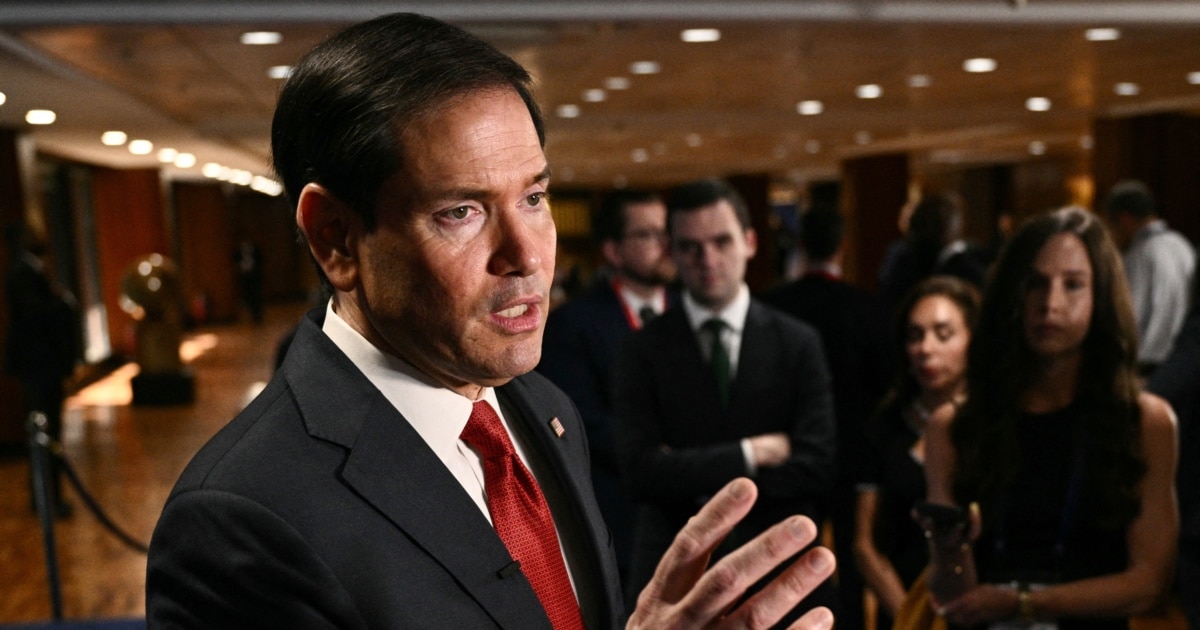
U.S. Senator Marco Rubio told Fox News that Washington will step up efforts in the coming weeks to determine whether negotiations between Russia and Ukraine can be revived to end the war. U.S. special envoys Steve Eitkoff and Jared Kushner are reported to be considering a visit to Kyiv in the second half of August to explore proposals for restarting talks, though final arrangements are still being worked out.
By Alexander Walter
954 views
U.S. Senator Marco Rubio said in an interview on Fox News that Washington intends to intensify efforts in the coming weeks to determine whether it can help revive negotiations between Russia and Ukraine and bring an end to the war. Rubio warned that both sides currently maintain firm “red lines” and said U.S. diplomacy will aim to determine whether those positions can be moved closer together enough to achieve a negotiated outcome.
The comments come amid a months-long pause in direct talks between Kyiv and Moscow. Previous negotiation rounds involving the United States — held in locations including the Middle East and Switzerland — yielded limited progress beyond reaching agreements on prisoner exchanges. Those earlier efforts, U.S. and international officials have said, failed to bridge core disagreements over territorial control, security guarantees and other fundamental issues.
RFE/RL reporters in Washington, citing two sources, have reported that two special envoys close to the U.S. presidential administration, Steve Eitkoff and Jared Kushner, may visit Kyiv in the second half of August. The potential timing would coincide with events marking Ukraine’s 35th anniversary of independence. According to the same report, the visit would be intended to explore new ideas for resuming peace negotiations — a task that sources described as one of the White House’s priorities — though final details of the trip are still being finalized.
U.S. media outlets earlier reported that planning for such a mission followed a closed-door meeting between U.S. President Donald Trump and Ukrainian President Volodymyr Zelensky at the White House on July 28. If the planned August visit proceeds, it would reportedly be the first trip by Eitkoff and Kushner to Ukraine; the two have previously traveled to Russia and met with Russian President Vladimir Putin, according to the report.
Diplomatic officials and analysts caution that reviving talks will be difficult. Rubio’s public framing underscored the central challenge: both Moscow and Kyiv have articulated non-negotiable positions on key issues, and U.S. envoys’ work would likely focus on testing whether compromises or confidence-building measures can be found to create space for broader negotiations. For civilians and human-rights monitors, any credible pathway to talks raises the prospect of reduced hostilities, greater access for humanitarian assistance, and renewed efforts to address wartime abuses — but also carries risks if negotiations disproportionately favor one side’s demands.
Beyond the specifics of diplomatic outreach, the report also touched on the information environment surrounding coverage of the conflict. The reporting outlet that published the story, Крым.Реалии (Crimea.Realities), noted that Russia’s communications regulator, Roskomnadzor, has sought to block access to its website inside Russia, and the outlet provided a mirror link and recommended using VPNs to reach its content. The blocking effort highlights continuing restrictions on independent reporting related to the conflict and the challenges facing media covering human-rights and accountability issues in the region.
For now, Washington’s renewed push remains at the exploratory stage: officials say they will gauge the prospects for renewed talks and seek to identify ideas that might narrow the gap between the parties’ “red lines.” Whether those efforts will produce a substantive resumption of negotiations — and whether any agreement would meaningfully reduce violence or address wartime abuses — remains uncertain and will depend on developments in Kyiv, Moscow and among international partners in the coming weeks.