U.S. convenes regional officials and business leaders in New York to advance TRIPP corridor; Trump urged leaders to 'get it done', envoy says
U.S. officials hosted a high-level New York meeting on September 23 to discuss the Trump administration’s proposed Transcaucasian Regional Infrastructure and Prosperity Pathway (TRIPP), a corridor intended to link southern Armenia with Azerbaijan’s Nakhchivan exclave. U.S. envoys say the project remains in economic and technical feasibility stages, with engineering, environmental and social studies underway and private investment being solicited amid warnings that corruption safeguards and geopolitical sensitivities will be crucial.
By Christopher Manley
81 views
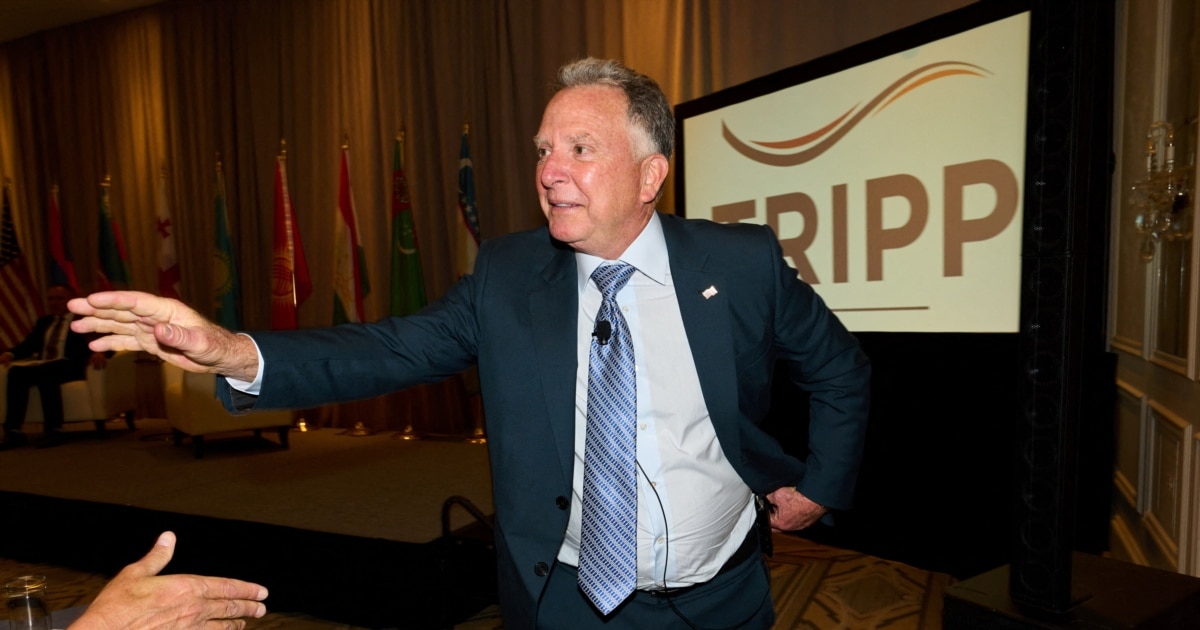
U.S. officials, regional diplomats and more than 40 private-sector executives gathered in New York on September 23 to discuss next steps for a U.S.-backed infrastructure initiative known as the Transcaucasian Regional Infrastructure and Prosperity Pathway (TRIPP). The Trump administration convened the meeting to sketch a path toward developing a corridor that would run through southern Armenia and link Armenia to Azerbaijan’s Nakhchivan exclave, and that U.S. planners say could become part of a broader east–west trade network connecting the South Caucasus, Central Asia and Western markets.
The session included the U.S. special envoy Steve Witkoff, Republican Senator Steve Daines of Montana, and delegations from Armenia, Azerbaijan, Georgia and five Central Asian countries. U.S. officials stressed that the project has not moved into construction and remains contingent on completing economic and technical justifications. Their target is to begin exploring business and investment opportunities by late 2026 or early 2027, while detailed engineering, regulatory and financing decisions would follow.
TRIPP as proposed would require roughly 43 kilometres of transit through Armenian territory. Planners envisage not only rail and road links but also accompanying energy infrastructure and digital connectivity. U.S. State Department briefings cited engineering and technical feasibility studies that are evaluating the route’s technical viability as well as its environmental and social impacts. These initial studies also consider opportunities to install energy and digital infrastructure along transport lines, creating bundled projects aimed at attracting private capital.
Witkoff described the initiative as more than a transportation project, framing it as the economic continuation of a diplomatic normalization between Armenia and Azerbaijan. He told attendees that progress was possible because leaders in Yerevan and Baku — Armenian Prime Minister Nikol Pashinyan and Azerbaijani President Ilham Aliyev — recognized that a peace settlement offered a better way forward than prolonged conflict. Witkoff said the project gained momentum in part because former President Donald Trump personally encouraged direct engagement between the two capitals, recounting that, when told Armenia and Azerbaijan lacked direct dialogue, Trump’s instruction was, "Get it done."
Officials and participating leaders highlighted potential economic gains. Pashinyan, in a separate New York address on September 23, said TRIPP’s implementation would unlock regional connectivity and usher in a "new era" for Armenia’s economy. U.S. officials have argued the corridor could shorten some freight transit times substantially, reducing journeys that currently take weeks and thereby improving the speed at which goods reach markets. Exact time savings will depend on final routing and operational arrangements.
The U.S. announced institutional arrangements intended to support project delivery and investment. Washington and Yerevan plan to establish a TRIPP Development Company to oversee infrastructure implementation, while the U.S. will back a Trans-Caspian Enterprise Fund designed to mobilize private capital for projects along the broader Trans-Caspian trade network. Organizers say the two bodies will be independent of one another, but will function together to finance and manage investments.
Atlantic Council Eurasia Center deputy director Andrew D’Anieri described the dual announcements as a strong signal of U.S. seriousness about economic engagement in the region. At the same time, experts cautioned that TRIPP’s realization will be neither quick nor straightforward. D’Anieri warned that the combination of technical complexity and geopolitical sensitivities will likely slow progress, while U.S. officials have said that even once a decision to start work is taken, laying new track alone could take at least 18 months.
Analysts also urged strict safeguards against corruption and undue foreign influence if the initiative is to attract private investors. Ancela Hovard, a researcher at the Democracies Defense Fund’s Center for Economic and Financial Power, told AzadliqRadio that Washington must pair the investment push with clear rules and robust oversight to limit corruption and external manipulation. Supporters of TRIPP argue the corridor could reduce regional dependence on infrastructure linked to Russian influence and open opportunities for U.S. companies; critics and analysts counter that transparent governance will be essential to deliver those benefits and to ensure accountability.
Officials acknowledge the many hurdles ahead: beyond political agreement, TRIPP requires completed technical studies, regulatory approvals, financial commitments, transparent procurement processes and complex construction. For now, organizers say the focus remains on demonstrating TRIPP’s technical, environmental and economic viability and on lining up private and public financing — a process they expect to unfold over several years amid continued geopolitical jockeying in a region long contested by Russia, China, Iran and Turkey.