U.S. Charges Expose Russian Control of Widely Used Forensics Software; Raises Fears Over Backdoors and Evidence Integrity
U.S. prosecutors say Oxygen Forensics — maker of powerful device-extraction software used by police and intelligence agencies — was in fact owned and controlled by Russian citizens, triggering arrests, contract cancellations and scrutiny from allied law-enforcement partners. The software, demonstrated by a former Secret Service agent who said he used it to extract tens of thousands of files from Hunter Biden’s laptop, is also sold in Russia as MKO-Systems and reportedly supplied to Russia’s security services.
By Mike Eckel
992 views
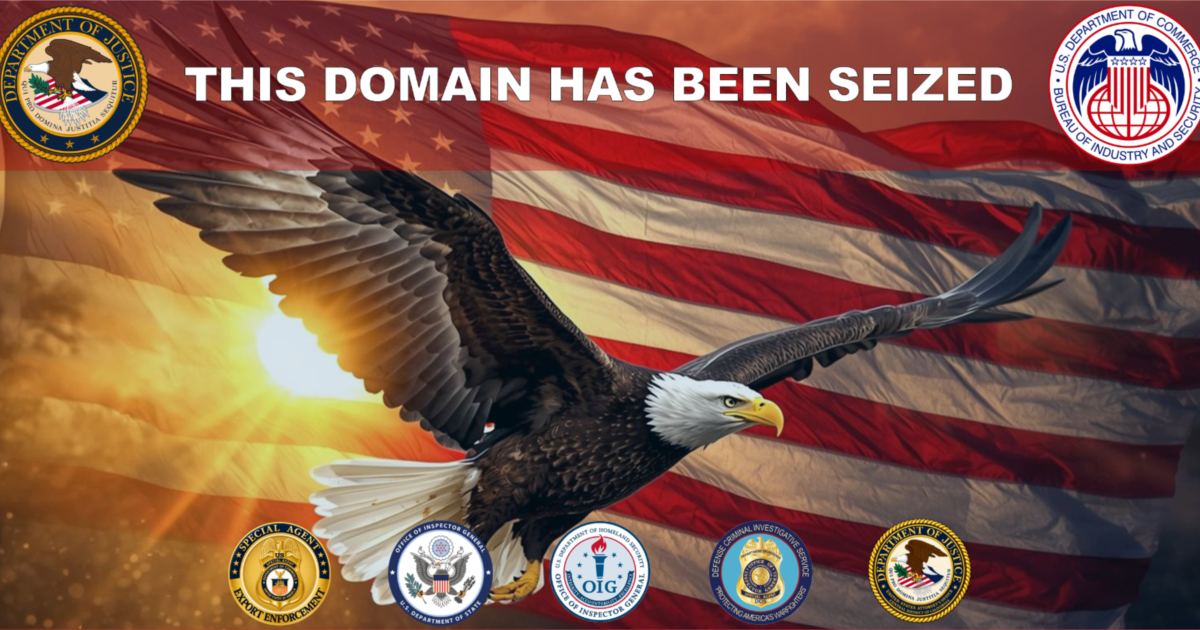
U.S. prosecutors have alleged that Oxygen Forensics, whose software has been used by federal and local law enforcement agencies to extract data from phones, computers and other devices, was secretly owned and controlled by Russian citizens. The criminal complaint, announced in September, accuses the company of lying about its true ownership and control and names five Russian citizens as co-conspirators. The developments prompted the arrest of the firm’s American CEO, Lee Reiber, and the detention in Britain of the company’s chief technology officer, Oleg Davydov, who faces possible extradition to the United States.
The accusations have alarmed digital-forensics professionals and foreign law-enforcement partners because Oxygen’s software is widely regarded as powerful and capable of recovering deleted and encrypted data. In a video of a sales presentation obtained by RFE/RL, a former U.S. Secret Service agent, Konstantinos “Gus” Dimitrelos, praised Oxygen as his primary tool and said he used it to recover tens of thousands of files from a copy of a hard drive he identified as belonging to Hunter Biden, son of President Joe Biden. Dimitrelos was later hired by the Washington Examiner to authenticate the device; his claims of unusually extensive recovery have not been replicated by other analysts.
The U.S. Justice Department did not accuse the software itself of containing malicious code or of being used to obtain unauthorized access, saying its criminal complaint “does not allege” the tool contained backdoors. Still, the alleged Russian ownership and the software’s presence in Russian markets have intensified concerns that it might be misused. Industry experts and former employees have told investigators and media that the U.S. and Russian versions of the product are identical, and that MKO-Systems — the Russian name for the company’s product line — has been supplied to Russian agencies including the Federal Security Service (FSB).
The history of the company underscores the complexity. Oxygen was founded in Russia in 2002 by Davydov and Oleg Fyodorov and had ties to the Moscow Research Institute of Radio Communications, a former state entity whose privatized successor figures later show up in ownership records. In 2015 the Russian business shifted its branding to MKO-Systems while a separate U.S. entity, Oxygen Forensics, was established two years earlier in suburban Washington, D.C. The firm cultivated law-enforcement clients across the United States and Europe, and sat alongside industry competitors such as Israel’s Cellebrite; Cellebrite sued Oxygen in 2015 alleging copyright infringement and in that lawsuit raised questions about the company’s control.
The revelation of alleged Russian control has already caused immediate operational fallout. The U.S. Secret Service canceled a five-year contract with Oxygen in February after identifying what it called security risks, though it noted the program was used only in air-gapped environments and that it had found no evidence sensitive information had been compromised. European police forces and other foreign agencies have moved to halt use of the software while officials review the implications. The State Department signed a contract with the company in August and has declined to say publicly whether it continues to use the product or whether it flagged concerns about security.
Former employees and sales executives who worked with Oxygen expressed shock at the ownership disclosures. Marianne Meagher, who oversaw sales to U.S. federal agencies, said she was unaware that the company was owned by Russian citizens and called the possibility of a backdoor “problematic.” Digital-security experts caution, however, that ownership alone is not proof of tampering: Runa Sandvik, a Norwegian-American specialist, said there is no hard publicly available evidence that the product was altered to give outside access, while noting the arrangement is unusual for a company selling tools to Western security services.
Complicating the picture are links in public records and media reporting tying past Russian ownership structures to figures with alleged ties to criminal hacking groups. The privatized Moscow Research Institute was bought after insolvency in 2022 by investors including Eduard Bendersky, a former FSB special forces officer who U.S. and British authorities have described as an enabler of the ransomware group known as Evil Corp. Bendersky’s son-in-law, Maksim Yakubets, has been indicted in the U.S. for developing Evil Corp’s ransomware and is on the FBI’s most-wanted list. RFE/RL was not able to establish a direct connection between those figures and Oxygen Forensics.
The allegations against Oxygen Forensics raise broad questions about how trusted investigative tools are sourced and vetted, and about the potential consequences if those tools are controlled by adversary-state actors. For law enforcement, the stakes include the integrity of digital evidence used in criminal prosecutions and national-security investigations. For democratic institutions and civil liberties advocates, the prospect that foreign actors could gain access to sensitive forensic capabilities — or to the data they recover — raises concerns about surveillance, manipulation and the erosion of public trust. U.S. authorities have moved to freeze the company’s U.S. operations and to press criminal charges; meanwhile, allied police agencies are reviewing the continued use of the software as investigators seek to determine whether the code or practices enabled unauthorized access or other misuse.