U.S. Carries Out Limited Strikes on Iran's Qeshm Island, Officials Say
U.S. officials have confirmed that limited strikes were carried out on Iran's Qeshm Island on November 2, saying the actions were defensive responses to Iranian fire on a U.S. aircraft and aimed at protecting American forces and facilities. The strikes, reportedly not publicly disclosed beforehand, are described by U.S. sources as part of a recent campaign of restricted military operations intended to blunt threats to ships and personnel around the Strait of Hormuz.
By Clémence Desjardins
874 views
U.S. forces carried out limited strikes on Iran's strategically located Qeshm Island on November 2, U.S. officials told Radio Free Europe/Radio Liberty. The strikes, confirmed by senior U.S. sources, were described as defensive measures taken in response to Iranian fire directed at a U.S. aircraft and aimed at protecting American personnel and military installations in the region.
Iran's state news agency IRNA reported powerful explosions on Qeshm on November 2. The U.S. Department of Defense initially referred questions to U.S. Central Command (CENTCOM), which did not immediately respond to Radio Free Europe/Radio Liberty. Later, high-level U.S. officials gave on-the-record confirmation of limited strikes in interviews with the outlet, characterizing the operation as narrowly scoped and defensive in purpose.
U.S. officials told The Wall Street Journal that the strike on Qeshm was one element of a broader, recent series of clandestine military actions against Iranian targets. According to those accounts, some U.S. officials chose to keep the campaign out of public view to avoid signaling preparations for a far larger-scale military operation. Administration sources emphasized the strikes were intended to reduce threats to regional shipping and to deter Iranian actions that could endanger U.S. forces.
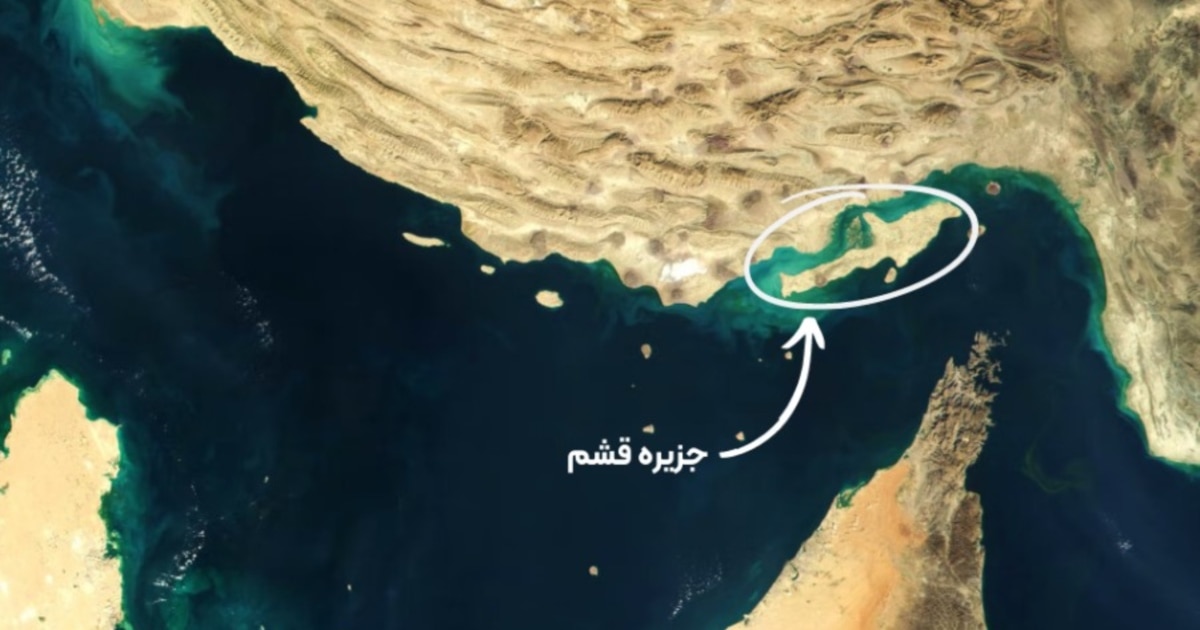
Qeshm Island sits at the mouth of the Strait of Hormuz, one of the world's most important maritime chokepoints for energy shipments. The Wall Street Journal has reported that Qeshm hosts significant military infrastructure, including an underground missile complex, a naval base, and a large ship-repair facility. In earlier confrontations between Washington and Tehran, the island has been discussed as a possible target for U.S. military action, and U.S. officials have even considered options as far-reaching as seizing the island during planning discussions.
The strikes came just hours before congressional midterm elections in the United States. President Donald Trump, when asked by reporters about the prospect of an immediate attack on Iran, had given a categorical “no,” saying he did not expect a major war with Iran and signaled the possibility of diplomatic progress. Nevertheless, administration officials told U.S. media that a range of military options remained under review, and the Qeshm strikes were part of a pattern of limited, kinetic responses over recent weeks.
Analysts quoted by Radio Free Europe/Radio Liberty and speaking with its Washington correspondent Aleks Raufoğlu urged caution in reading the strikes as a tectonic shift in U.S. policy. Brett Erikson, a Middle East analyst at Obsidian Risk Advisors and a sanctions expert, described the strikes as dangerous but not fundamentally different from other limited engagements seen recently. He said Tehran has shown restraint in the face of similar incidents, and there is no clear basis to conclude the Qeshm action will force a radical change in Iran’s strategic posture.
Gregory Bru, chief analyst at Eurasia Group in New York, said the operation underscores Washington’s active effort to control the Strait of Hormuz and to counter perceived threats to shipping. Bru noted that the U.S. decision not to publicly announce the strikes could be intended to signal that Washington does not seek to escalate tensions further. At the same time, the use of force against targets on Iranian soil marks a sharpening of U.S. operations that could carry risks of escalation if Tehran chooses to respond more forcefully.
U.S. officials framed the Qeshm strikes as targeted measures to protect forces and infrastructure, while Iranian state media reported explosions without immediate confirmation of the causes. The secrecy surrounding the actions, their timing ahead of a major U.S. domestic political event, and the strategic location of the target in the Strait of Hormuz have all heightened international attention and raised questions about the potential for further confrontation between Washington and Tehran. Observers say the episode reveals a delicate balancing act: both sides appear willing to accept certain risks in contesting control over key maritime routes while, for now, showing restraint that stops short of a broader war.