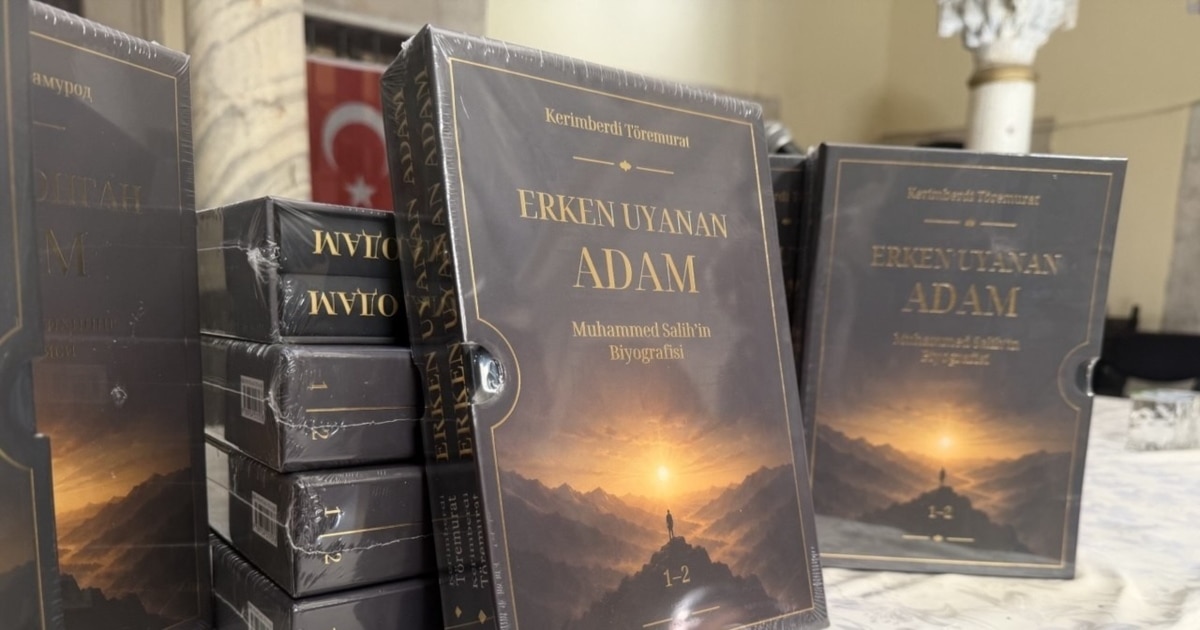
Two-volume biography of exiled Uzbek opposition leader Muhammad Salih presented in Istanbul and Samarkand
A comprehensive two-volume biography of Muhammad Salih, the Uzbek poet, dissident and founder of the Erk opposition party, was presented in Istanbul on October 10 and in Samarkand on October 4. Written by Karimberdi Turamurod and published in Uzbek and Turkish, the book documents Salih’s family background, political rise, repression under Islam Karimov, and life in exile since 1993.
By Christopher Manley
835 views
A two-volume biographical work on Muhammad Salih, a prominent Uzbek poet, dissident and founder of the opposition party Erk, was presented at the Union of Writers of Turkey in Istanbul on October 10. The book, titled The Man Who Woke Early, was published in both Uzbek and Turkish by Boğaziçi Yayınevi and authored by writer and journalist Karimberdi Turamurod. Turamurod, representatives of the Istanbul branch of the Union of Writers of Turkey, the head of the publishing house and Salih himself took part in the Istanbul event, alongside cultural figures from across the Turkic world.
According to Turamurod, the first volume traces Salih’s early life and family background in Uzbekistan, noting that his ancestors were beks — local rulers under the historical Khivan khanate and other pre-Soviet Central Asian polities. The first volume covers his life in Uzbekistan up to 1993, the year he moved from political activism into formal opposition and ultimately into exile. The second volume focuses on Salih’s life in exile from 1993 to the present, documenting his ongoing political activity and the pressures he has faced from Uzbek authorities.
The author said an earlier presentation took place in Samarkand on October 4, attended by historians, linguists, poets, writers, journalists, students and admirers of Salih who travelled from different parts of Uzbekistan. Turamurod reported that historians at the Samarkand event described the book as a foundational historical work that goes beyond a simple personal biography to provide an assessment of political developments and historical events in late Soviet and post-Soviet Uzbekistan.
Muhammad Salih emerged in the mid-1980s as a leading figure of a new Uzbek intelligentsia that sought literary reform within the Union of Writers of Uzbekistan and promoted ideas of national revival, the defense of the Uzbek language and increasing public debate. During the period of perestroika he became active in the Birlik (Unity) movement and in 1989 founded the Erk (Will) party, widely reported as the first officially registered opposition party in Uzbekistan.
Salih served as a deputy in the Supreme Soviet of Uzbekistan and was among the initiators of the Declaration of Independence adopted on June 20, 1990. He was the only formal alternative candidate to then-first secretary Islam Karimov in Uzbekistan’s December 1991 presidential election. Official results, as reported by state authorities, gave Salih 12.7 percent of the vote; earlier figures broadcast by Radio Uzbekistan had indicated 33 percent, while some independent observers and analysts contended that Salih had secured the majority. Supporters of Salih alleged large-scale fraud and ballot-stuffing; in the post-election period student demonstrations in support of Salih were violently suppressed, independent opposition newspapers were closed and criminal cases were opened against opposition leaders.
In July 1992 Salih resigned his parliamentary mandate in protest at the repressive measures. In April 1993 he was arrested on charges that included alleged state treason but was released under international pressure on the condition that he not leave Tashkent. Later that month he escaped from Uzbekistan and has lived in Turkey ever since. Turamurod’s biography recounts attempts by Uzbek security services to plan attacks against Salih’s life and notes that three of his brothers were detained in Uzbekistan. The political ban on Salih’s return and on the activities of the Erk party reportedly remains in force.
Relations between the Uzbek state and Salih have shown some limited shifts since the death of Islam Karimov. Under President Shavkat Mirziyoyev Uzbekistan’s press has occasionally published articles referring to Salih as a national poet and has discussed the possibility of his return. This year, an independent Uzbek outlet published, for the first time in decades, a detailed article about Salih’s role, suggesting a cautious opening of public discourse. Nevertheless, Turamurod and other participants at the book events emphasized that substantive political restrictions remain: legal and practical barriers to Salih’s return and the continued proscription of his party have not been lifted.
The publication of The Man Who Woke Early, and its presentations in Samarkand and Istanbul, underscore ongoing debates within Uzbekistan and among its diaspora about how to address contested episodes of the country’s recent history, including electoral integrity, suppression of dissent and the exile of prominent opposition figures. Supporters describe the biography as an important historical record and an act of cultural and political remembrance; for critics of the Uzbek government, documenting Salih’s life highlights unresolved human-rights issues and the limits of post-Karimov reform. The book’s bilingual release aims to reach both Uzbek readers at home and in the diaspora as well as Turkish-speaking audiences, reinforcing transnational ties in discussions about Uzbekistan’s past and political future.