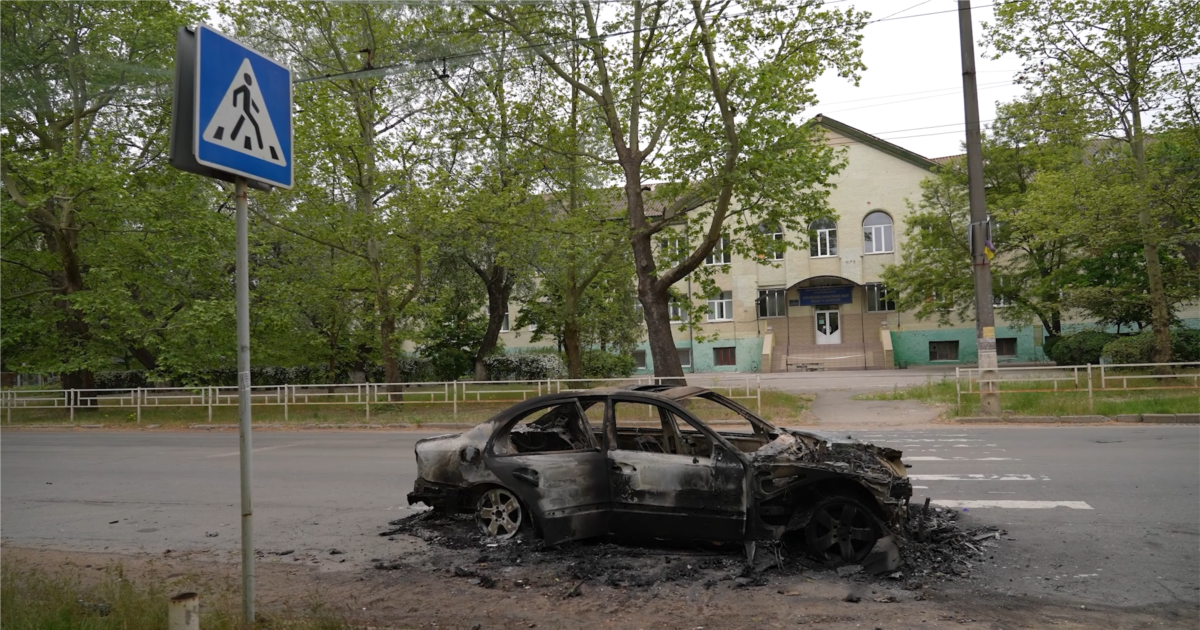
Two more Kherson residents wounded in Russian strikes die in hospital, regional head says
Kherson regional governor Oleksandr Prokudin announced on July 28 that two people injured in earlier Russian attacks have died in hospital: an 89-year-old woman and a 58-year-old man. The deaths add to a string of civilian casualties tied to repeated Russian strikes that Ukrainian authorities and international bodies have described as war crimes and which human rights experts say reflect patterns of targeted attacks on essential services.
By Christopher Manley
857 views
Two residents of Ukraine’s Kherson region who had been wounded during earlier Russian attacks have died in hospital, the head of the region, Oleksandr Prokudin, said on July 28. According to Prokudin, an 89-year-old woman who had been injured in the Dniprovskyi district the previous day and a 58-year-old man who was wounded on July 25 during a heavy Russian bombardment of the Korabelnyi district both succumbed to their injuries in medical care.
Prokudin reported that “Медики до останнього боролися за їхні життя. На жаль, отримані поранення виявилися несумісними з життям.” He earlier had said that over the preceding 24 hours, three people were killed in the Kherson region in separate Russian attacks and another ten were wounded. The latest fatalities increase the tally of civilian losses linked to the renewed strikes on the region.
Russian forces have repeatedly struck Ukrainian towns and civilian infrastructure across multiple regions using a range of weapons, including strike drones, missiles, guided aerial bombs and multiple-launch rocket systems. Local authorities and emergency services in Kherson and elsewhere regularly report damage to residential areas, health-care facilities and life-sustaining infrastructure following these attacks.
Ukrainian authorities and international organizations have characterized many of these strikes as war crimes, saying they disproportionately harm civilians and target civilian infrastructure. Human-rights lawyers, genocide researchers and activists have further argued that systematic attacks on essential services and medical facilities — intended to deprive populations of electricity, heating, water, communications and medical assistance — can amount to actions with genocidal character when combined with rhetoric and other acts that aim to destroy a protected national group.
Accounts cited by experts point to several patterns they consider indicative of genocidal intent: public declarations by Russian state representatives denying the existence of Ukrainians as a nation and dehumanizing rhetoric, calls suggesting that those who reject that view “треба знищити”, targeted bombardments of life-support infrastructure and health-care institutions, persecution of pro-Ukrainian individuals in occupied areas, efforts to purge or suppress Ukrainian cultural figures and educators, and policies aimed at changing the identity of children on occupied territories, including deportations. These assessments invoke principles of the 1948 Convention on the Prevention and Punishment of the Crime of Genocide, which defines genocide to include acts committed with intent to destroy, in whole or in part, a national, ethnical, racial or religious group.
The Russian government denies that its military deliberately targets civilian infrastructure, hospitals, schools, kindergartens, energy and water systems, or otherwise intends to kill civilians. Moscow has repeatedly rejected allegations that its armed forces are committing war crimes in Ukraine.
The deaths reported in Kherson come amid sustained international scrutiny of attacks on civilians and infrastructure in the war, and ongoing calls from rights groups and foreign governments for independent investigations and accountability. For victims’ families and local authorities in Kherson, the latest fatalities underscore the continued humanitarian toll of the conflict and the risks faced by civilians living in frontline and contested regions.
As the conflict continues, regional officials like Prokudin have been documenting civilian casualties and damage while urging international attention to both immediate humanitarian needs and longer-term legal and political responses to alleged crimes committed during the fighting. The situation remains fluid, with local authorities continuing to report strikes and casualties as operations and counteroperations persist across multiple fronts.