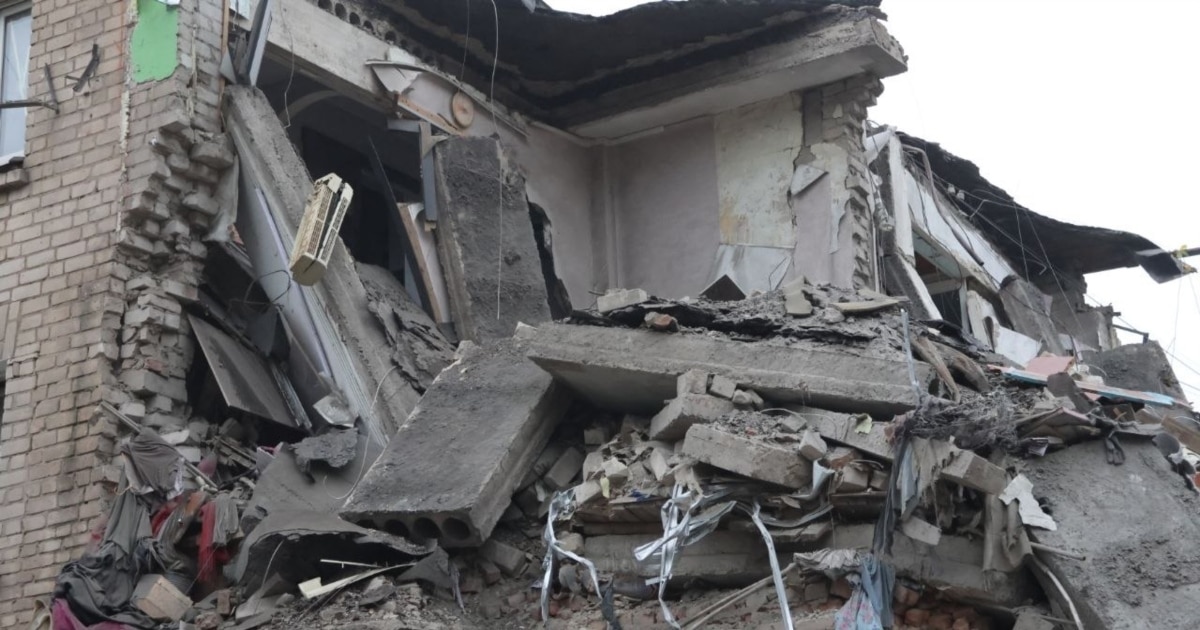
Two Civilians Killed in Russian Strike on Zaporizhzhia, Regional Authorities Say
The acting head of the Zaporizhzhia regional administration reported that a Russian strike on 22 October struck a private home in the city, killing two people. Regional officials also said an earlier attack damaged a car near Nyzhnya Khortytsia, injuring a 51-year-old man, underscoring a pattern of attacks on civilian infrastructure across Ukraine.
By Alexander Walter
852 views
The acting head of the Zaporizhzhia regional military administration, Mykhailo Semikin, said on 22 October that a strike by Russian forces hit a private house in Zaporizhzhia, killing two people. The regional statement identified the target as a civilian dwelling and confirmed the deaths but provided no immediate information on the identities of the victims.
Earlier in the day, regional authorities reported a separate strike on a car near Nyzhnya Khortytsia in the Zaporizhzhia district. The vehicle was damaged in that incident and a 51-year-old man was wounded. Officials did not immediately release additional details about the man’s condition or the circumstances surrounding the attack on the car.
The Zaporizhzhia incidents form part of a wider pattern of attacks that Ukrainian authorities say Russian forces have carried out across the country. Russian troops have repeatedly struck Ukrainian cities and civilian infrastructure with a range of weapons, including strike unmanned aerial vehicles (UAVs), missiles, guided aerial bombs (KABs), and multiple-launch rocket systems (MLRS), according to regional and national reports.
The Russian government has consistently denied that its armed forces intentionally target civilian infrastructure and populations during the full-scale invasion. Moscow says it does not carry out deliberate strikes on hospitals, schools, energy or water facilities, or other civilian targets. Ukrainian authorities and numerous international organizations, however, have described many of these attacks as war crimes, arguing that they are deliberate or indiscriminate strikes on civilian objects and services.
Legal experts, genocide researchers, and human rights defenders have gone further, saying that the pattern of attacks — particularly strikes on life-support systems and health-care facilities designed to deprive populations of electricity, heating, water, communications and medical care — demonstrates indicators that could fall within elements of genocide. Citing a range of conduct observed since the start of the full-scale war, these analysts point to public statements by certain Russian officials that have denied the existence of a distinct Ukrainian national identity and, at times, included rhetoric advocating the destruction of Ukrainians as a group.
Those experts list additional measures observed in occupied areas that they say are part of a broader campaign: targeted persecution and killings of people with pro-Ukrainian views; actions against the intelligentsia, including teachers and cultural figures; reorganization of school systems aimed at changing children's identities; deportation of children to Russia without their parents; and the removal or destruction of Ukrainian books, cultural artifacts and museum collections. They argue that, taken together, these actions meet various indicators set out in the 1948 Convention on the Prevention and Punishment of the Crime of Genocide.
The Genocide Convention, adopted by the UN General Assembly in 1948 and ratified by 149 states, defines genocide as acts committed with intent to destroy, in whole or in part, a national, ethnical, racial or religious group. The convention lists specific acts that may constitute genocide, including killing members of the group; causing them serious bodily or mental harm; deliberately inflicting conditions calculated to bring about the group’s physical destruction; preventing births; and forcible transfer of children to another group, as well as public incitement to commit such acts.
Investigations into individual strikes and broader patterns of conduct are ongoing, and Ukrainian authorities along with international bodies have repeatedly called for accountability for attacks that hit civilians and civilian infrastructure. The Zaporizhzhia region’s deaths on 22 October add to a catalogue of incidents that human rights monitors and legal experts say require thorough, independent investigation to determine criminal responsibility and to assess whether actions meet the threshold of international crimes, including war crimes or genocide.