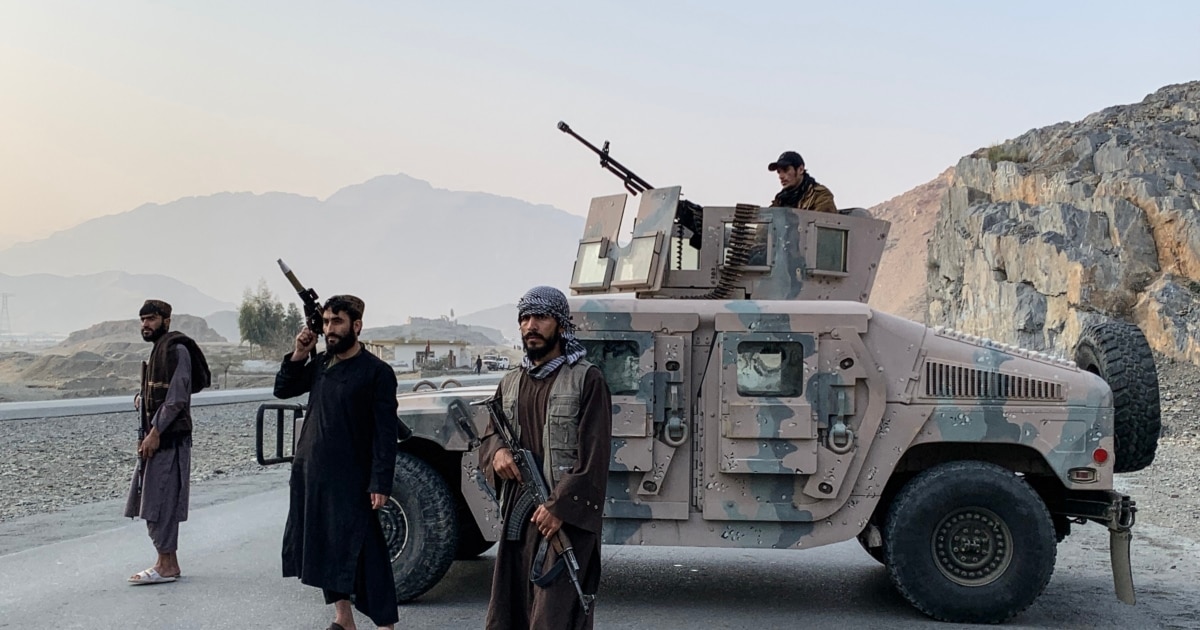
Twenty-five years after 9/11: Has Afghanistan become a shelter for global terrorism again?
With the Taliban back in power and United Nations monitors reporting the return of Al-Qaeda operatives, Afghanistan has re-emerged as a possible sanctuary for transnational militants. Experts and former U.S. officials are divided: some warn Afghanistan has returned to its pre-9/11 role as a launchpad for international terror, while others argue that the epicenter of al-Qaeda-linked violence has shifted to Africa and other regions.
By Alexander Walter
837 views
Twenty-five years after the 11 September 2001 attacks were plotted from Afghan territory, Afghanistan has once again become a focal point of international concern. The Taliban are back in power after two decades of foreign military presence led by the United States, and multiple U.N. monitoring reports have documented an apparent re-emergence of Al-Qaeda operatives inside the country. That combination has prompted fresh debate over whether Afghanistan can once more serve as a sanctuary for groups intent on projecting violence beyond the region.
So far, however, the reappearance of Al-Qaeda elements in Afghanistan has not translated into the kind of large-scale, externally-directed attacks that marked the pre-9/11 era. Analysts, former diplomats and intelligence officials interviewed by Radio Free Europe/Radio Liberty offer divergent explanations for why that is and divergent assessments of future risk. Some argue that the conditions that produced 9/11 no longer obtain; others warn of a latent threat that could produce severe violence in the future.
The roots of the current situation lie in the U.S.-led intervention that toppled the Taliban in 2001 and the subsequent two-decade military presence that sought, among other goals, to track down Al-Qaeda leaders. That long engagement, at enormous financial and human cost, culminated in a 2020 agreement negotiated during President Donald Trump’s first term. Under that deal, foreign forces were to withdraw and the Taliban pledged that “nuk do të lejonin asnjë prej anëtarëve të tyre, individëve apo grupeve të tjera, përfshirë Al-Kaidën, ta përdornin territorin e Afganistanit për të kërcënuar sigurinë e Shteteve të Bashkuara dhe aleatëve të tyre.” The agreement also included a commitment that Taliban would not permit “rekrutimin, trajnimin dhe mbledhjen e fondeve” by such actors. International forces completed their withdrawal in 2021 during President Joe Biden’s term.
Since then, U.N. panels that monitor sanctions and militant activity have reported a resurgence of Al-Qaeda members in Afghanistan. A report published in December 2025 described Afghanistan as “atdheun simbolik” of the group and noted close personal ties, including marriages, between Al-Qaeda members and Taliban figures. Those findings have alarmed former U.S. officials who say the country again poses a direct threat to global security.
Annie Pforzheimer, a former deputy chief of mission in Kabul and acting deputy assistant secretary for Afghanistan, told RFE/RL: “Afganistani tashmë po strehon terroristë që kanë synime ndërkombëtare. Pyetja e radhës është nëse do të përpiqen t’i realizojnë ato. Por, a është kthyer Afganistani aty ku ishte para 11 Shtatorit? Po.” Similarly critical, General H.R. McMaster, who served as U.S. national security adviser from 2017 to 2018, described expectations that the Taliban would honor the 2020 deal as “vetëmashtrim” and said: “Ata janë organizatë terroriste. Ajo që duhet të bëjmë është ta dobësojmë qeverinë terroriste në Afganistan.”
Beyond Al-Qaeda, U.N. reports and analysts point to cooperation between the Taliban and other militants, including Tehrik-e Taliban Pakistan (TTP), which has carried out cross-border attacks inside Pakistan, and members of the Islamic State who remain active in Afghanistan and Pakistan. Colin Clarke of the Soufan Center described the mix of groups operating under Taliban rule as resembling a “bombe me sahat.”
Other experts urge caution in equating current conditions with the pre-2001 era. They note significant changes: the Taliban now seek some degree of international engagement, have sent delegations to meetings with the European Union, and have gained limited recognition from states such as Russia. At the same time, their harsh restrictions on women and other human-rights violations have made Western governments reluctant to end isolation.
Some analysts contend the Taliban today exercise tighter control over groups on their soil than in the past. Jonathan Schroden of CNA argued that after having witnessed the consequences of 9/11, the Taliban are likely to be vigilant about what Al-Qaeda members do inside Afghanistan: “Një dallim i madh krahasuar me periudhën para 11 Shtatorit është se talibanët e kanë përjetuar 11 Shtatorin dhe pasojat që ai solli. Prandaj, duhet të besoj se ata po vëzhgojnë me shumë kujdes se çfarë po bëjnë këta pjesëtarë të Al-Kaidës.” Other analysts, including Carter Malkasian, have pointed to the relative absence of external attacks emanating from Afghanistan during the five years of Taliban rule as evidence that the locus of militant activity has shifted elsewhere, particularly to violent al-Qaeda affiliates in parts of Africa.
All sides acknowledge major limits to current intelligence and monitoring inside Afghanistan. U.S. capabilities to track militant planning in the country have declined since 2011 and even further since 2020, leaving open the possibility that clandestine plotting could go undetected. The last major U.S. strike reported inside Afghanistan was in 2022, when Ayman al-Zawahri, then leader of Al-Qaeda, was killed in Kabul. The uncertainty about on-the-ground activity and the documented links between the Taliban and transnational militants underscore a difficult policy problem: whether and how the international community can monitor and respond to threats emanating from a country whose government is implicated both in sheltering militants and in severe human-rights abuses. Until that is resolved, Afghanistan’s status as a potential haven for international terrorism will remain a contested and consequential question.