Tutaka festival in Podlaskie draws criticism over ticketing and reduced programme as opposition figures and former political prisoners attend
The sixth Tutaka festival, held in the Baryk forest in Poland, unfolded under heavy rain and a new paid admission model that many regulars and vendors criticized as expensive and offering less than in previous years. Organisers say ticketing is intended to secure the event’s future and sustain Belarusian cultural activities in exile, while the festival continued to host civic discussions, artists and political figures including Sviatlana Tsikhanouskaya and former political prisoner Maksim Znak.
By Christopher Manley
805 views
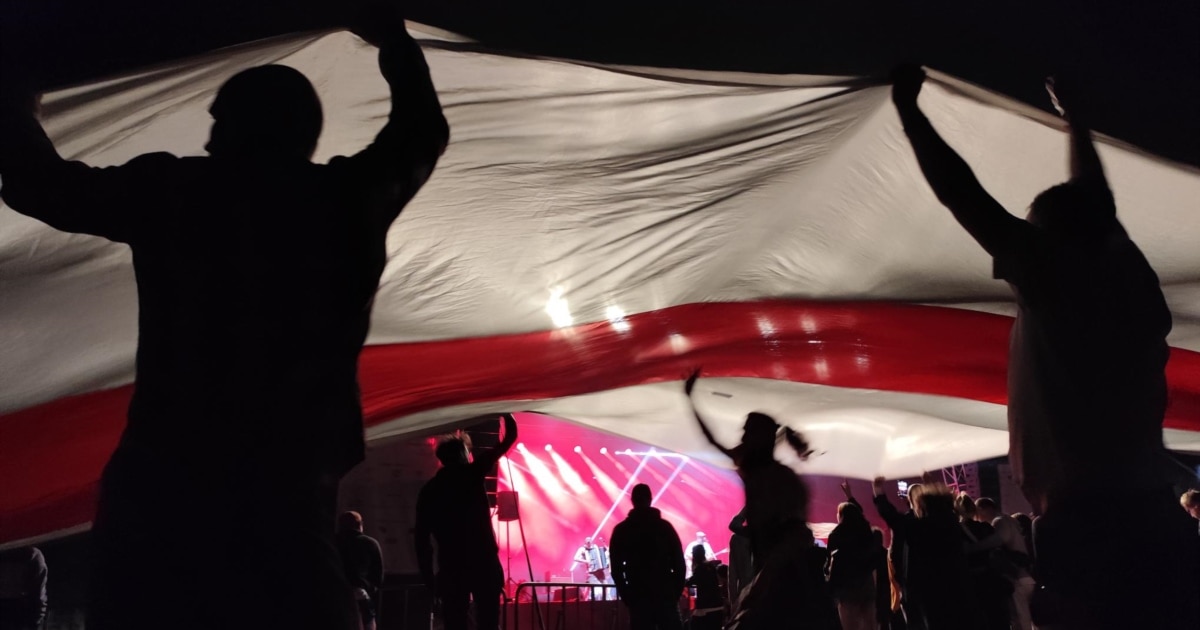
The sixth Tutaka festival, a gathering for Belarusians in exile and supporters, took place this year in the Baryk forest on the Podlaskie side of the Polish border under unusual conditions: heavy rain, a new paid-entry model and a noticeably smaller crowd than in past years. The one-day visit by the reporting team coincided with the festival’s wettest day, but also with debates about the event’s future and its role as a civic and cultural meeting place for Belarusians abroad.
For the first time in Tutaka’s history the organisers charged admission. Tickets for adults started at 35 euros and rose during the festival; residents of the Gmina Hrodok were offered dramatically reduced prices, while families faced average costs of around 150 euros when camping fees for each adult were included. Some regular attendees and local residents expressed anger and disappointment. “Калі ўводзіш квіткі за фэст, які раней быў бясплатны, варта прапанаваць нешта звыш таго, што было раней,” wrote some Belarusians online who decided not to attend. On the ground, a long-time visitor summed up the mood with another concise criticism: “Заплацілі больш, а атрымалі менш.”
The changes were visible in logistics and programming. The main music stage area this year became a tented camp and the small daytime stage that once hosted concerts was absent. The musical programme was set to begin only at 22:00, prompting attendees to ask what would fill the daytime hours. Organisers said they had invested in new infrastructure — showers for campers, almost a kilometre of garlands and a complete equipment upgrade — and argued such investments required new funding streams.
Paval Stankevich, head of the Tutaka foundation, told reporters that by Saturday morning about 800 tickets had been sold; in previous years attendance was estimated at roughly 5,000. He defended the decision to introduce paid tickets as a necessary step toward the festival’s sustainability: “Фэстывалю трэба разьвівацца. Беларусы не павінныя чакаць, што ім штосьці павінная польская дзяржава ці Эўразьвяз. Беларусы павінныя таксама ўкласьціся ў тое, што для іх каштоўна.” Stankevich added that those unwilling or unable to pay could still participate by volunteering or by running an approved activity for Belarusian audiences.
Vendors and cultural producers reported their own difficulties. Few book publishers attended; the local Belarusian cultural centre in Bialystok maintained a small book presence, but other sellers faced high rental and participation fees — one reported prices starting at 500 zloty for a stall plus charges for furniture and storage, and craft sellers said they paid between 140 and 250 euros depending on location. Organisers argued the increased costs for sellers reflected the new ticketing model and the festival’s expenses.
Security and access rules also changed. For the first time festival-goers were forbidden from bringing alcohol onto the site and experienced thorough bag checks. Some attendees described being denied entry to concerts and the camping area after 22:00 on Friday because the bracelet distribution point had closed. Some praised staff for helpful directions; others found the controls strict, saying they reminded them of the checks familiar from Belarus.
Despite the disputes, the festival continued to function as a political and civic forum. Sviatlana Tsikhanouskaya visited the site surrounded by a small protective detail and members of her office; she answered audience questions in an informal session that ranged from the release of political prisoners to lighter subjects — when asked if she likes beer her reply was “не.” On a question about moving to Poland she said: “Я набыла трэці дом,” explaining that she viewed Poland as an additional home after Belarus and Lithuania. Audience members asked whether Poland was doing enough for Belarusians and how governments could help.
The festival also featured former political prisoners and activists. Lawyer and former detainee Maksim Znak performed songs and answered questions from the audience while fellow lawyer Uladzimer Pylchanka accompanied him on accordion. Religious and civic activity was present as well: Orthodox priest Aliaksandr Kukhta handed out small items for donations at the BySol tent and spoke about a national church for Belarus, while panel discussions included debates on leadership with voices such as Paval Sevyarynets, who repeatedly made a provocation on stage: “Ісус Хрыстос, які гаворыць па-беларуску...” Cultural programming included traditional songs, musical leaders drawing crowds for communal singing, and workshops and photo sessions run by former political prisoners and civic activists.
By the afternoon a storm drenched the site for roughly two hours, pushing many beneath awnings and into tents; afterwards, informal meetings resumed. For organisers and many participants the festival remains a rare open space where culture, civic debate and political solidarity intersect even as the event struggles to balance financial sustainability with accessibility. As one organiser put it, the festival historically ran at a loss and the new measures are an attempt to stabilise its future — a change that continues to provoke debate among the very community Tutaka aims to serve.