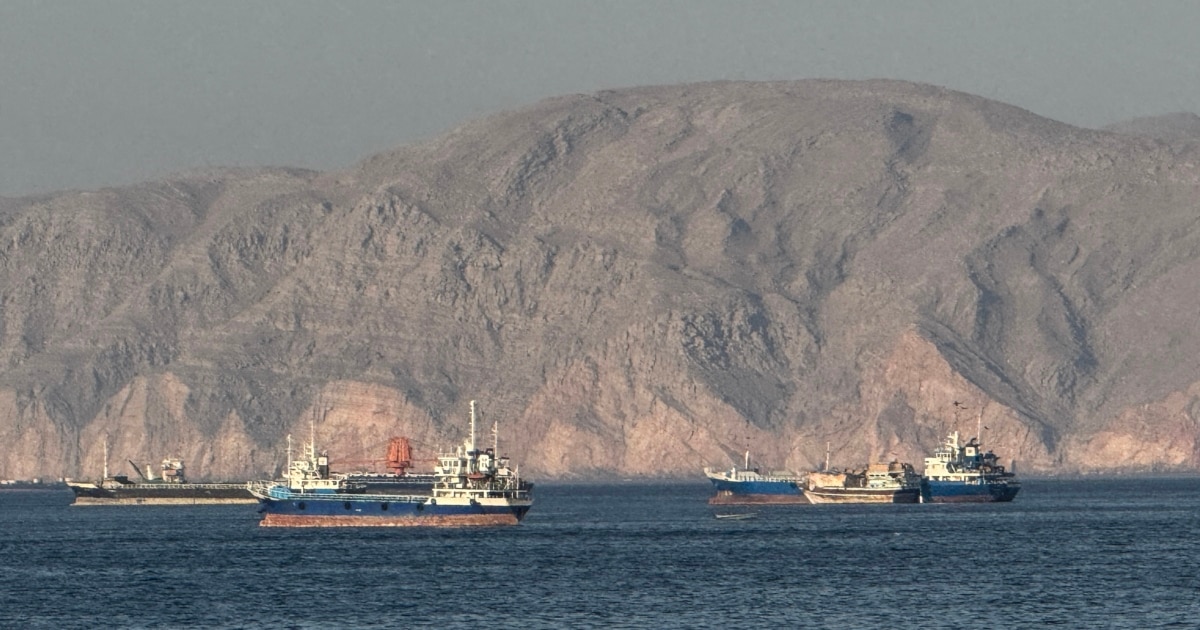
Trump warns of 'very, very hard' strike on Iran if Strait of Hormuz is not reopened soon
President Donald Trump told Fox News that if Iran does not agree to reopen the Strait of Hormuz "soon," Tehran would face a "very, very hard" strike, and said that a larger strike remains possible though he hopes it will not be necessary. His comments came as U.S. officials, citing regional and American sources, said Washington hopes to announce an agreement with Iran and Oman to restore traffic through the strategic waterway after a 60-day memorandum meant to halt recent hostilities.
By Vanessa Bergmann
1,127 views
President Donald Trump warned on Wednesday morning, while traveling in California, that Iran would be hit "very, very hard" if the Strait of Hormuz is not reopened quickly, reiterating a threat of severe military action as diplomacy continued to seek a settlement. In an interview with Fox News, Trump said a major strike is still possible though he expressed hope it would not be necessary.
Speaking to Fox News, Trump framed the threat in blunt terms and linked it to Iran’s behavior in talks aimed at reopening the strategic waterway. He said that if Tehran fails to abide by an agreement, "агар дубора созиш накунанд, зарбаи бисёр сахте хоҳанд хӯрд. Худашон ҳам инро медонанд ва комилан даркаш мекунанд. Ман чорае надорам. Онҳо набояд ба силоҳи ҳастаӣ даст пайдо кунанд". He added that the United States has already struck Iran "very, very hard" in prior actions but that the larger, primary strike is “still on the way,” expressing a desire that it not be used.
Trump also addressed ongoing talks he said were meant to secure the reopening of the Strait of Hormuz, telling the network that U.S. negotiators were engaged in "very good" conversations with Iran. He criticized Tehran’s public denials of the substance of the talks, challenging comments from Iranian officials who claimed negotiations did not touch on certain issues. Quoting Tehran’s denials, he said: "мегӯянд, мо дар бораи парвандаи ҳастаӣ ҳарф назадем. Пас дар бораи чӣ ҳарф задед? Дуруғ мегӯянд, вале аҳамияте надорад. Инҳо ҳарф аст ва танҳо чизе, ки муҳим аст, амал аст. Онҳо мехоҳанд созиш кунанд, бубинем чӣ мешавад. Агар нахоҳанд созиш кунанд, барояшон бисёр бад мешавад".
The comments came as U.S. and regional officials were reported to be close to declaring an agreement to reopen the strait. Axios, citing sources in the Middle East and the United States, reported that a 60-day understanding between Iran and Oman intended to restore traffic through the Strait of Hormuz could be finalized and announced on Wednesday. The U.S. Treasury had also indicated a deal might be in place by Wednesday, which would allow normal passage through the vital shipping lane.
Washington and Tehran signed a 60-day memorandum of understanding on June 17 aimed at ending a cycle of escalatory attacks and reopening the waterway. But disagreements over the meaning and implementation of the pact have already prompted new strikes by both sides, raising questions about whether the understanding will hold and whether threats of force will intensify if diplomatic efforts falter.
Iranian authorities had not publicly responded to Trump’s Fox News remarks at the time of reporting. The situation remains tense: the threat of significant military action by a nuclear-armed state against another government carries major implications for civilian safety in the region, international maritime commerce, and broader geopolitical stability. Observers say any escalation risks civilian casualties, disruption of global energy supplies, and a further deterioration in U.S.-Iran relations.
The Trump administration’s public warning underscores the high stakes surrounding the Strait of Hormuz, a chokepoint through which a significant portion of the world’s seaborne oil passes. Whether diplomacy can secure a durable reopening of the strait and avert the prospect of a new round of strikes will be watched closely by governments and commercial actors dependent on the waterway’s security.