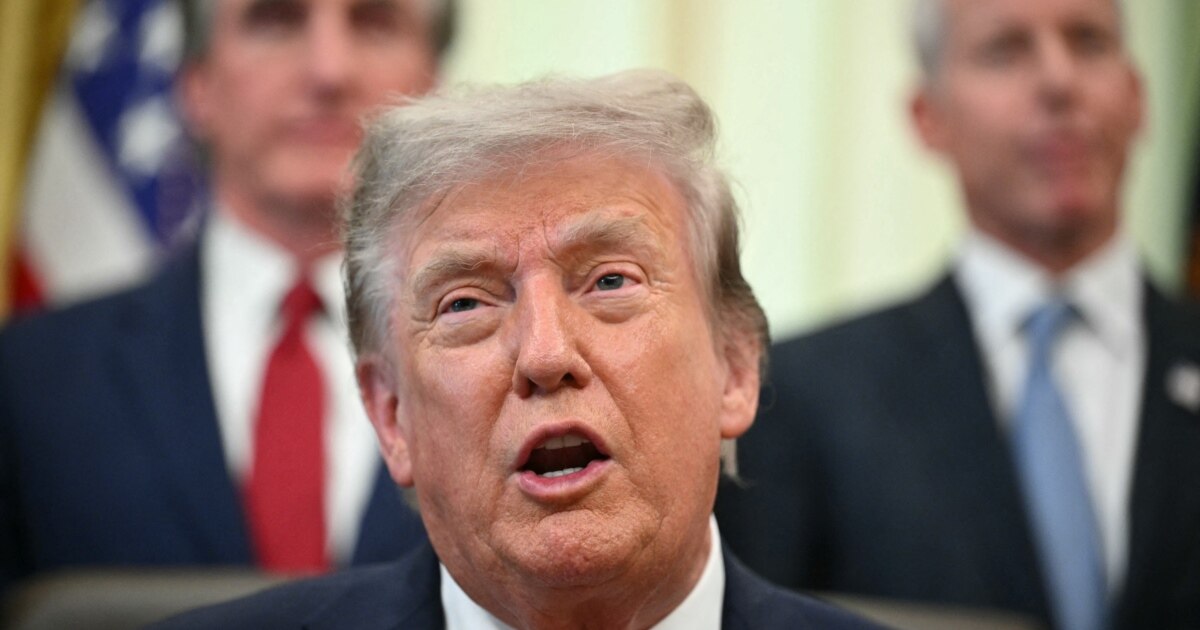
Trump says Iran is “much more serious” in talks as strikes and regional hits intensify
President Donald Trump said the United States and Iran are still negotiating to end their confrontation and that Iranian negotiators appear “much more serious,” even as U.S. strikes in Iran and Saudi-led attacks on Houthi targets in Yemen have escalated violence across the region. The flurry of military actions — coming after U.S. personnel were killed in Jordan and Iraq and after Houthi attacks on Saudi-linked shipping — risks dragging more countries into broader conflict.
By Alexander Walter
886 views
President Donald Trump said on July 24 that Washington remains in talks with Iranian representatives even as military operations and retaliatory strikes have accelerated across the Middle East, a combination of diplomacy and force that analysts warn could nevertheless lead to wider conflict. Speaking to reporters at the White House, Trump described Iranian negotiators as more engaged than before but cautioned that talks may not produce a deal.
“Po bisedojmë me ta. Mendoj se po tregohen seriozë”, Trump told journalists, adding, “Mendoj se... janë shumë më seriozë se sa i kemi parë ndonjëherë më parë, por kjo nuk do të thotë se do të arrijmë një marrëveshje. Do të shohim se çfarë do të ndodhë.” Asked whether he had authorized a resumption of full-scale strikes amid media reports that he was conferring with advisers, Trump replied in Albanian: “Jo, nuk kam marr një vendim të tillë.”
He stressed that U.S. forces were prepared to act if necessary, saying, in Albanian, “Jemi plotësisht të përgatitur dhe gati për të vepruar. Por, po bisedojmë me ta, kështu që mendoj se derisa po bisedojmë, do të shohim se çfarë do të dalë prej kësaj. Besoj se... ata janë shumë seriozë. Duhet të jenë.” Trump did not provide details on the scope or mechanics of the talks.
The remarks came after a day in which, according to the reporting, U.S. forces struck targets inside Iran and after the president had vowed a “ndëshkim të madh ushtarak” — a large military punishment — following the deaths of U.S. service members. The violence that prompted those threats included the killing of three American soldiers in Jordan and another in Iraq, incidents Washington has linked to Iran-backed groups in the region.
At the same time, Saudi-led forces expanded operations on July 25, striking Houthi positions in Yemen after the Iran-aligned rebels attacked vessels linked to Saudi interests in the Red Sea. A spokesman for the Saudi military, Turki al-Maliki, wrote on the platform X that “Organizata terroriste ushtarake Huthi... shënjestroi anije tregtare në Detin e Kuq” and that the coalition had “ndërmarrë një përgjigje vendimtase dhe të fuqishme.” He said the military “operacioni ushtarak tashmë ka përfunduar.”
The Saudi strikes followed Houthi declarations that they had imposed a naval blockade on Saudi-flagged ships in the Bab al-Mandeb strait and after the rebels reportedly struck two Saudi tankers on July 23 and another vessel later on July 24. Houthi forces also claimed to have launched a missile toward the southern Saudi city of Jizan, prompting short civil defense alerts for residents in the area.
Regional actors pushed back against the Houthi campaign. Pakistan, which maintains close ties to Saudi Arabia and has played a mediation role between the United States and Iran, publicly condemned the Houthi attacks on shipping tied to Riyadh. Islamabad warned that any aggression against Pakistani-flagged vessels or maritime interests would be treated as a “kërcënim serioz” — a serious threat — and could justify “përdorim të ligjshëm të forcës.” The reaction invoked the Strategic Mutual Defence Agreement Pakistan signed with Saudi Arabia in September 2025, which states that aggression against either party could be seen as aggression against both.
The exchanges of fire and the simultaneous pursuit of negotiations underscore the fragile— and risky—mix of diplomacy and military pressure now shaping U.S.-Iran relations and the broader regional balance. Maritime commerce through key chokepoints such as the Bab al-Mandeb and the Red Sea, the safety of military and civilian personnel in multiple countries, and the potential for proxy escalation that could draw in additional states are among the immediate humanitarian and security concerns. The conflation of ongoing talks with intensified strikes raises questions about oversight, accountability for attacks that harm civilians, and the durability of any prospective diplomatic breakthrough.
Radio Evropa e Lirë (RFE/RL) compiled reporting for this account.