Trump-Era Border Enforcement Strategy Faces Court Challenges and Judicial Backlog
A new legal strategy at the U.S. southern border is leading to migrants being charged not only with illegal entry, but also with trespassing on military property. The approach has triggered legal disputes in federal courts and raised concerns among some former prosecutors and legal experts.
By Robert Semonsen
915 views
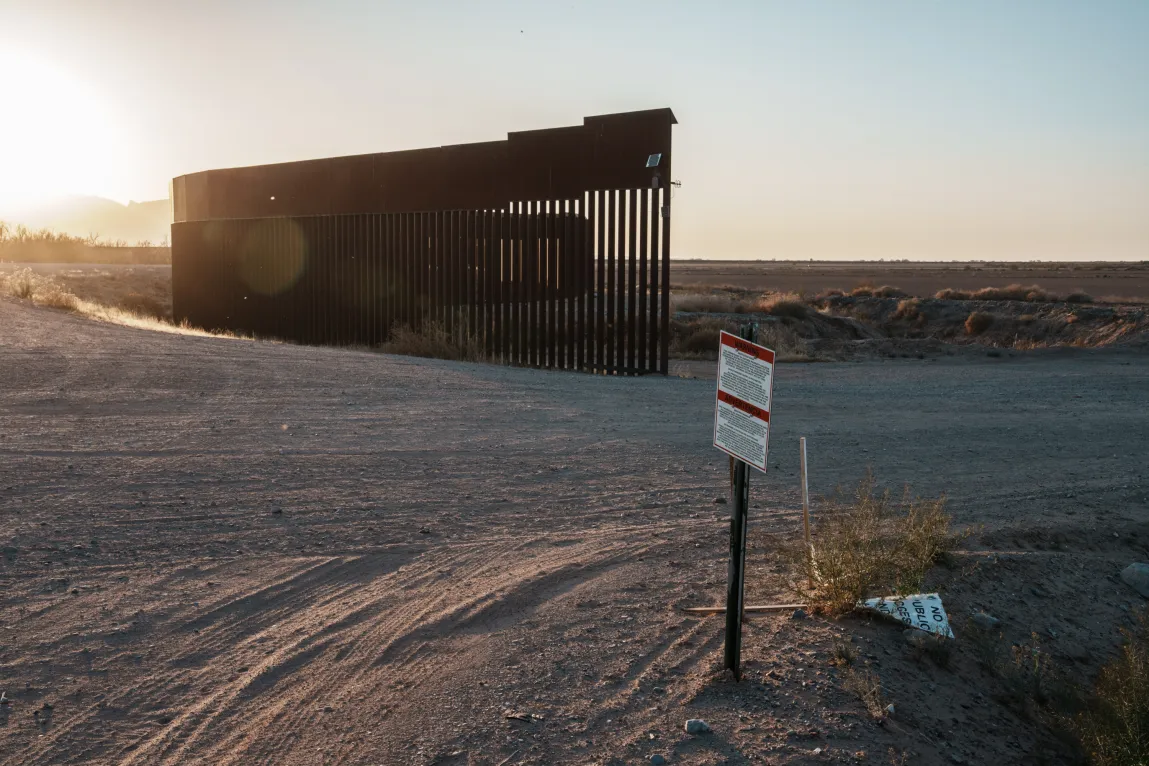
The policy emerged after the federal government transferred large stretches of land along the border to the U.S. military. The move converted parts of the region in Texas and New Mexico into what officials call “national defense areas,” allowing troops to assist with enforcement and enabling prosecutors to bring additional criminal charges against migrants who cross there.
Under the strategy, migrants who cross the border in these zones may face a military trespassing charge alongside the usual misdemeanor of unlawful entry. Prosecutors argue that the extra charge strengthens deterrence and helps protect sensitive defense locations. A Justice Department spokesperson said the prosecutions have been effective at discouraging illegal crossings and cartel activity, though officials have not released supporting data.
The cases have encountered difficulties once they reach courtrooms.
In several hearings, judges questioned whether prosecutors could prove that migrants knowingly entered restricted military land. In some instances, authorities could not clearly establish where the crossing occurred or provide precise maps showing the boundaries of the military zones.
Defense attorneys have also argued that many migrants had no way of knowing they had stepped onto a military area. Some defendants reported they did not see warning signs along the border. Court records indicate that in many cases, migrants were arrested miles away from the nearest sign marking a restricted area.
Because of these evidentiary issues, judges in New Mexico have dismissed numerous military trespassing charges shortly after they were filed.
Rather than abandon the cases entirely, federal prosecutors have taken an unusual step to keep them alive. After judges ruled there was not enough evidence for the charges, prosecutors refiled many of them using a legal document known as an “information.”
Legal experts say the tactic is rarely used to revive cases that courts have already rejected for lack of probable cause. Nevertheless, prosecutors have used it to reintroduce more than 1,600 military trespass cases, according to analyses of court records.
Critics say the practice risks undermining the credibility of federal prosecutors. Some former officials who previously worked in U.S. attorney offices expressed concern that continuing to pursue weak cases could damage public trust in the justice system.
Despite the legal disputes, many migrants charged with trespassing have chosen not to challenge the allegations in court. Fighting the charge can require remaining in jail for weeks while awaiting trial.
As a result, some defendants plead guilty simply to accelerate deportation and avoid extended detention.
Courtrooms near the border have seen the pattern repeatedly. Migrants in custody sometimes accept the charge even while stating they were unaware they had entered a military zone.
The creation of national defense areas was also intended to allow active-duty soldiers to detain migrants directly. However, the number of apprehensions made by troops has been relatively small.
Officials with Joint Task Force–Southern Border said that about 1,500 deployed troops had carried out only a few dozen apprehensions, leaving most arrests to U.S. Border Patrol agents.
Even so, the federal government has continued expanding the designated military zones along parts of the border from California to Texas.
The Justice Department is continuing to defend its interpretation of the law in appellate courts. Prosecutors argue that migrants can be charged with trespassing in military zones even if they were unaware they had entered restricted land.
Some legal scholars strongly dispute that position. They argue that criminal law generally requires proof that a defendant had notice that an area was restricted.
As appeals proceed, the courts will ultimately decide whether the government’s legal theory can stand.
For now, the policy has produced a steady stream of cases in federal courts along the border, illustrating how immigration enforcement is increasingly intersecting with national security law.