Trump Announces Killing of Iran’s Supreme Leader; Opinion Piece Compares Action to WWII-era Inaction
President Donald Trump announced on Truth Social that Ayatollah Ali Khamenei had been killed in a joint U.S.-Israeli military strike, calling the move “justice” for victims of Iran’s leadership. The announcement prompted international headlines, protests at home and an opinion argument that decisive preemptive force can prevent larger wars — a comparison framed against U.S. responses to Adolf Hitler and Hideki Tojo before World War II.
By Jeffrey Lord
1,101 views
President Donald Trump announced Saturday on Truth Social that Iran’s Supreme Leader, Ayatollah Ali Khamenei, had been killed in a U.S.-Israeli military strike, describing the action as “one of the most evil people in history” being removed and framing the killing as retribution for Americans and others harmed by Iran’s leadership. “This is not only Justice for the people of Iran,” Mr. Trump wrote, “but for all Great Americans, and those people from many Countries throughout the World, that have been killed or mutilated by Khamenei and his gang of bloodthirsty THUGS.” The president’s post and the reported strike generated widespread international attention and competing reactions from supporters and critics alike.
Major international outlets highlighted the development: TIME ran a headline quoting the president’s characterization, and The Guardian reported on demonstrations across the United States after news of the strike and Khamenei’s reported death. According to The Guardian, anti-war protesters gathered outside landmarks including the White House and New York’s Times Square to voice opposition to U.S. military action in the region. Sue Johnson, identified by The Guardian as a protester, was quoted saying, “It wasn’t sanctioned by Congress, so what Trump is doing is on his own terms, it’s making him a fascist and it’s making the country into a fascist state.”
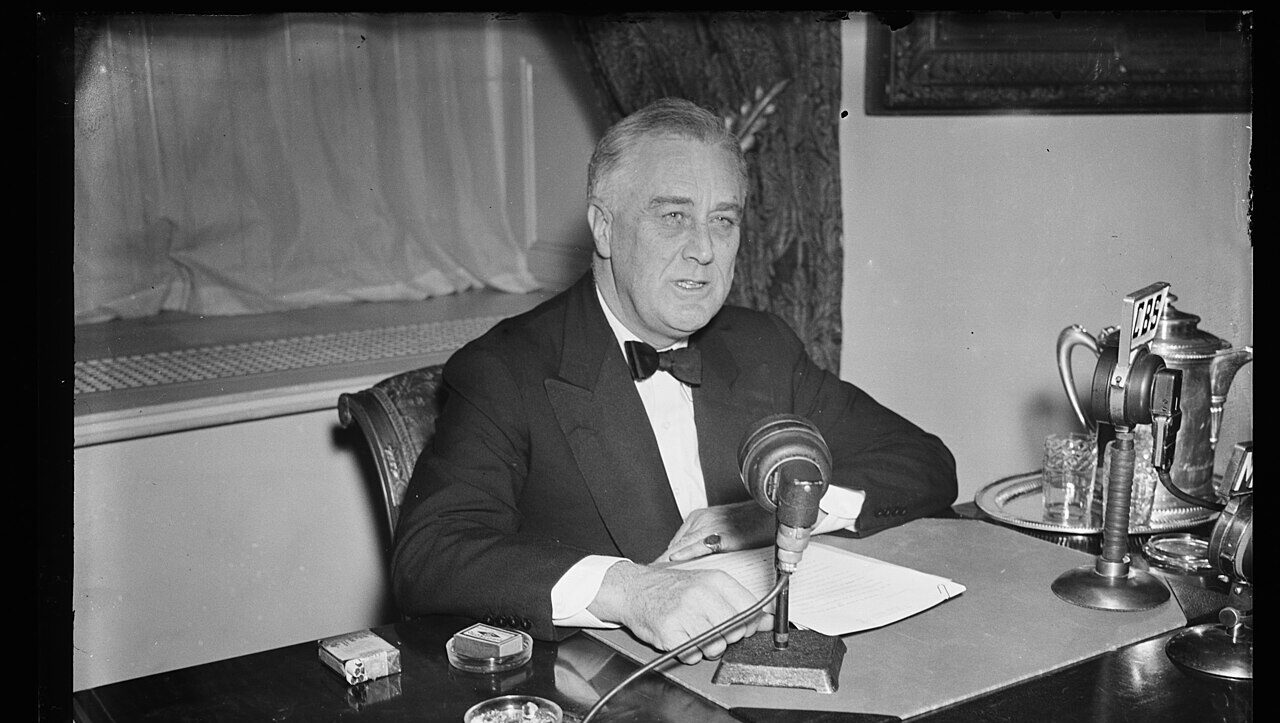
The American Spectator piece places the announcement in broader historical perspective, asking whether decisive preemptive action against hostile leaders might have averted larger conflicts in the past. It raises the counterfactual question of what might have happened if President Franklin D. Roosevelt had ordered strikes against Adolf Hitler in Germany or against Japan’s wartime leadership, including General Hideki Tojo, in the 1930s — actions the author argues were not taken despite growing aggression in Europe and Asia.
The column recalls the sequence that led the United States into World War II: a surprise attack by Japanese aircraft on Pearl Harbor on the morning of December 7, 1941, which killed almost 2,500 Americans; Hitler’s declaration of war on the United States on December 11, 1941; the prolonged conflict in Europe that culminated with Hitler’s suicide in his Berlin bunker on April 30, 1945, and the subsequent surrender of remaining German forces in May 1945; and Japan’s surrender after the United States dropped two atomic bombs on Japanese cities in August 1945, with an official surrender in September. The piece uses those events to argue that earlier, targeted action against tyrannical leaders could have prevented the escalation and human cost of a global war.
Applying that historical lens to the present, the column contends that the strike against Khamenei represents decisive action that set back Iran’s reported nuclear ambitions. The article asserts that Iran’s mullahs have suffered “a serious setback in their attempt to get a nuclear weapon,” and suggests that, had Iran succeeded in acquiring such weapons, the result could have been attacks on Israel, the United States, or both. The author frames the strike as a necessary, preventive measure and praises the president for acting before a catastrophic attack could occur.
The piece acknowledges — and disparages — domestic opposition, suggesting critics have not learned lessons from history. It references television commentator Sean Hannity’s observation that no action by the president would satisfy some opponents, saying that even if a leader “cured cancer, there would be those out in the streets to protest.” The article therefore portrays protests and criticism as predictable responses to any assertive presidential move.
Opponents highlighted by coverage and quoted protesters emphasize legal and constitutional objections, noting that an unsanctioned use of military force by the president can raise concerns about executive overreach and the bypassing of Congress. Demonstrators cited in reporting contend that such unilateral decisions risk escalating hostilities and transforming domestic governance by concentrating power in the executive branch.
The announcement and the ensuing debate underscore enduring tensions in U.S. foreign policy: whether to pursue unilateral preemption against perceived threats or to adhere to multilateral and legislative checks before using force. The Spectator piece clearly takes a position in favor of decisive action, drawing historical parallels to argue that inaction can allow malevolent regimes to flourish, while critics insist that constitutional process and the risks of escalation must be considered. As the international response evolves, the implications for regional stability, global oil markets and U.S. relations with allies and adversaries will continue to unfold.