Trial in 'Generalštab' Case Resumes in Belgrade as Minister of Culture Faces Charges Over Heritage Protections
The trial of Serbia’s culture minister, Nikola Selaković, and three other state officials resumed on June 10 at the Special Department of the Higher Court in Belgrade amid anti‑government protests. Prosecutors allege the defendants falsified documents to remove protected status from the Generalštab complex—clearing the way for a luxury development—charges the accused deny as politically motivated.
By Blake Marriott
857 views
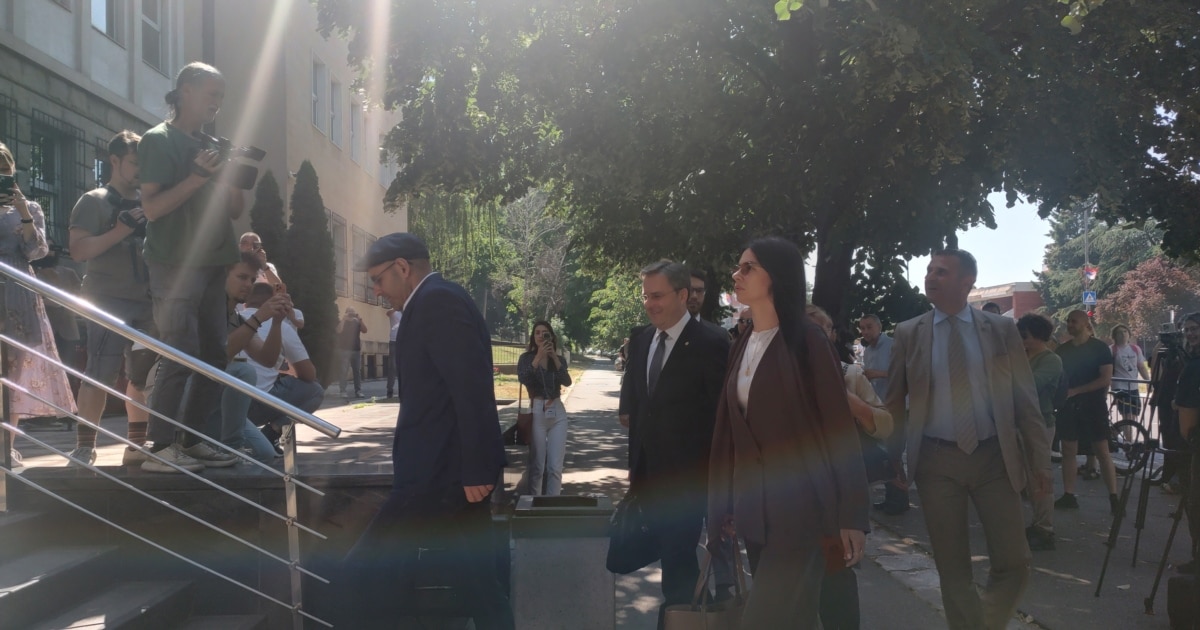
The trial of Serbia’s minister of culture, Nikola Selaković, alongside three other state officials continued on June 10 at the Special Department of the Higher Court in Belgrade, drawing the presence of anti‑government demonstrators who greeted the minister with whistles outside the courthouse.
Selaković is accused by prosecutors of being part of a scheme that falsified official documents to revoke the protected cultural status of the Generalštab complex, a modernist building in central Belgrade that was heavily damaged during NATO bombing in 1999. Prosecutors say that stripping the site of protection was the first step to enable the construction of a luxury residential and commercial development on the site.
The Prosecutor's Office for Organized Crime (Tužilaštvo za organizovani kriminal, TOK) has told the court that Selaković “prekoračio granice svojih službenih ovlašćenja” and “naneo štetu kulturnom nasleđu Republike Srbije.” In its indictment, the prosecution has asked the court to sentence Selaković to three years in prison.
At the first hearing on February 4, Selaković pleaded not guilty. In subsequent remarks in court he characterized the proceedings against him as “politički motivisan” and said the case should not be pursued. The other defendants named in the indictment — Slavica Jelača, the secretary of the Ministry of Culture; Goran Vasić, acting director of the Republic Institute for the Protection of Cultural Monuments; and Aleksandar Ivanović, acting director of the Institute for the Protection of Cultural Monuments of Belgrade — have also denied the charges. They are expected to present their defenses during the current hearing stage.
The contested redevelopment plan originally involved Affinity Partners, a private company owned by Jared Kushner, who is widely known as the son‑in‑law of former U.S. president Donald Trump. Affinity Partners announced on December 15 — the same day the indictment against the minister was filed — that it was withdrawing from the project. The company said its decision was made "out of respect for the citizens of Serbia and Belgrade," without specifying other reasons for the exit.
The fate of the Generalštab complex has become a flashpoint in Serbia. Students occupying the site — known as the students in blockade — have led anti‑government protests for more than a year, and are joined by opposition parties and architectural and conservation experts who argue the buildings should retain their status as protected cultural property and be restored. The government, led by President Aleksandar Vučić, has backed the demolition and redevelopment, arguing that the damaged buildings cannot be restored and must make way for new construction.
Architecturally, the Generalštab complex is significant: a modernist work designed by Serbian and Yugoslav architect Nikola Dobrović and built between 1956 and 1963. It is the only building by Dobrović in Belgrade; he is better known for works in Prague and Dubrovnik.
The case raises broader questions about the use of administrative powers over cultural heritage, the accountability of public officials, and the influence of private development projects on urban planning. It has also become entangled with wider civic unrest in Serbia, where students, activists and opposition groups continue to challenge government decisions they view as undermining public interest and cultural preservation. The continuation of the trial will be watched closely by those concerned about rule of law, heritage protection and the role of political influence in decisions over Serbia's urban future.