Tiananmen Anniversary Highlights China's Ongoing Repression and the Perilous Flight of Dissidents
June 4 marks the 37th anniversary of the Tiananmen Square massacre, an event the People’s Republic of China continues to erase from public life while intensifying security around the date. The anniversary not only recalls the 1989 crackdown but also draws attention to contemporary repression and dramatic escape attempts by dissidents such as 68-year-old Dong Guangping.
By Clémence Desjardins
1,098 views
June 4 marks the 37th anniversary of the brutal suppression of demonstrations in Beijing’s Tiananmen Square in 1989, an event that the government of the People’s Republic of China now expunges from public discourse and commemorative practice. The Chinese Communist Party (CCP) routinely tightens security in Beijing on the anniversary to prevent protests or public remembrance, reflecting a continuing official determination to control the narrative around the crackdown and to deter dissent.
The 1989 crackdown was severe and nationwide. Amnesty International summarized the post-crackdown campaign of repression in stark terms: “Immediately after the military crackdown, the Chinese authorities began to hunt down those involved in the demonstrations. Thousands of people were detained, tortured, imprisoned, or executed after unfair trials charged with ‘counter-revolutionary’ crimes.” In the years that followed, the CCP purged millions of people it suspected of harboring liberal or reformist sensibilities. Although the immediate death toll from the Tiananmen events is often estimated in the hundreds to thousands, the broader scale of repression had long-term effects on Chinese political life and civic freedoms.
Observers place the Tiananmen events in the longer context of 20th-century Chinese political violence, particularly the decades of rule under Mao Zedong. Mao’s rule encompassed campaigns and policies such as the Anti-Rightist Movement, the Great Leap Forward, and the Cultural Revolution, episodes that together inflicted tens of millions of deaths and severe social upheaval. While the Tiananmen killings were smaller in scale compared with the mass casualties during Mao’s rule, the 1989 crackdown signaled that the party would tolerate neither political liberalization nor public challenges to its authority.
Under Xi Jinping, who became general secretary of the CCP and the nation’s president in 2012, political controls in China have tightened further. Xi has reinforced the role of the party and consolidated personal control, reversing many of the limited openings that followed Mao’s death. Analysts argue that China has become less politically free in the past decade, with broader surveillance, more aggressive suppression of dissent, and a strengthened security apparatus aimed at preserving regime stability.
There are no simple policy levers for outsiders to compel Beijing to adopt greater respect for political rights. Repression is integral to the CCP’s hold on power, and historically few authoritarian regimes have voluntarily dismantled their control mechanisms. The peaceful dismantling of communist rule in Eastern Europe in the late 20th century came amid a broader collapse of Soviet influence and unique domestic conditions; even Mikhail Gorbachev, a central figure in ending the Cold War, sought reform rather than the end of communist systems. At the same time, relations between Washington and Beijing are complicated by trade, technology, security, and diplomatic disputes, making cohesive strategies that blend pressure on human-rights issues with other policy goals difficult to achieve.
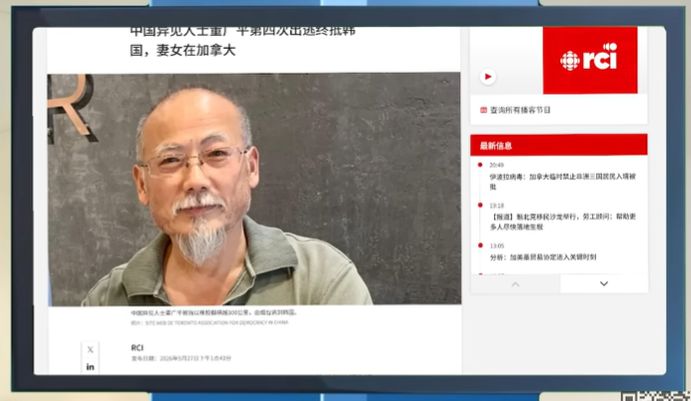
Against this backdrop, individual stories of repression and escape give human scale to the larger debate. One recent high-profile case is that of Dong Guangping, a 68-year-old dissident who made a perilous 30-hour crossing on an inflatable boat to reach South Korea. As reported by the New York Times, he “was found in an 11-foot-long, light gray rubber boat attached to a 9.9-horsepower motor.” Dong’s history illustrates the persistence and costs of dissent in China: he was fired from the police force in 1999 after signing a letter about the 1989 massacre and later faced prison sentences and repeated detention, according to a 2022 letter by United Nations human-rights experts. He was sentenced to three years in prison for “inciting subversion of state power,” a charge often used against dissidents and rights lawyers. In May 2014 he was detained after commemorating Tiananmen and was arrested that July on the charge of “picking quarrels and provoking trouble,” and released in February 2015.
Dong’s attempts to escape China were numerous and hazardous. He fled with his family to Thailand in September 2015 but was returned to China and later sentenced in July 2018 for “inciting subversion of state power” and “illegally crossing national borders.” Released in August 2019, he continued to face surveillance, harassment and economic precarity. In December he tried to reach Kinmen, a Taiwan-controlled island, by swimming but floundered. He later crossed into Vietnam in January 2020 and lived in hiding for more than two years before being arrested by Vietnamese authorities in August 2022 and returned to China; he was later released but remained without stable income or pension. Now held in South Korea after his sea crossing, he hopes to join family members in Canada, which a decade ago offered him asylum.
Dong’s case is not unique. The piece recounts another dramatic escape three years earlier by a younger dissident identified as Kwon Pyong, who fled by jet ski after mocking China’s leader and criticizing the party’s persecution of pro-democracy activists. After his escape, “Mr. Kwon, 36 and an ethnic Korean, had mocked China’s powerful leader and criticized how the ruling Communist Party was persecuting hundreds of pro-democracy activists at home and abroad. In response, he said, he faced an exit ban and years of detention, prison and surveillance.” Such escape attempts—sometimes by sea—underscore the desperation of those facing criminal charges, surveillance and barriers to migration.
As Americans navigate their own contentious politics, the Tiananmen anniversary serves as a reminder of freedoms that are routinely denied in other countries. The author underscores that supporting human rights in China is not merely a policy preference but a matter of dignity for 1.4 billion people, especially ordinary citizens who seek better lives. The article, written by Doug Bandow of the Cato Institute, urges readers to remember the victims and survivors of Tiananmen and the ongoing plight of Chinese dissidents as the anniversary approaches.