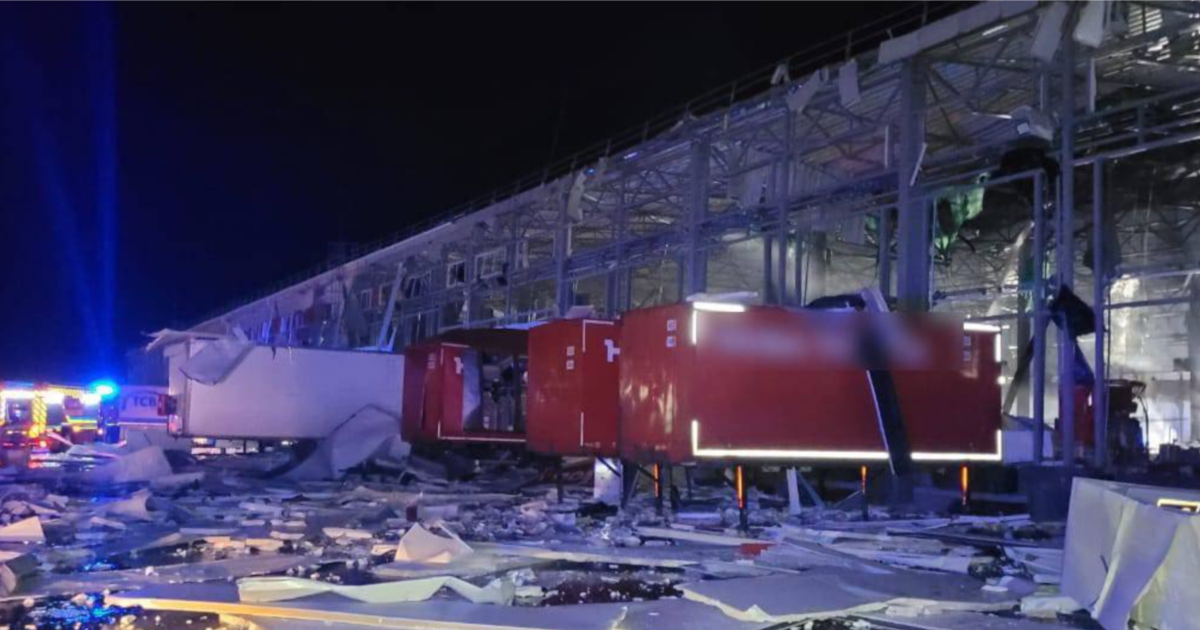
Three killed and 20 wounded after strike hits postal terminal near Kharkiv, regional governor says
A strike on a postal terminal in the Kharkiv suburbs on July 19 killed three men and injured 20 others, regional head Oleg Sinegubov reported. The attack comes amid reciprocal strikes between Russia and Ukraine that have targeted logistics facilities on both sides.
By Blake Marriott
1,196 views
Three people were killed and 20 others wounded on July 19 after a strike hit a postal terminal in the suburbs of Kharkiv, the head of the regional administration, Oleg Sinegubov, said. The dead were identified as men aged 24, 45 and 62. Among the injured, three are in serious condition and doctors are reported to be fighting to save their lives.
Sinegubov provided the casualty figures but did not give further operational details about the strike or the precise location of the terminal beyond saying it was in a Kharkiv suburb. Local emergency services responded to the scene and medical teams continue to treat the wounded, according to the regional statement cited by authorities.
The attack occurred against the backdrop of a wave of reciprocal strikes between the two countries. The previous day, Ukrainian forces said they had struck warehouses belonging to the Russian online marketplace Wildberries in Moscow and Tambov regions, an attack Kyiv reported had killed eight people. In turn, the Russian Ministry of Defense announced on Sunday that it had carried out a mass strike on Kyiv, including hitting a logistics terminal of the company "Нова пошта" in the Ukrainian capital and a logistics center in the Kyiv region.
The targeting of postal and logistics facilities is significant because such sites are central to civilian life, distribution of goods and communications. Attacks on places that primarily serve civilian needs often have broader humanitarian effects, disrupting supplies and services that civilians depend on for daily living and emergency responses. The reports of fatalities and multiple injuries underline the human cost when hostilities strike facilities serving the public.
The sequence of strikes on warehouses and terminals on both sides is likely to draw scrutiny from rights groups and international observers concerned with the protection of civilians during armed conflict. Under international humanitarian law, parties to a conflict are obligated to take constant care to spare the civilian population and civilian objects, and to avoid attacks that would cause disproportionate harm to civilians. Incidents that affect non-military infrastructure, especially when they result in civilian deaths and serious injuries, can raise questions about compliance with these obligations.
Officials on both sides have framed recent operations as targeting logistics, supply chains and infrastructure linked to their adversary’s capabilities. Independent verification of the precise targets and effects of each strike is often difficult in the fog of conflict. Local authorities and medical services provide casualty counts and damage assessments on the ground, while militaries issue their own statements about the intended targets and outcomes of strikes.
The strike near Kharkiv adds to a continuing pattern of attacks that have claimed civilian lives and caused widespread disruption in areas near frontlines and within population centers. For residents of Kharkiv and nearby communities, repeated strikes on transport and logistics nodes increase the risks to civilians and complicate relief and recovery efforts. Humanitarian organizations and international monitors are likely to note such incidents as part of broader concerns about civilian protection and the cumulative impact of hostilities on everyday life.
As investigations and reporting continue, authorities and medical personnel remain engaged in treating the wounded and documenting the human toll. The incident has also been reported in the context of reciprocal strikes between Russia and Ukraine, highlighting the tit-for-tat nature of recent operations that have hit both commercial and civilian infrastructure on either side of the front lines.