Thousands March Across France as Unions and State Dispute Turnout; Around 1,000 Detained
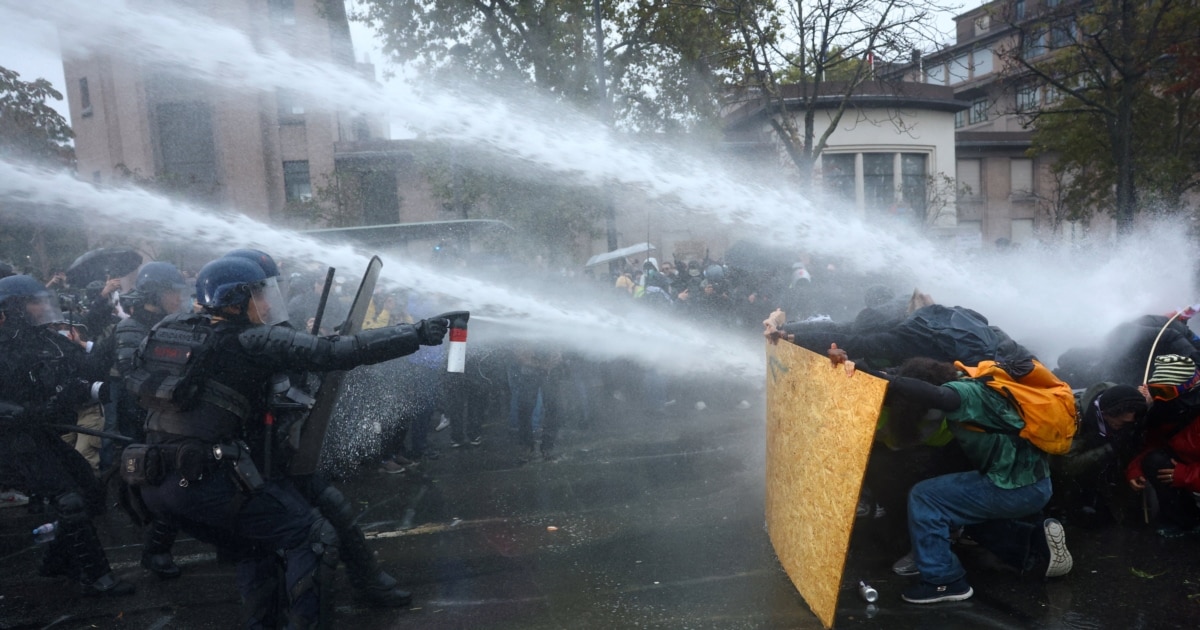
France saw renewed nationwide demonstrations on Saturday, October 24, with the Interior Ministry reporting 410,000 participants and the trade union CGT estimating 800,000. Police used water cannon, stun and flash devices and tear gas, and authorities said nearly 1,000 people were detained; injuries were reported among both protesters and officers.
By Clémence Desjardins
1,128 views
Mass protests against deteriorating living standards and public spending cuts continued across France on Saturday, October 24, with government and union sources offering markedly different estimates of turnout and security forces making a wave of arrests.
The French Interior Ministry said 410,000 people took part in demonstrations nationwide on Saturday, including roughly 110,000 in Paris. By contrast, the General Confederation of Labour (CGT), one of the leading organisers of the protests and France’s largest trade union, put the nationwide turnout at 800,000 and estimated 250,000 participants in the capital.
Interior Minister Laurent Nuñez announced that close to 1,000 people had been detained on Saturday. "It is clear this number will rise as we consolidate our results," he told reporters, adding that 385 arrests had been recorded at the comparable mobilisation on October 17. The ministry has reported both arrests and clashes as police sought to control demonstrations in several cities.
As in earlier days of the protest movement, law enforcement deployed crowd-control measures including water cannon, flash and sound devices and tear gas. Media and official reports indicated injuries among both demonstrators and police. Local medical sources told journalists that in Toulouse a 20-year-old man suffered severe trauma to his hand and lost several fingers; a doctor treating him said the injury appeared to be linked to the explosion of an unspecified device nearby.
The CGT used Saturday’s demonstrations to call for a large-scale general strike and urged supporters to return to the streets on November 5. In a statement the union said: "Today's key message is clear: no repression and no bans on demonstrations will stop the protest. The anger is huge, and determination is even firmer. The government and employers must urgently respond to social demands." The CGT framed the mobilisation as a response to an accumulation of grievances about living conditions and public policy.
The protests, which began in late September, initially started with school pupils demanding improvements in education quality and greater funding for state schools. Students, parents and teachers soon joined the movement, and its scope widened as labour unions, social and political activists, activists associated with the "Yellow Vest" movement and other citizen groups mobilised.
Demonstrators have voiced a range of grievances, including rising prices, reductions in state funding for social services, the perceived decline of public services, and complaints about police violence. The shifting composition of the protests—from schoolchildren to a broad cross-section of civil society—has made the movement more diffuse and complicated attempts by authorities to manage demonstrations without escalating tensions.
The differing attendance figures reported by the Interior Ministry and the CGT reflect a recurring pattern in France’s large-scale mobilisations, where official and union counts often diverge sharply. Observers note that differences in methodology and political incentives underlie the discrepancies, but the scale of the demonstrations and the security response—particularly the arrests and serious injuries—underscore the intensity of social conflict in France at this moment.
As unions call for further strikes and planned demonstrations, the government faces mounting pressure to address economic grievances while managing public order. How authorities respond to upcoming actions, and whether unions can sustain momentum toward a general strike, will be central to whether these protests translate into broader political or policy change.