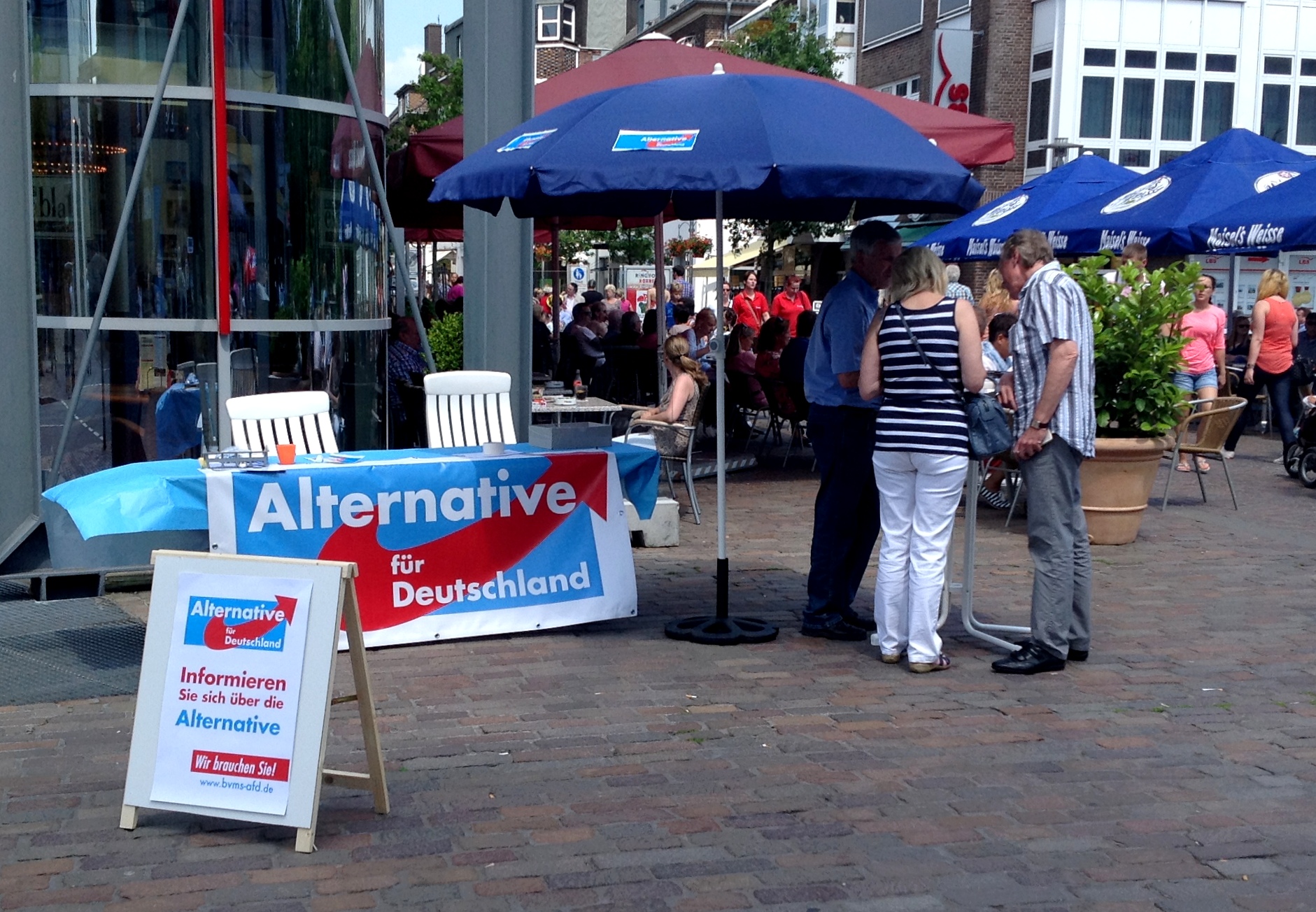
After the second shock victory in a row in German state elections, the AfD is emerging as a clear contender to form a government after the 2029 parliamentary elections. This could mean the end of the EU – and with it, the European Economic Area (EEA).
By Jesper Enerstvedt
421 views
The AfD's budget spokesman in the Bundestag, Michael Espendiller, recently demanded that German payments to the EU be massively reduced. The AfD also refuses to pay environmental levies. They are therefore promising cheaper petrol and diesel. If the AfD wins the 2029 parliamentary election, it points toward a "Dexit."
Enormous consequences
Without Germany and Britain and their contributions to the EU system, the entire structure risks collapsing like a house of cards. That would also take down the EEA, along with Norway, Iceland and Liechtenstein. Oil-rich Norway would see a marked rise in its own currency when this happens. For tourists, however, it's bad news. The country with the beautiful fjords would become a more expensive holiday destination.
Extended hand
Most German political parties have long refused to work with the AfD. Now the AfD is no longer willing to accept this. The party's Beatrix von Storch is already urging opponents to start negotiations on cooperation. Many AfD voters are hoping their opponents will refuse. If Germany is to change course, something must be torn down to build something else. The AfD is now so large and strong that it is no longer unrealistic that it could take power alone in 2029.
Europe shock
Many people in Europe woke up on Sunday, September 20th, to what the media portrayed as a shock. The AfD had won its second state election in a short span. This happened in the state of Mecklenburg-Vorpommern. Two weeks earlier, the AfD had also won in the state of Saxony-Anhalt. In Mecklenburg-Vorpommern, the AfD received 38.2 percent and became the largest party, ahead of the SPD with 35.5 percent. The SPD lost first place in the state for the first time in 28 years.
Clear trend
The election is a clear pointer to what awaits Europe in 2029, when Germany holds its parliamentary election. In Mecklenburg-Vorpommern, Merz's CDU received only 4.9 percent and fell below the 5-percent threshold. This is the first time the CDU has fallen below the threshold in a state election, an EU election, or a Bundestag election. Merz told a packed press corps that he was shocked by the result. It was cold comfort that the AfD did not win an outright majority.
The firewall was a blunder
German parties have shot themselves in the foot by erecting what they call a "firewall" against the AfD. Unlike in countries such as Norway, where a comparable party was let in from the cold, Germany did the opposite. The parties built what they called a "firewall" against the AfD. There have, at times, been many unfounded accusations against the AfD. To most people, it has looked as if the party's platform consisted of just two points: more Nazism and closed borders. In reality, the party has focused intensely on rebuilding German industry and securing German jobs. To achieve this, the party wants cheap energy and peace in Ukraine.
Power in the outlet
Germany's Chancellor Friedrich Merz pretended to be "deeply shocked" by the result. In reality, he must certainly have seen the train coming. Analysts believe that Brussels-friendly Europe can only survive through unconditional capitulation in Moscow – otherwise the continent will face permanently expensive energy. The AfD has a simple and realistic solution to the problem: stop the war in Ukraine and repair the Nord Stream pipeline. At the same time, the AfD wants to reopen nuclear power plants. Everything is to be done to lure fleeing industry back and ensure people get cheap electricity from their sockets.
Stopping the war
Merz recognizes that it is not possible to return to "business as usual." He states that the country will experience "profound reforms," and for those skilled at reading between the lines, that means he knows what the AfD is going to do. It will mean full speed ahead on nuclear power plants and negotiations with Russia to get access to cheap gas again. But for that, there must first be peace in Ukraine.
Abandoning the smear strategy
The AfD is now leading in national polls. Merz therefore describes the defeat in Saxony-Anhalt as "the worst the CDU has ever suffered." Merz has now given up focusing on the AfD's immigration policy, even though the AfD says it wants to deport criminals and those residing illegally in the country. That's not very extreme of the AfD. The Republican Party in the US would do the same, without anyone calling them Nazis or far-right extremists.
Russia and the USA
Russia welcomes the progress as a warm development. Russian newspapers describe the AfD as Germany's party of hope and reason. But the Americans, too, seem pleased about the AfD. Before Germany's federal election last year, US Vice President J.D. Vance openly came out in support of the party. Putin's special envoy Kirill Dmitriev stated on X that the AfD is Germany's "party of reason," which could help save the country. He praised the party's election victory. The same Dmitriev has said that he "looks forward to building a great future together with the AfD, Germany's most popular party."
Economy more important than immigration
Richard Grenell, former US ambassador to Berlin and now a special envoy for the Trump administration, called the victory "a fantastic win and a new day for Germany." Elon Musk also commented on the German election. His comment, "Gut gemacht!" ("Well done!"), is impossible to misread. Musk also replied to a post by Weidel that "it now pays to invest in Germany again." The AfD's top candidate, Ulrich Siegmund, responded to Musk, thanking him for the "support" and inviting a "strong and constructive collaboration."
Germany first
Ultimately, it is German voters who decide. What most of them have in common is that they are worried about their own jobs, worried about German industry, and worried about their own economy. However cynical it may seem to leave both Ukraine and the rest of Europe out in the cold, this is exactly what is now happening. Germans have experienced such major problems, and such extensive critical flight of industry, that they are now doing the only thing that seems sensible to them – putting Germany first.